
Terai (Tarai): South Asian lowland marshes and alluvial plains
Terai (Tarai) is a lowland belt of marshes, grasslands and farmland along the southern foothills of the Himalayas spanning northern India and southern Nepal. It is ecologically rich and intensively settled.
Overview
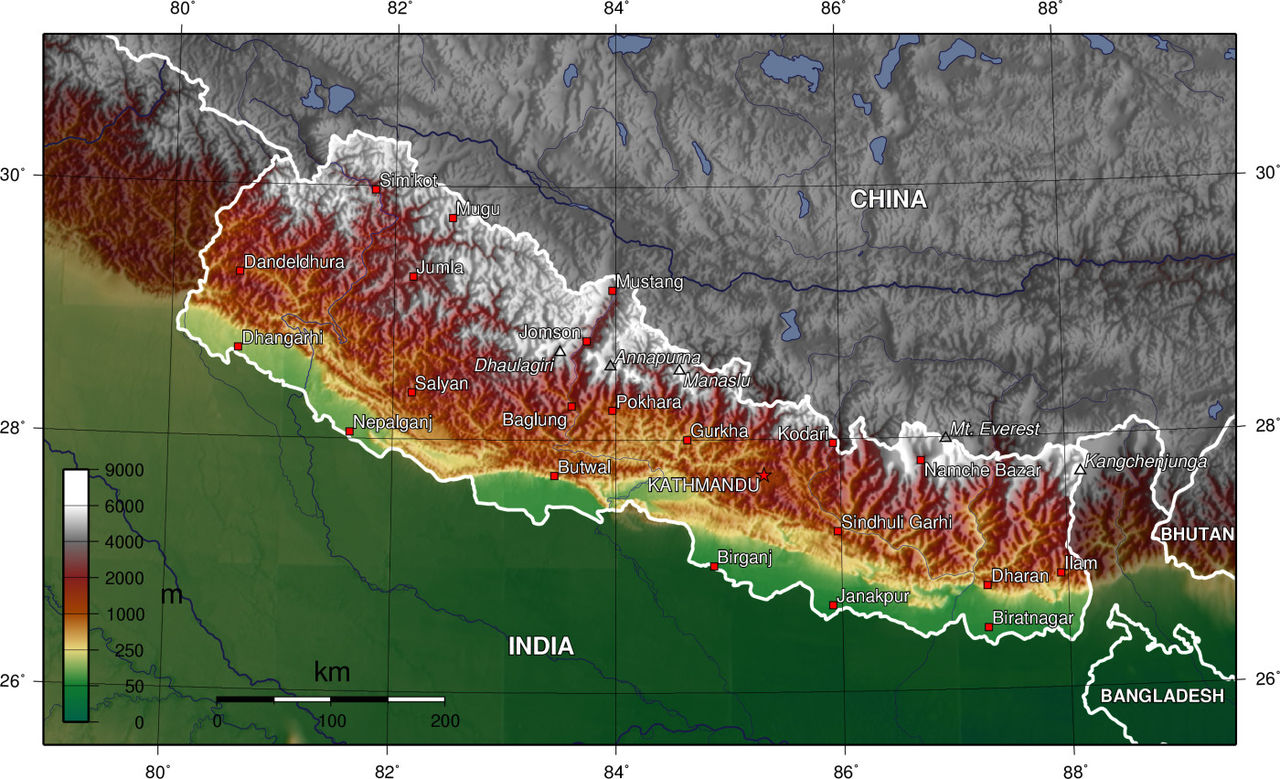
The Terai, also spelled Tarai, is a low-lying region of marshes, flooded grasslands and fertile alluvial plains that lies along the southern edge of the Himalayan foothills. It stretches across parts of northern India and southern Nepal, forming a distinct ecological zone between the higher hills to the north and the drier plains farther south. The term commonly denotes the strip of wetland running from the area near the Yamuna River in the west to the floodplains of the Brahmaputra in the east.
Image gallery
4 Images

Geography and natural characteristics
The Terai sits immediately below the belt of porous, gravelly land known as the Bhabar and directly north of the broad Gangetic plains. It is fed by rivers descending from the Himalayas, which deposit silt and create an extensive network of wetlands, oxbow lakes and seasonally flooded fields. Historically much of the area was swampy with tall grasses and sal forest; periodic flooding and a high water table have been characteristic features.
Ecology and notable features
The region supports a rich assemblage of flora and fauna adapted to moist, subtropical conditions. Wetland plants, tall grasses and riverine forests provide habitat for large mammals, numerous bird species and aquatic life. Because of its transitional position between mountain and plain, the Terai is important for migratory species and for biodiversity that depends on both forest and wetland habitats.
Human use and development
For centuries the Terai was sparsely populated due to seasonal malaria and difficult terrain. Over the past century, drainage, irrigation and agricultural development transformed much of the marshland into farmland and settlements. Today the area is intensively used for crops such as rice, sugarcane and other staples, and it supports dense rural populations and urbanizing towns where soils are fertile and water abundant.
Conservation, challenges and distinctions
Conversion of wetlands for agriculture, infrastructure and settlement has reduced natural marshes and altered hydrology. Conservation efforts focus on protecting remaining forest tracts, wetlands and wildlife corridors, and on managing floods and groundwater sustainably. The Terai is often discussed alongside adjacent ecological belts—the higher Bhabar to the immediate north and the broader Gangetic plain to the south—to emphasize its distinct wetland character and role as a buffer between mountains and lowland plains.
Summary and significance
The Terai remains a region of high ecological value and human importance: a zone where Himalayan rivers slow, deposit fertile soils and support wetlands that sustain agriculture, biodiversity and local livelihoods. Its cross-border extent makes it a focus of regional environmental and development planning in both India and Nepal, and its river systems link it to larger fluvial networks including the Brahmaputra basin and the hills of the Himalayas.
Questions and answers
Q: What is Terai?
A: Terai or Tarai is a region of northern India and southern Nepal.
Q: What is the geography of Terai?
A: The Terai is a strip of natural marshland bordering the Yamuna River to the west and the Brahmaputra River to the east. To the north of the Terai are the Himalayas.
Q: How has the natural marshy areas of Terai been affected?
A: The marshy areas have been reduced by drainage and cultivation.
Q: What is the significance of the Yamuna River in Terai?
A: The Yamuna River is the western border of Terai.
Q: What river lies to the east of Terai?
A: The Brahmaputra River lies to the east of Terai.
Q: What is the relation between Terai and Himalayas?
A: The Himalayas are located to the north of Terai.
Q: Which regions does Terai cover?
A: Terai covers the regions of northern India and southern Nepal.
Related articles
Author
AlegsaOnline.com Terai (Tarai): South Asian lowland marshes and alluvial plains Leandro Alegsa
URL: https://en.alegsaonline.com/art/97057