
Bayeux: historic commune in Normandy
Bayeux, a commune and sous-préfecture in Calvados, Normandy, is known for its 11th‑century tapestry, medieval cathedral, and role in World War II. A regional cultural and touristic centre.
Overview
Bayeux is a commune in northwestern France that serves as a sous-préfecture of the Calvados department. Historically associated with the former region of Basse-Normandie, it now lies within the administrative region of Normandy. The town sits on a river plain and functions as a local centre for visitors, heritage preservation and regional services.
Image gallery
10 Images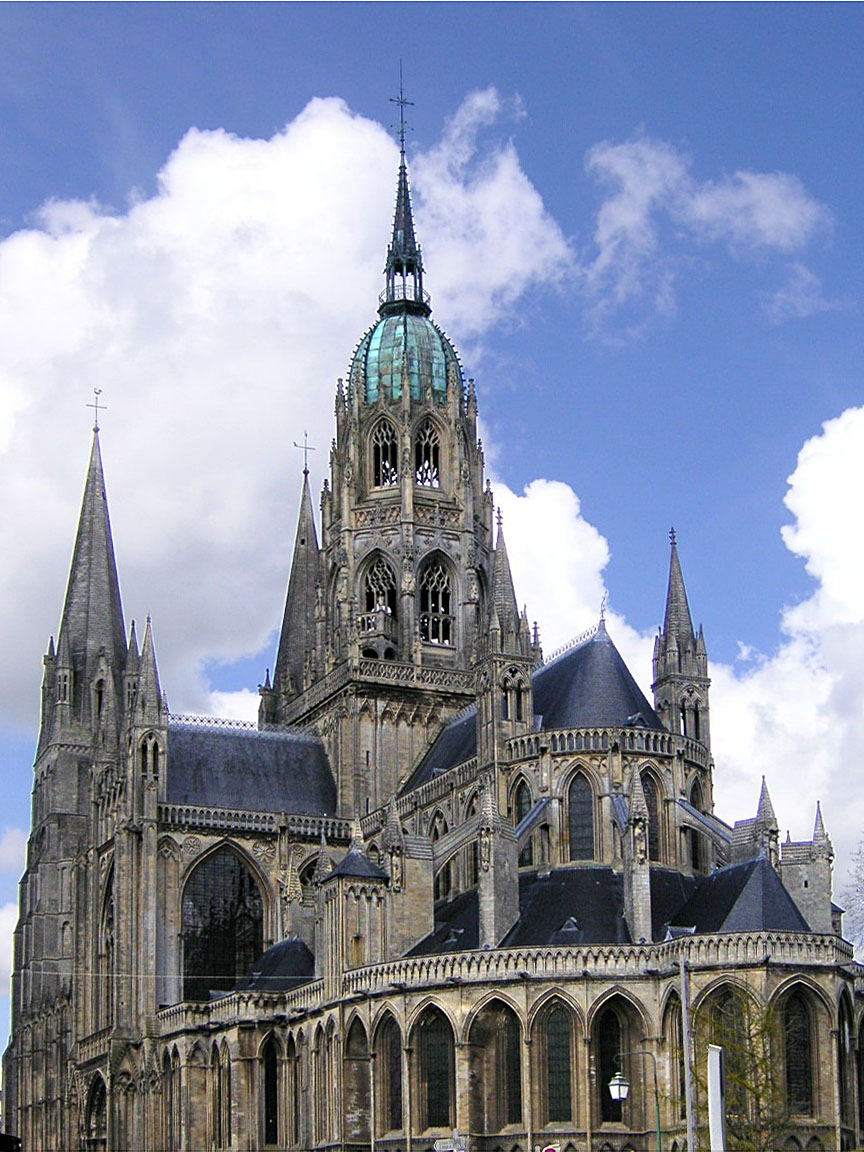


Historical background
Bayeux has medieval origins and developed around its cathedral and market. It became prominent in the 11th century and is best known for an embroidered narrative cloth created around that period. In the 20th century the town was notable during the liberation of northern France and preserved much of its historic centre when some nearby towns suffered greater destruction during World War II.
Notable sights and characteristics
- Bayeux Tapestry: The long embroidered frieze that depicts events leading to the Norman conquest of England is one of the town's principal attractions; information and displays about it can be found at local museums and visitor centres (see tapestry resources).
- Bayeux Cathedral: A fine example of Norman ecclesiastical architecture that shaped the town skyline for centuries.
- Historic streets and museums: Cobblestone lanes, municipal museums and conservation efforts present local medieval and modern history.
Culture, economy and uses
Tourism driven by heritage sites, local festivals and museums is a major part of Bayeux's economy, complemented by services, small industry and the surrounding agricultural landscape. The town is a base for visitors exploring the Normandy coast, heritage trails and memorials.
Administration and people
Bayeux is administered within the Calvados department and sits in the northwestern part of France. Inhabitants are commonly referred to as Bajocasses or Bayeusains. As a sous-préfecture, the town hosts sub‑departmental administrative offices and local institutions.
Distinctions and notable facts
The town's association with the famous embroidered narrative and its well-preserved medieval centre make it an important site for study of Norman art and architecture. Bayeux combines cultural heritage with contemporary regional life and remains a frequent destination for international visitors interested in medieval history and the events of the 20th century.
Questions and answers
Q: Where is Bayeux located?
A: Bayeux is located in the region Basse-Normandie in the Calvados department in the Northwest of France.
Q: What is Bayeux famous for?
A: Bayeux is famous for its tapestry, which is one of the oldest complete tapestries in the world.
Q: What are the inhabitants of Bayeux called?
A: The inhabitants of Bayeux are called Bajocasses ou Bayeusains.
Q: Is Bayeux a sous-préfecture?
A: Yes, Bayeux is a sous-préfecture of the Calvados department.
Related articles
Author
AlegsaOnline.com Bayeux: historic commune in Normandy Leandro Alegsa
URL: https://en.alegsaonline.com/art/9696
Sources
- bayeuxtapestry.org.uk : Bayeux Tapestry description
- linternaute.com : Caen
- cassini.ehess.fr : cassini.ehess.fr/cassini/fr/html/6_index.htm
- insee.fr : INSEE : Population depuis le recensement de 1962