
Temporal bone
The temporal bone is a complex skull bone at the sides and base of the cranium that houses ear structures, transmits cranial nerves and blood vessels, and varies in form across mammals.
The temporal bone is a paired bone located at the sides and base of the human skull, contributing to the cranial floor and the lateral walls of the head. It helps form part of the skull and contains openings and processes that protect and support the delicate organs of hearing and balance. Its complex shape reflects the multiple functions it performs: mechanical protection, attachment for muscles, and passageways for nerves and vessels.
Image gallery
10 Images

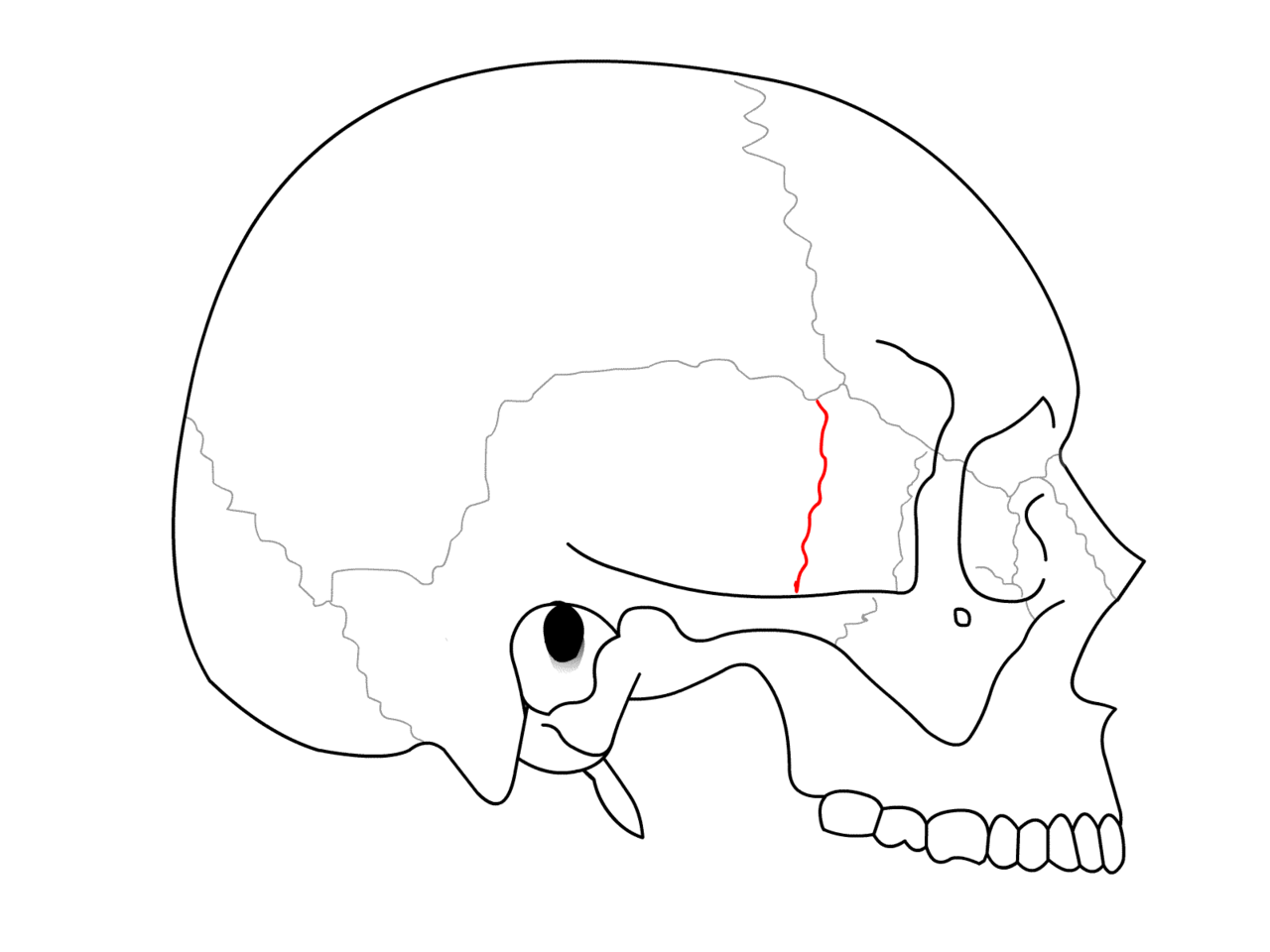


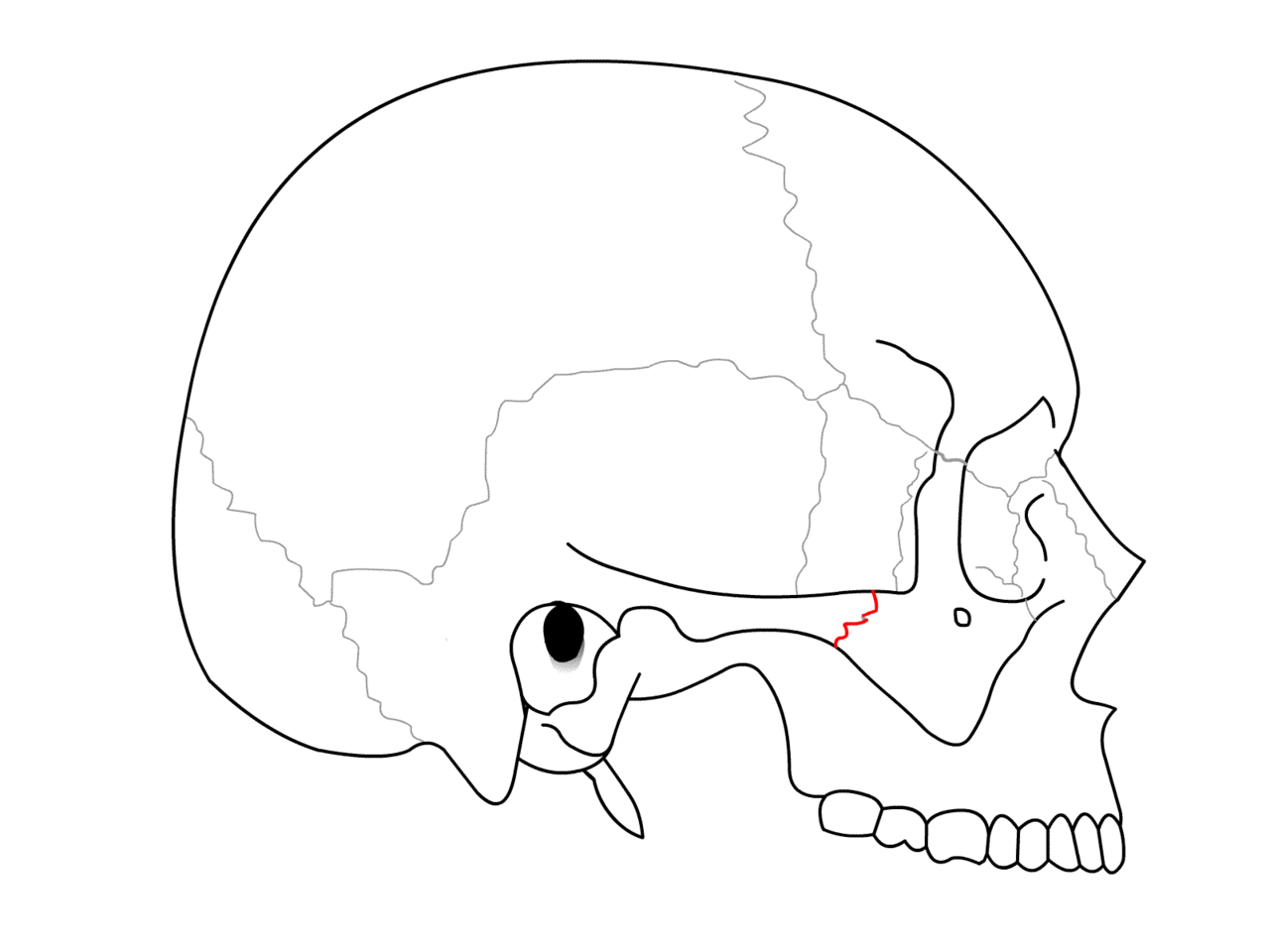


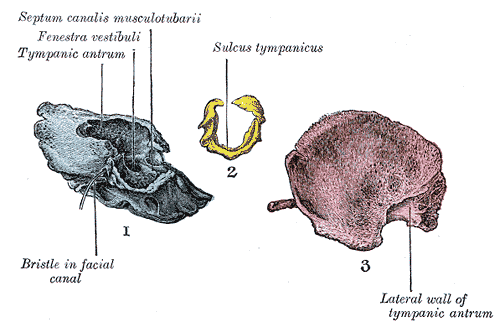
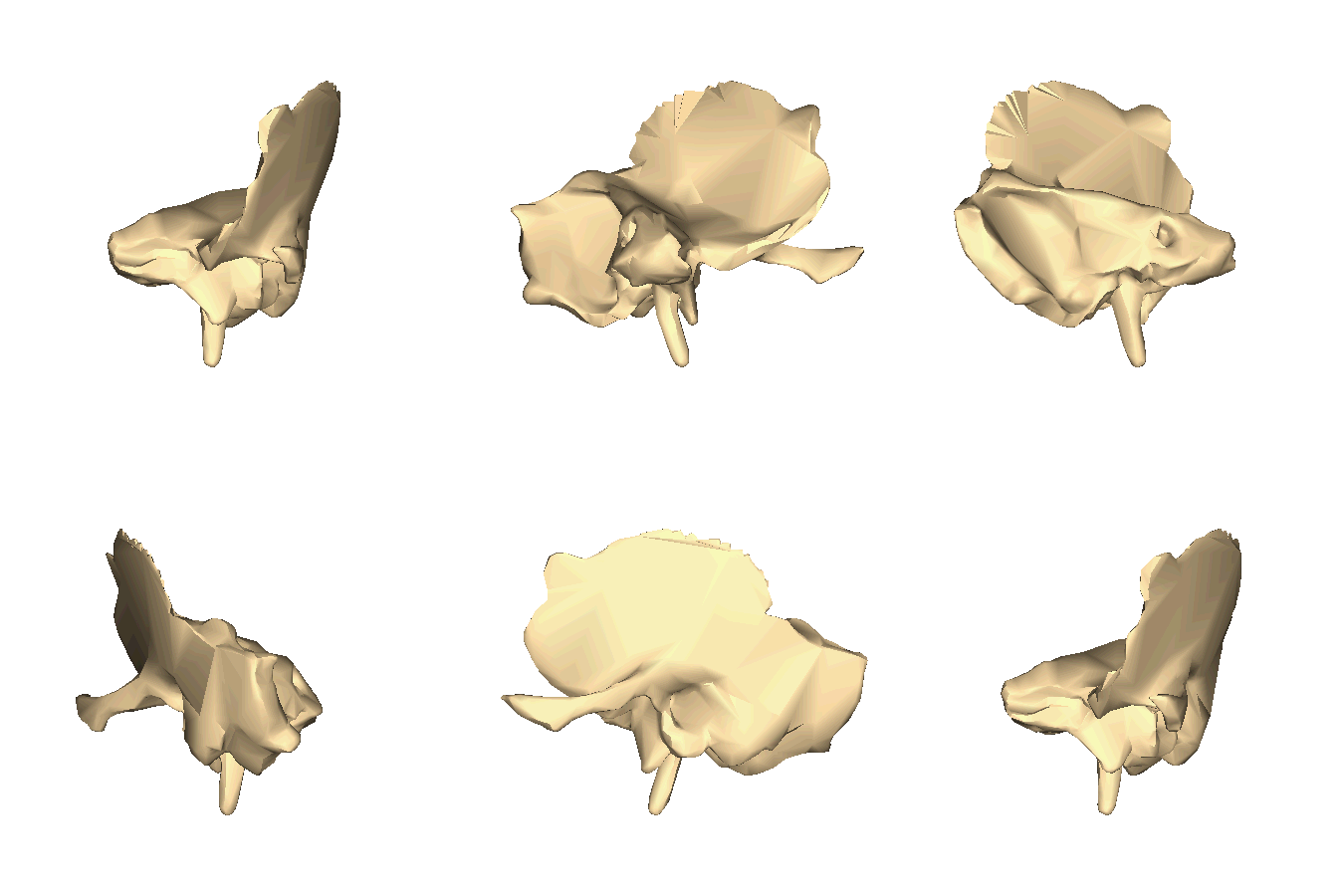
Anatomy and parts
Because the temporal bone is composed of several regions with distinct embryological origins, anatomists commonly describe it in parts rather than as a single homogeneous element. Key components include:
- Squamous part — a flat, thin portion that forms part of the cranial vault and provides an attachment for temporal muscles.
- Tympanic part — surrounds the external auditory canal and contributes to the walls of the middle ear.
- Mastoid part — a porous region behind the ear that contains air cells and serves as an insertion for neck muscles.
- Petrous part — a dense, pyramid-shaped portion that houses the inner ear structures and offers robust protection.
- Styloid process — a slender projection that serves as an anchor point for ligaments and muscles of the tongue and throat.
Functions
The temporal bone protects the organs of hearing and balance by enclosing the middle and inner ear cavities; the inner ear itself sits within the petrous part and is shielded from direct trauma. The bone also transmits the roots of several cranial nerves; branches of the facial and vestibulocochlear nerves pass through foramina and canals in the temporal region. In addition, major arterial and venous channels that supply and drain the brain travel adjacent to or through temporal bone structures, so the bone plays a role in guiding vascular pathways (inner ear, cranial nerves, blood vessels).
Development and evolutionary notes
During development the temporal bone forms from several ossification centers that later fuse. Across mammals the temporal region shows marked differences: some groups develop additional protective structures such as the auditory bulla that further enclose the middle ear, while other lineages present simpler arrangements. These variations reflect evolutionary adaptations in hearing and skull architecture.
Clinical relevance and notable conditions
Because of its contents and connections, the temporal bone is important in several clinical contexts. Fractures of the temporal bone can damage the inner ear or cranial nerves, producing hearing loss, vertigo, or facial weakness. Infections may spread into mastoid air cells (mastoiditis) and require surgical drainage. Otologic surgery frequently targets the tympanic and petrous regions when treating chronic ear disease or removing tumours.
Distinctions and interesting facts
Compared with simpler bones of other vertebrates, the mammalian temporal bone is notable for its subdivision and the degree to which it accommodates auditory specializations. The petrous part is one of the densest bones in the body because of the need to protect inner ear structures. Anatomical variants and developmentally persistent canals occasionally affect nerve or vessel courses and are important to recognize in imaging and surgery.
Questions and answers
Q: What is the function of the temporal bones?
A: The temporal bones protect the structures of the inner ear.
Q: What moves along the inside of the temporal bones?
A: The lower seven cranial nerves and the main blood vessels to and from the brain move along the inside of the temporal bones.
Q: Are temporal bones the same in all mammals?
A: No, the temporal bones are not the same in all mammals.
Q: How is the inner ear protected in placentals?
A: The inner ear is protected in placentals by a structure called the auditory bulla.
Q: Which part of the skull are the temporal bones located?
A: The temporal bones are located at the sides and base of the skull.
Q: In which mammals is the inner ear usually not protected?
A: The inner ear is usually not protected in marsupials.
Q: What is the significance of the protection offered by the temporal bones?
A: The temporal bone is significant as it protects the structures of the inner ear, which is an important part of the sensory system responsible for hearing and balance.
Related articles
Author
AlegsaOnline.com Temporal bone Leandro Alegsa
URL: https://en.alegsaonline.com/art/96933