
Adenoid (pharyngeal tonsil): anatomy, function, and clinical significance
Adenoids are lymphoid tissue at the back of the nasal cavity. This article covers their anatomy, role in immunity, common childhood problems, diagnosis, and treatment including adenoidectomy.
The adenoids, also known as the pharyngeal tonsil or nasopharyngeal tonsil, are a mass of lymphoid tissue located high in the throat behind the nasal cavity. They form part of the immune system's first line of defense against inhaled or swallowed pathogens in early life. Because they sit in the uppermost portion of the throat, they are not visible by looking into the mouth.
Image gallery
2 Images
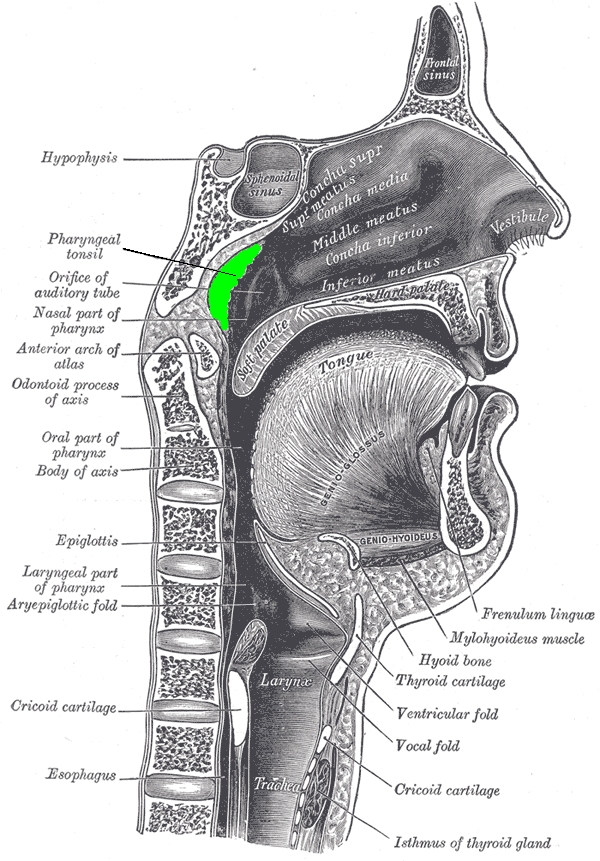
Structure and function
The adenoids are made of lymphatic tissue similar to other tonsils and are one component of Waldeyer's ring, a circle of lymphoid tissue that guards the entrance to the respiratory and digestive tracts. Their surface contains immune cells that sample bacteria and viruses entering through the nose or mouth, helping to stimulate protective immune responses. Adenoids are relatively large in infants and young children and typically shrink during adolescence.
Clinical importance and common problems
Because of their position in the upper airway, adenoids can influence breathing, middle ear function, and sleep. Enlargement or chronic infection of the adenoids may lead to:
- Nasal obstruction or persistent nasal discharge, often causing mouth breathing.
- Recurrent or chronic middle ear infections (otitis media) and temporary hearing loss due to blockage of the Eustachian tube.
- Snoring and sleep-disordered breathing, occasionally progressing to obstructive sleep apnea in children.
- Altered speech or dental changes when prolonged mouth breathing affects facial growth.
Diagnosis and treatment
Evaluation may include clinical examination, nasopharyngeal endoscopy, or radiographic imaging to assess adenoid size. Management begins with conservative measures—nasal steroids, saline irrigation, or antibiotics when infection is suspected. When symptoms are severe, persistent, or associated with complications such as repeated ear infections or significant sleep disturbance, surgical removal is considered.
Surgical removal of the adenoids is called adenoidectomy. The operation is commonly performed in children under general anesthesia and is often combined with removal of the palatine tonsils when indicated. Adenoidectomy can relieve nasal obstruction and reduce ear infections; in some cases adenoidal tissue may regrow, especially if removal is incomplete. Recovery is usually rapid, though risks include bleeding and, rarely, infection.
History and notable distinctions
The term "adenoid" reflects the gland-like appearance of the tissue. Unlike the palatine tonsils that are visible at the sides of the throat, adenoids are hidden in the nasopharynx. They are most active in early childhood, contributing to immune development, and normally diminish in size with age. Because of their central role in pediatric airway and ear disease, adenoids remain a frequent focus of evaluation in children with chronic nasal or ear problems. For further anatomical detail see the nasopharyngeal region at back of the nose (nasopharynx) and for descriptions of the junction between nasal and oral cavities see where the nose meets the mouth.
Questions and answers
Q: What are adenoids?
A: Adenoids are tissues found at the very back of the nose, at the point where the nose joins the mouth.
Q: What is another name for adenoids?
A: Adenoids are also known as pharyngeal tonsils or nasopharyngeal tonsils.
Q: What do adenoids do?
A: Adenoids help to trap bacteria and viruses that enter the body through the nose.
Q: What do adenoids look like in most children?
A: In most children, adenoids present as a soft bump on the top and back section of the nose's air passage.
Q: What is the surgical removal of adenoids called?
A: The surgical removal of adenoids is called adenoidectomy.
Q: Why might someone need to have their adenoids removed?
A: Adenoids may need to be removed if they are enlarged or if they become infected frequently, leading to breathing problems or other health issues.
Q: Where in the body are adenoids located?
A: Adenoids are located at the very back of the nose, in the part where it joins the mouth.
Related articles
Author
AlegsaOnline.com Adenoid (pharyngeal tonsil): anatomy, function, and clinical significance Leandro Alegsa
URL: https://en.alegsaonline.com/art/968