
Teasel (Dipsacus): description, ecology, uses and management
Teasel (genus Dipsacus) are tall, biennial herbaceous plants with prickly stems and distinctive seed heads; native to Eurasia and North Africa, valued for wildlife and historic textile use, sometimes invasive.
Overview
Teasel is the common name for plants in the genus Dipsacus, a small group of about fifteen species of herbaceous, biennial plants. Teasels are best known for their erect, spiny stems and distinctive globular flower heads that dry into seed-bearing cones. They are native to parts of Europe, Asia and northern Africa and have been introduced to other regions where some species have become naturalized or invasive.
Image gallery
10 Images




Description and life cycle
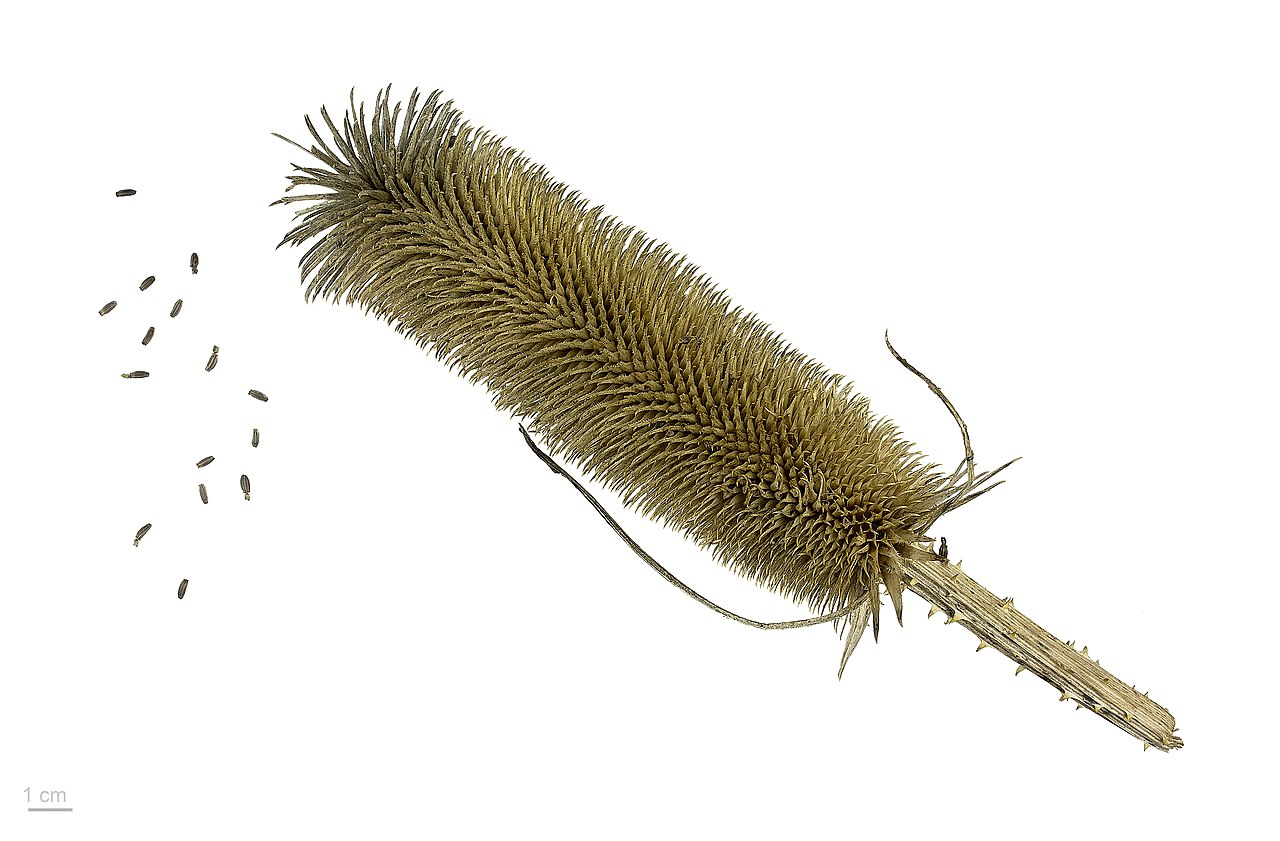
Most teasels grow between about one and two and a half metres tall and form a basal rosette of leaves in their first year. In the second year a flowering stem rises and produces opposite, often prickly leaves. Flowers are borne in dense heads at the stem tips; individual flowers may be purple, pink, lavender or whitish and open progressively around the head. After flowering the heads dry and persist as hard seedheads that hold numerous small seeds. The biennial habit—vegetative first year, flowering second year—is typical for the genus.
Ecology and wildlife value
Teasel seedheads are an important winter food source for seed-eating birds, especially finches. The structural form of the dried heads also provides perches and habitat features for insects and birds during colder months. In gardens and reserves they are often retained as part of wildlife-friendly planting schemes for this reason. Teasels flower in summer and can provide nectar for bees and butterflies while in bloom.
History, human uses and cultural notes
Historically, cultivated varieties of teasel were used in textile processing: the spiny heads were used to raise the nap on cloth, a process known as fulling. One cultivated form was selected and used specifically for that purpose. Dried teasel heads have also been used in floral arrangements and as decorative elements. Folk uses and herbal applications have been noted in traditional sources, but such uses are not part of mainstream medical practice.
Management, distribution and invasive behavior
Several teasel species have been introduced outside their native range. In some areas, notably parts of North America, teasels can spread aggressively and compete with native vegetation. Management typically focuses on preventing seed set by cutting or mowing before heads mature, hand-pulling rosettes, or using targeted herbicide applications where appropriate. Conservation-minded gardeners balance the plant's wildlife benefits against its potential to spread.
Distinctions and notable facts
- Teasels are not true thistles; they differ in flower and seedhead structure and belong historically to the family Dipsacaceae (sometimes included in broader family groupings).
- The characteristic dried seedheads are often used to attract goldfinches and similar birds to reserves and gardens.
- Identification of species within Dipsacus relies on flower-head shape, spine arrangement and leaf features; a few species are commonly encountered in cultivation or as weeds.
External resources
- Resource 1: General overview of teasel
- Resource 2: Genus Dipsacus details
- Resource 3: Species list and descriptions
- Resource 4: Flower morphology
- Resource 5: Biennial plant life cycles
- Resource 6: Native range — Europe
- Resource 7: Native range — Asia
- Resource 8: Native range — North Africa
- Resource 9: Stem and leaf structure
- Resource 10: Flower and inflorescence
- Resource 11: Purple-flowered varieties
- Resource 12: Pink and lavender forms
- Resource 13: Cultivation tips
- Resource 14: Seed biology and dispersal
- Resource 15: Wildlife value and birds
- Resource 16: Winter food sources for birds
- Resource 17: Gardening with teasel
- Resource 18: Use in nature reserves
- Resource 19: Introductions to North America
- Resource 20: Invasive plant guidance
- Resource 21: Native vs. non-native status
- Resource 22: Management and control practices
Questions and answers
Q: What is teasel?
A: Teasel is a plant in the genus Dipsacus.
Q: How many species of teasel are there?
A: There are about 15 different species of teasel.
Q: Where is teasel native to?
A: Teasel is native to Europe, Asia, and northern Africa.
Q: What is the height of teasel?
A: Teasel can grow to be 1 to 2.5 metres (3.3 to 8.2 ft) tall.
Q: What is the importance of teasel seeds?
A: Teasel seeds are important food in the winter for birds, especially the European Goldfinch.
Q: What is the reason for growing teasel in gardens and nature reserves?
A: Teasels are grown in gardens and nature reserves to attract European Goldfinches, as they feed on its seeds.
Q: Is teasel an invasive species in the United States?
A: Yes, teasel is an invasive species in the United States and takes over the land of native plant species.
Related articles
Author
AlegsaOnline.com Teasel (Dipsacus): description, ecology, uses and management Leandro Alegsa
URL: https://en.alegsaonline.com/art/96662
Sources
- invasivespeciesinfo.gov : "Invasive Species: Plantes - Common Teasel (Dispacus fullonum)"
- dnr.wi.gov : "Invasive Species - Common Teasel (Dipsacus fullonum subsp. sylvestris)"
- mdc.mo.gov : "Cut-leaved and Common Teasel"
- commons.wikimedia.org : Dipsacus