
Tate: Britain’s national collection and network of modern art galleries
Tate is the United Kingdom’s public museum organisation for British and international modern and contemporary art, operating four galleries, a shared collection, exhibitions, research and educational programmes.
Tate is the principal public institution for modern, contemporary and historical art in the United Kingdom. It administers a single, national collection that is distributed across a network of galleries, and combines permanent displays, temporary exhibitions, research, conservation and public programmes. The organisation is widely described as a national museum of British and modern art, operating through several complementary sites rather than a single building.
Image gallery
8 Images





Galleries and the collection
Tate comprises four publicly accessible galleries in England, each with a particular curatorial emphasis but sharing the unified Tate Collection. The sites work together to present historical surveys, thematic shows and major contemporary commissions.
- Tate Britain (the original Millbank site, opened in 1897) houses the national holdings of British art from the early modern period to the present and traces long developments in painting, sculpture and design.
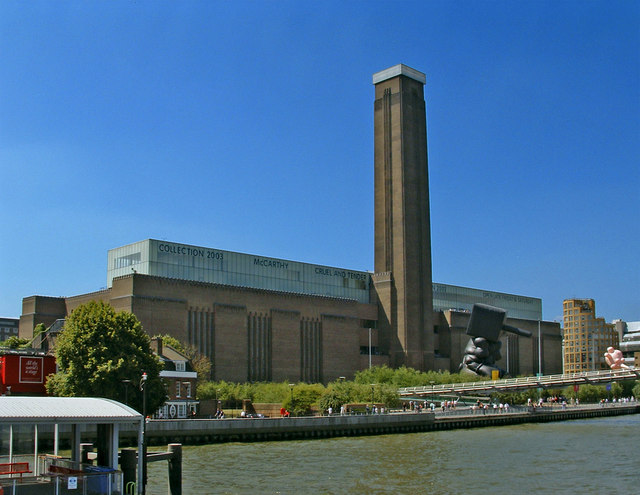
- Tate Modern (established as a separate institution in 2000) occupies a converted power station on the Thames and presents international and British modern and contemporary art from the twentieth century onward, with large-scale installations and rotating temporary exhibitions.
- Tate Liverpool (opened in 1988) extends Tate’s programme to the north-west, mounting major temporary exhibitions and displays drawn from the national collection in a regional context to reach different audiences in Liverpool.
- Tate St Ives (opened in 1993) focuses on modern and contemporary work by artists with a particular connection to the coastal area and its distinctive artistic traditions.
History and governance
The institution began in the late 19th century as the National Gallery of British Art and later became known as the Tate, in recognition of the benefactor after whom it is named. The first principal home was the Millbank building in London, which now forms the core of Tate Britain. Over the twentieth century the institution’s remit broadened to include modern and international art, and new sites were established to reflect those changes. Tate is administered by the Board of Trustees and often operates as a public body with a degree of independence; it is commonly described as a quango and the corporate entity is referred to as the Tate corporation.
Collections, research and conservation
The Tate Collection encompasses painting, sculpture, works on paper, photography, film, moving image and new media. Collections staff are responsible for acquisition policies, cataloguing, loans and long-term conservation. Tate undertakes research and conservation projects to care for works in the collection and to make them available for display and study. The organisation also supports scholarship through catalogues, exhibitions and digital resources.
Exhibitions and public programmes
Tate stages a wide range of exhibitions, from historical retrospectives to ambitious commissions by contemporary artists. Programming includes long-term displays drawn from the collection, major temporary exhibitions that may travel, and site-specific installations. Education and outreach form an important part of Tate’s public remit: the galleries provide learning programmes for schools, workshops for families, adult courses and resources for teachers and researchers. Digital initiatives, including the Tate online portal, extend access to collection images, essays and educational materials.
Events, awards and public profile
One of Tate’s most publicised activities is the annual Turner Prize exhibition and award, held at Tate Britain in recent years; it highlights contemporary practice and stimulates debate about art and public culture. Tate’s exhibitions and acquisitions often attract national and international attention, and the institution plays a central role in cultural partnerships and loans to other museums and galleries.
Criticism, debate and adaptation
As a major public cultural body, Tate has been the subject of discussion around topics such as collecting policy, representation, sponsorship and the interpretation of difficult historical subjects. The organisation continually reviews display strategies, curatorial priorities and engagement practices in response to public debate and scholarly research, seeking to balance canonical narratives of the past with efforts to present diverse artistic voices.
Visiting and further information
All four galleries provide visitor services, special exhibitions and learning activities; practical details are available via the institution’s central information services and individual gallery pages. For those researching the collection or planning a visit, Tate’s online resources and on-site reference services offer access to catalogues, images and contextual material. The galleries are major nodes of public culture, combining historical holdings and contemporary practice to serve audiences across the country and beyond.
Note: for official information about the galleries, programmes and the collection consult the institution’s published resources and the central online portal maintained by Tate.
Questions and answers
Q: What is the Tate?
A: The Tate is the United Kingdom's national museum of British and Modern Art. It is a group of four art galleries in England, including Tate Britain, Tate Liverpool, Tate St Ives, and Tate Modern. There is also a website called Tate Online.
Q: How was the gallery started?
A: The gallery was started in 1897 as the National Gallery of British Art. When its role changed to include modern art it was renamed after Henry Tate as the "Tate Gallery". It was first located at Millbank in London on the Embankment.
Q: What are the four museums that make up the Tate?
A: The four museums that make up the Tate are Tate Britain (which displays British art from 1500 to present day), Tate Modern (which houses British and International Modern and Contemporary art from 1900 to present day), Tate Liverpool (which has same purpose as Tates Modern but on a smaller scale), and finally,Tate St Ives which displays modern and contemporary art by artists with a connection to local area. All four museums share one collection -the "Tate Collection".
Q: What event does the Turner Prize take place at?
A: The annual Turner Prize takes place at Tate Britain.
Q: Who administers the quango for this organization?
A: The quango for this organization is administered by "The Board of Trustees of the Tates Gallery".
Q: Where did it start out originally?
A: Originally, it started out at Millbank in London on an embankment.
Q:What year did it become known as “The Board Of Trustees Of The Tates Gallery” ? A:It became known as “The Board Of Trustees Of The Tates Gallery” in 1897 when it was first established .
Related articles
Author
AlegsaOnline.com Tate: Britain’s national collection and network of modern art galleries Leandro Alegsa
URL: https://en.alegsaonline.com/art/96500