
Tarn (river)
The Tarn is a river in southern France that rises in the Massif Central and joins the Garonne; known for the Gorges du Tarn, historic towns such as Albi, and its role in regional agriculture and tourism.
The Tarn is a major river in southern France. It rises in the highlands of the Massif Central and flows generally westward before joining the Garonne. The river is associated with two French administrative areas whose names derive from it: the department of Tarn and the department of Tarn-et-Garonne. Its approximate coordinates near a representative point are given for orientation.
Image gallery
10 Images

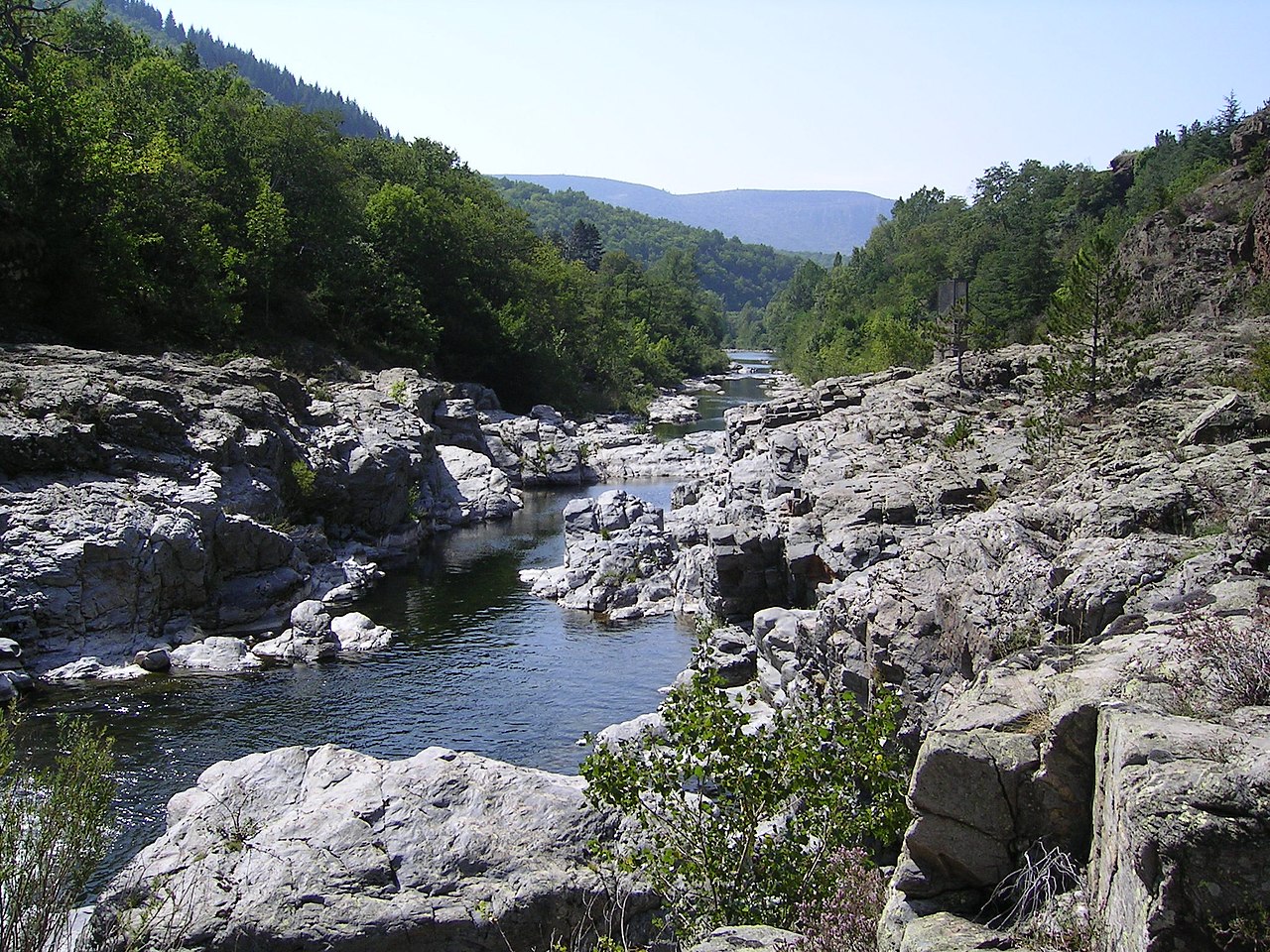


Course and geography
The Tarn begins in the Cévennes section of the Massif Central and travels across varied terrain, cutting deep limestone gorges in places and widening into alluvial valleys in others. Its length is roughly 380 kilometres, and along its course it drains a mix of upland and agricultural landscapes. Karst plateaus and the celebrated Gorges du Tarn are important physical features where the river has carved narrow, scenic canyons that attract visitors and shape local microclimates.
Principal towns and landscape
The river passes several notable towns and historic sites. Albi, with its medieval centre and cathedral, sits beside the Tarn and has a long cultural association with the waterway. Other riverside settlements, including Gaillac and Montauban, developed where the river supported trade, milling and agriculture. Vineyards, pastures and woodland characterize much of the Tarn valley outside the steep gorges.
Human uses and ecology
Throughout history the Tarn has been used for water supply, irrigation and local transport; its fast sections powered mills, while calmer reaches supported small-scale navigation and fishing. In the 20th century hydroelectric installations and reservoirs were constructed for power and flood control. The river supports freshwater habitats with fish and aquatic invertebrates, and its banks host diverse flora. Conservation and river management balance tourism, agriculture and flood risk mitigation.
Recreation and significance
The Gorges du Tarn are a major destination for canoeing, kayaking, rock climbing and hiking, drawing domestic and international visitors. The river corridor also underpins local agriculture—especially vineyards around Gaillac—and contributes to regional identity. The Tarn’s scenic and cultural values have long shaped settlement patterns and remain central to the heritage of the surrounding departments.
See maps and official resources for precise measurements, seasonal flow data and protected-area designations: the linked placeholders point to general reference locations and administrative pages for further reading.
Questions and answers
Q: Where is the Tarn river located?
A: The Tarn river is located in southern France.
Q: What are the coordinates for the Tarn river?
A: The coordinates for the Tarn river are 44°05′11″N 3°48′51″E.
Q: What river is the Tarn a tributary of?
A: The Tarn is a tributary of the Garonne river.
Q: What departments are named after the Tarn river?
A: The Tarn and Tarn-et-Garonne departments are named after the Tarn river.
Q: What is the Tarn river's significance?
A: The Tarn river is significant enough that two departments in France are named after it.
Q: How does the Tarn river impact transportation in southern France?
A: It's unclear how the Tarn river may impact transportation in southern France.
Q: Are there any notable landmarks or attractions along the Tarn river?
A: The text did not provide information about notable landmarks or attractions along the Tarn river.
Related articles
Author
AlegsaOnline.com Tarn (river) Leandro Alegsa
URL: https://en.alegsaonline.com/art/96406
Sources
- services.sandre.eaufrance.fr : "Le Tarn (O---0100)"
- hydro.eaufrance.fr : "Le Tarn à Moissac"
- geoportail.gouv.fr : "Source du Tarn"
- geoportail.gouv.fr : "Confluence du Tarn"
- services.sandre.eaufrance.fr : "Le Tarnon (O30-0400)"
- services.sandre.eaufrance.fr : "La Jonte (O31-0400)"
- services.sandre.eaufrance.fr : "La Dourbie (O33-0400)"
- services.sandre.eaufrance.fr : "Le Cernon (O34-0400)"
- services.sandre.eaufrance.fr : "Le Dourdou de Camarès (O35-0400)"
- services.sandre.eaufrance.fr : "Le Rance (O37-0400)"
- services.sandre.eaufrance.fr : "L'Agout (O4--0250)"
- services.sandre.eaufrance.fr : "La Muze (O34-0430)"
- services.sandre.eaufrance.fr : "L'Alrance (O36-0400)"
- services.sandre.eaufrance.fr : "Le Tescou (O49-0430)"
- services.sandre.eaufrance.fr : "L'Aveyron (O5--0250)"