
Taranto — Italian port city in Apulia
Taranto is a coastal city in Apulia, southern Italy. Capital of the Province of Taranto, it is known for its strategic port, ancient Greek origins, archaeological heritage and a mixed maritime–industrial economy.
Overview
Taranto is a coastal city in the Apulia region of Italy. It is the capital of the Province of Taranto and has a population of about 201,349. The city hosts a large commercial and military port and serves as a regional hub for maritime trade, fishing and industry.
Image gallery
10 Images




Geography and layout
Taranto occupies a strategic position on a gulf of the Ionian Sea and is commonly described as the "city of the two seas". The urban core includes an island historic centre between an outer basin (Mar Grande) and an inner lagoon (Mar Piccolo), connected to the mainland by bridges and causeways. Sheltered waters, harbours and coastal plains shape local transport, fisheries and settlement patterns.
History
Its origins lie in antiquity: Taranto began as the Greek colony of Taras and became one of the most important cities of Magna Graecia. Over centuries it passed into Roman control and later experienced medieval and early modern transformations under various rulers. Architectural and archaeological remains — from ancient inscriptions to fortified walls and an Aragonese castle — reflect a long sequence of cultural influences and commercial links across the Mediterranean.
Economy and infrastructure
Maritime functions dominate the modern economy. The port supports commercial shipping, a naval presence, fishing fleets and ship-repair activities. Taranto has also hosted large industrial enterprises, notably heavy metallurgy and chemical works, which have been important employers while prompting public discussion about environmental and health effects. Rail and road connections link the city to other centres in Apulia and southern Italy.
Culture, landmarks and cuisine
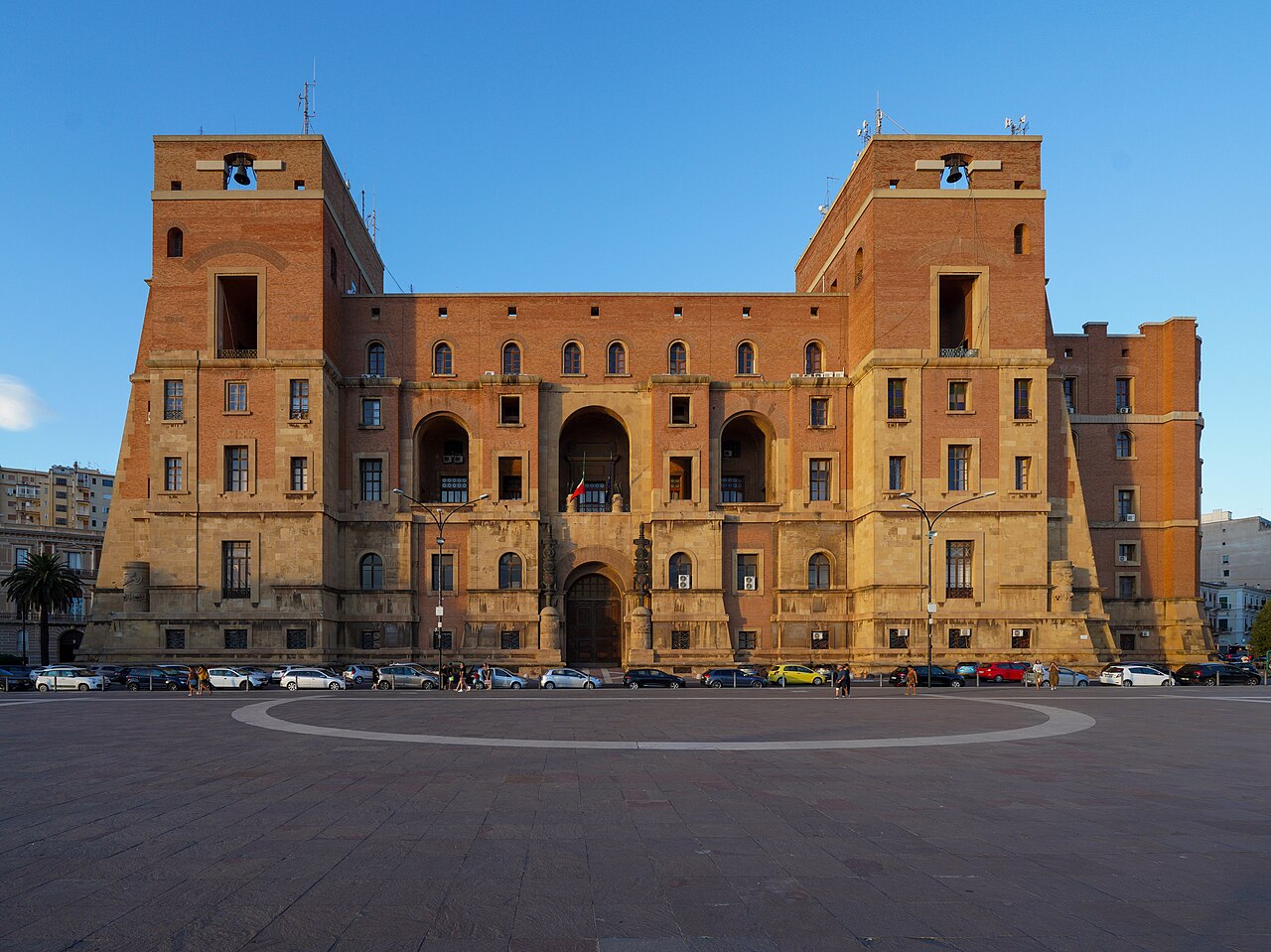
The city offers a compact historic centre, notable monuments and museums which preserve its Greek and Roman past. Local culture mixes Mediterranean culinary traditions (emphasizing fresh seafood) with folk music and dance typical of the region. Important sites include museums, churches and defensive architecture.
- Castello Aragonese and remnants of defensive walls
- Cathedral of San Cataldo
- National Archaeological Museum with Greek and Roman artifacts
- Historic island quarter with narrow streets and piazzas
Notable facts
Taranto's strategic port and its layered archaeological record make it significant both economically and historically. Recent decades have seen efforts toward urban renewal, pollution remediation and cultural promotion as the city balances its maritime-industrial role with heritage conservation and quality of life initiatives.
City breakdown
Taranto is divided into six municipal districts:
| No. | Municipality | Area | Population | Density | Neighbourhood (Rioni) |
| I | Paolo VI | 55,05 | 40.254 | 731 | Paolo VI |
| II | Tamburi - Lido Azzurro | 37,85 | 18.300 | 483 | Tamburi, Croce, Lido Azzurro |
| III | Città Vecchia - Borgo | 2,36 | 2.745 | 1163 | Città Vecchia, Borgo |
| IV | Tre Carrare - Solito | 15,93 | 48.934 | 560 | Tre Carrare-Battisti, Solito, Corvisea |
| V | Montegranaro - Salinella | 16,34 | 48.123 | 2333 | Salinella, Italia-Montegranaro |
| VI | Talsano - San Vito - Lama | 85,34 | 36.756 | 407 | Talsano, San Vito, Lama |
|
| Taranto | 217,87 | 195.112 | 656 |

Mythology
Related articles
Author
AlegsaOnline.com Taranto — Italian port city in Apulia Leandro Alegsa
URL: https://en.alegsaonline.com/art/96358