
Tannhäuser — opera by Richard Wagner
Three-act opera by Richard Wagner (premiered 1845). A medieval legend transformed into a drama of sacred and profane love, famous for the Venusberg scene and a controversial 1861 Paris production.
Overview
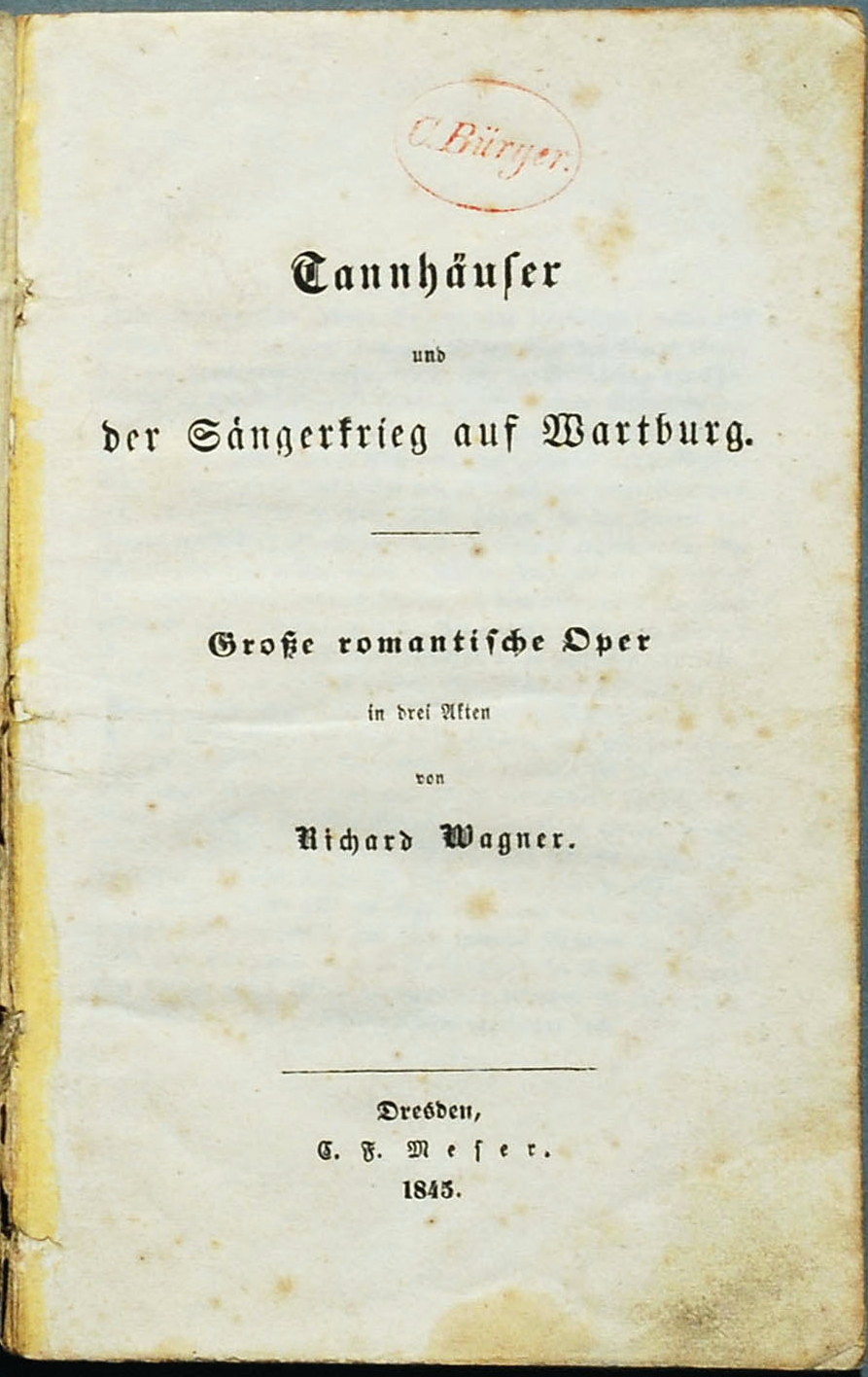
Tannhäuser und der Sängerkrieg auf Wartburg is a three-act opera composed and written by Richard Wagner. Created between the early 1840s and its first staging in 1845, the work adapts medieval legend and courtly song into a psychological drama about a knight-poet torn between sensual indulgence and spiritual redemption. The premiere at the Dresden Royal Opera established the piece in the German repertory and helped make Wagner a prominent figure in 19th-century music.
Image gallery
9 Images



Composition, versions and the Paris controversy
Wagner revised Tannhäuser several times after the Dresden premiere, producing different versions that are still discussed by scholars and performers. The most famous and tumultuous revision was prepared for a 1861 presentation at the Paris Opéra. That staging met fierce opposition from parts of the Paris musical establishment, in particular because of how the work was adapted to satisfy Parisian expectations for ballet and audience customs; protests forced the production to be withdrawn and left a lasting impression on the opera's reception outside Germany. Despite setbacks abroad, the opera remained well established in Germany.
Main roles and dramatic outline
- Tannhäuser — a wandering knight and singer (tenor)
- Elisabeth — a noblewoman, emblem of purity (soprano)
- Wolfram von Eschenbach — a knight and rival, voice of moral reflection (baritone)
- Venus — goddess of love, ruler of the Venusberg (mezzo-soprano or soprano)
- Landgrave Hermann and various singers and pilgrims
The drama moves from the sensual, otherworldly Venusberg—where Tannhäuser succumbs to carnal pleasure—to the Wartburg court, scene of a poetic contest where ideals of honor and devotional love are upheld and challenged. The protagonist's subsequent pilgrimage and quest for forgiveness form the opera's moral core, contrasting sacred devotion with worldly temptation.
Musical highlights and structure
Musically, Tannhäuser combines lyrical arias, choruses, and large orchestral episodes. Notable moments frequently cited in performance history include the Venusberg music, which evokes sensual, exotic atmosphere; the Wartburg song contest, with its nods to medieval minstrelsy; and Wolfram's serene invocation to the evening star, often performed in concert. Wagner's orchestration and use of leitmotivic linkage here point toward the music-drama techniques he developed more fully in later works.
Performance history and legacy
After its success in Dresden the opera reached international stages in the mid-19th century. It was among the first of Wagner's works presented in the United States, and it figured in the early seasons of major houses. A notable American milestone was its place in opening seasons at important venues, including the Metropolitan Opera; productions in the United States helped secure Tannhäuser's place in international repertory. The Paris episode delayed regular French performances for decades, and full acceptance there did not arrive until much later, after the initial controversy in Paris had subsided and tastes had evolved in France.
Today Tannhäuser is regarded as a transitional masterpiece in Wagner's output: rooted in Romantic fascination with medieval legend yet forward-looking in its dramatic integration of music and narrative. Productions continue to explore its moral tensions and rich orchestral palette, attracting both traditional stagings and modern reinterpretations in capitals such as New York City and beyond.
Questions and answers
Q: Who composed Tannhäuser und der Sängerkrieg auf Wartburg?
A: It was composed by Richard Wagner.
Q: How many acts does Tannhäuser und der Sängerkrieg auf Wartburg have?
A: It has three acts.
Q: When did Wagner work on Tannhäuser und der Sängerkrieg auf Wartburg?
A: He worked on it between 1842 and 1845.
Q: When was Tannhäuser und der Sängerkrieg auf Wartburg first performed and where?
A: Tannhäuser und der Sängerkrieg auf Wartburg was first performed at the Dresden Royal Opera on 19 October 1845.
Q: Where was Tannhäuser und der Sängerkrieg auf Wartburg first performed in the United States?
A: It was first performed in the United States at the Opera House of the Academy of Music in New York City on 4 April 1859.
Q: Why did Wagner withdraw Tannhäuser from the Paris Opéra?
A: Anti-Wagner riots broke out and he failed to revise the work to the audience's liking.
Q: When did Tannhäuser und der Sängerkrieg auf Wartburg open the second season of the Metropolitan Opera in New York City?
A: It opened the second season of the Metropolitan Opera in New York City in November 1884.
Related articles
Author
AlegsaOnline.com Tannhäuser — opera by Richard Wagner Leandro Alegsa
URL: https://en.alegsaonline.com/art/96305