
Talking Heads: an overview of the American rock band and their influence
Talking Heads, formed in New York City in the mid-1970s, fused punk, art rock, funk, dance and world music with avant-garde performance—notable for albums, films and enduring influence.
Overview
Talking Heads were an American rock band formed in New York City that rose to prominence in the late 1970s. Originating in the downtown scene, they combined literate songwriting with rhythmic invention and theatrical stagecraft. Although rooted in the United States, their sound reached international audiences and influenced many subsequent alternative and pop artists.
Image gallery
7 Images




Musical style and influences
The group is known for blending diverse elements: punk energy and DIY ethos, the exploratory textures of art rock, syncopated grooves of funk, club-friendly dance sensibilities and rhythmic ideas borrowed from world music. They often incorporated avant-garde approaches to arrangement and performance, using repetition, polyrhythms and nontraditional song structures to create a distinctive, tense-yet-danceable sound.
History and key works
Formed in the mid-1970s by David Byrne, Tina Weymouth and Chris Frantz (later joined by Jerry Harrison), the band released a string of influential albums. Early records captured nervous, minimalist songs; later work expanded into dense, layered productions. Notable albums include their late-1970s/early-1980s releases that explored African-influenced rhythms and studio experimentation, and they collaborated with producers and artists to push their sonic palette. Their concert film and live stage productions brought a visual intensity that matched their studio ambition.
Members and notable songs
- Core personnel: David Byrne, Tina Weymouth, Chris Frantz, Jerry Harrison.
- Frequently cited songs: "Psycho Killer," "Once in a Lifetime," "Burning Down the House," "Life During Wartime."
- Important recordings: early minimalist work, then rhythm-forward albums that integrated polyrhythmic and worldbeat influences.
Live performance and visual presentation
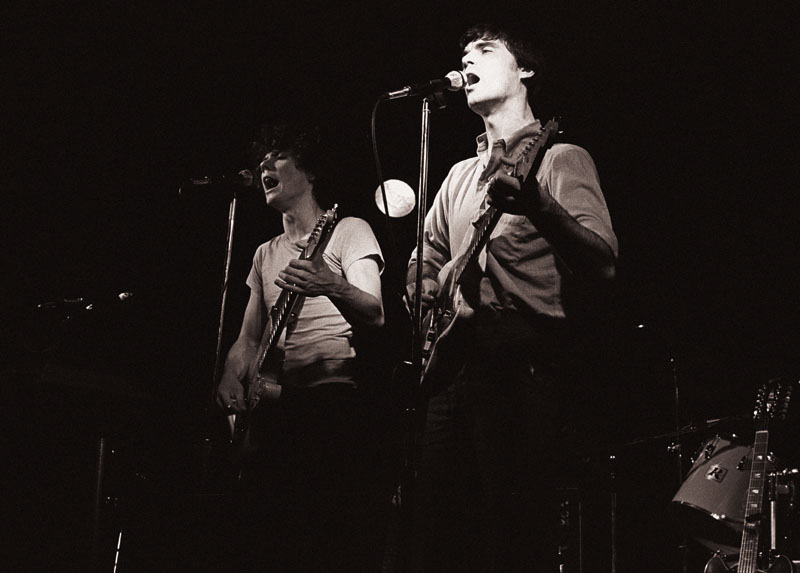
The band's concerts were notable for their choreography, lighting and stage personas. Lead singer David Byrne's distinctive delivery and onstage manner — sometimes described as anxious or detached — became part of the group's identity. A landmark live film captured their ability to translate studio complexity into energetic performances and introduced their aesthetic to a wider audience.
Legacy and influence
Talking Heads are widely regarded as pioneers who helped open rock music to broader rhythmic and textural possibilities. Their fusion of styles encouraged other musicians to experiment with global rhythms, electronic production and artful presentation. They remain a reference point for artists in indie rock, alternative pop and dance-oriented music, and their recordings and performances continue to be studied for their inventive arrangements and cultural impact.
Further reading and resources: band overview, geographic roots, era context, punk influences, art rock connections, funk grooves, dance elements, world music sources, avant-garde aspects.
Questions and answers
Q: What is Talking Heads?
A: Talking Heads is a rock band from the United States that became popular in the late 1970s.
Q: What was Talking Heads' influence on other musical groups?
A: Talking Heads influenced other musical groups by combining various sounds such as punk, art rock, funk, dance, and world music with an avant-garde style.
Q: Who is David Byrne?
A: David Byrne is a musician and the lead singer of Talking Heads.
Q: How did David Byrne sing on stage?
A: David Byrne sang on stage in an anxious way.
Q: What genres of music did Talking Heads combine?
A: Talking Heads combined the sounds of punk, art rock, funk, dance, and world music.
Q: When did Talking Heads become popular?
A: Talking Heads became popular in the late 1970s.
Q: What is the style of Talking Heads?
A: The style of Talking Heads is avant-garde.
Related articles
Author
AlegsaOnline.com Talking Heads: an overview of the American rock band and their influence Leandro Alegsa
URL: https://en.alegsaonline.com/art/96138
Sources
- allmusic.com : "Talking Heads - Biography"
- nytimes.com : "MUSIC; They're Recording, but Are They Artists?"
- kayosproductions.com : "Head Games: 'Talking Heads: Chronology'"
- rockhall.com : "Archived copy"
- vh1.com : "The Greatest - Ep. 215"
- rollingstone.com : "100 Greatest Artists of All Time"