
Battle royal (professional wrestling)
A multi-competitor professional wrestling match in which many wrestlers enter at once (or in intervals) and are eliminated until a single winner remains.
Overview
A professional wrestling battle royal (sometimes spelled "battle royale") is a multi-competitor contest in which a large group of wrestlers oppose one another until only a single participant remains. The match is used to showcase many performers at once, to resolve overcrowded rosters, or to determine a challenger for a title. Unlike standard one-on-one matches, a battle royal emphasizes survival and opportunistic tactics as much as in-ring technique.
Image gallery
4 Images

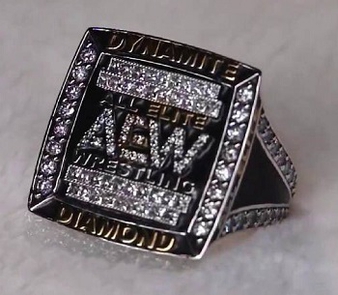

Basic rules and common mechanics
The most common elimination method in a battle royal is ejection from the ring: a wrestler is eliminated when they are thrown or forced over the top rope and both feet touch the arena floor. Other elimination methods are used in different versions — for example, some matches allow elimination by pinfall or submission, or by leaving the ring under any rope. Matches typically begin with all competitors in the ring simultaneously, though timed-entry variants exist.
- Typical field sizes vary widely; some promotions use 20, 25, or 30 entrants.
- Entrant order may be simultaneous or staggered (timed entries) depending on the format.
- Tag-team or specialty battle royals introduce team-based elimination rules.
Variations
Promotions have developed many variations on the basic concept. The best-known modification staggers entrants at regular intervals, creating shifting alliances and surprise comebacks. Other variations include team-based battle royals, last-person-standing adaptations, or matches where eliminated competitors remain at ringside with defined roles. These permutations preserve the core principle — multiple competitors eliminated until a single winner — while changing pacing and strategy.
History and notable examples
The battle royal has long been a fixture of professional wrestling cards around the world, used since the sport’s early decades to manage large numbers of performers and to provide an entertaining, chaotic attraction. A prominent modern example is the annual Royal Rumble produced by World Wrestling Entertainment; that event uses timed entries and has become a recurring highlight on many promotions' calendars. Smaller promotions and regional circuits also use standard over-the-top-rope battle royals to elevate emerging talent.
Importance and tactical considerations
Strategically, battle royals reward awareness, stamina, and ring positioning. Competitors often form temporary coalitions to eliminate larger threats, then turn on each other as the field narrows. For audiences, the format offers unpredictable outcomes and opportunities for surprise returns or debut appearances. Promoters use battle royals to advance storylines, set up title matches, or provide a spectacle involving many roster members at once.
For further reading about match types and how promotions present these events, see general resources on match formats and examples such as the match type overview and coverage of specific events like the Royal Rumble. Terminology and plural forms are discussed in guides to wrestling vocabulary at battle royals.
Questions and answers
Q: What is a battle royal in professional wrestling?
A: A battle royal is a match type in which many wrestlers fight against each other at the same time and wrestlers are eliminated until only one is left.
Q: How many wrestlers usually participate in a battle royal?
A: Usually a battle royal begins with 20 wrestlers in the ring.
Q: How are wrestlers eliminated in a battle royal?
A: Wrestlers are eliminated by being pushed out of the ring, over the top rope, and having both feet touch the floor outside the ring.
Q: What happens to the wrestler who is the last one standing in a battle royal?
A: The wrestler who is the last one standing is declared the winner.
Q: What is a popular example of a battle royal in professional wrestling?
A: A popular example of a battle royal is the Royal Rumble match that is put on yearly in January by World Wrestling Entertainment.
Q: Are battles royal always won by one wrestler?
A: Yes, battles royal are won by only one wrestler who is the last one standing.
Q: Is there a specific time limit for battles royal?
A: There is no specific time limit for battles royal, as they end when only one wrestler remains.
Related articles
Author
AlegsaOnline.com Battle royal (professional wrestling) Leandro Alegsa
URL: https://en.alegsaonline.com/art/9596