
Tabebuia — trumpet trees of the Americas
Tabebuia is a group of tropical American flowering trees in the family Bignoniaceae, noted for large trumpet-shaped blossoms, durable timber and ornamental use. Modern studies have split many species into related genera.
Overview
Tabebuia is the historical name applied to a group of tropical and subtropical trees and shrubs in the family Bignoniaceae, commonly called trumpet trees. They are best known for their conspicuous, trumpet-shaped flowers that appear in seasonal displays and for timber used in construction and furniture. Traditional treatments included many species across the Americas; recent botanical research has divided that assemblage among several genera.

Image gallery
10 Images


Characteristics
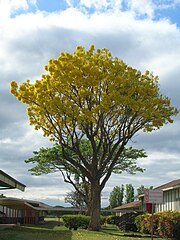
Plants treated as Tabebuia share several recognizable features: opposite, pinnate leaves; large, tubular flowers with five lobes; dry capsule fruits that release winged seeds; and a tendency in some species to drop leaves before mass flowering. Flower colors range from white and pink to yellow, purple and deep rose.
Distribution and habitat
These trees are native from Mexico and the Caribbean through Central America to South America. They occupy diverse habitats from dry seasonal woodlands to humid forest edges and are widely cultivated as street and garden trees in suitable climates worldwide.

Taxonomy and history
Historically Tabebuia was treated as a single large genus. Molecular and anatomical studies showed this group to be polyphyletic, and many species have been reassigned to related genera such as Handroanthus and Roseodendron. The name survives in some species names and in horticultural usage, but botanical circumscription continues to be refined.
Uses and importance
- Ornamental: valued for spectacular flowering displays.
- Timber: some species produce dense, durable wood used locally and commercially.
- Cultural/medicinal: inner bark (lapacho or pau d'arco) has traditional uses; scientific support for medicinal claims is limited and cautioned.
Notable distinctions
Closely related genera differ in wood anatomy, flower and seed characters and genetic markers; these differences underpin modern reclassification. In everyday language, the term "tabebuia" or regional names like "ipê" and "pau d'arco" remain in wide use for several related species regardless of current scientific names.
Questions and answers
Q: What is Tabebuia?
A: Tabebuia is a polyphyletic assemblage comprising 66 species.
Q: What is the typus of T cassioides?
A: The typus of T cassioides is Handroanthus (sive T impetiginosa).
Q: What species does the text mention?
A: The text mentions red lapacho T impetigosa and Roseodendron.
Q: How many species are in the Tabebuia assemblage?
A: There are 66 species in the Tabebuia assemblage.
Q: Is Handroanthus impetiginosus mentioned in the text?
A: Yes, Handroanthus impetiginosus is mentioned in the text as being considered as an example of red lapacho T impetigosa.
Q: Who considers Handroanthus impetiginosus to be an example of red lapacho T impetigosa?
A: Mattos considers Handroanthus impetiginosus to be an example of red lapacho T impetigosa.
Q:What other plant genus is mentioned in the text? A:Roseodendron is also mentioned in the text.
Related articles
Author
AlegsaOnline.com Tabebuia — trumpet trees of the Americas Leandro Alegsa
URL: https://en.alegsaonline.com/art/95791
Sources
- species.wikimedia.org : Tabebuia
- apps.kew.org : "World Checklist of Selected Plant Families"
- researchgate.net : Evolution of a charismatic Neotropical clade Molecular Phylogeny of Tabeuia s.l. Crescentieae and allied genera Bignoniaceae
- arbolesornamentales.es : arbolesornamentales.es
- ayto-murcia.es : ayto-murcia.es