
Battle of the Kasserine Pass (February 1943)
A tactical engagement in Tunisia during World War II that marked the first large-scale clash between American and Axis forces, exposed weaknesses in U.S. organization, and prompted major Allied changes in command and training.
Overview
The Battle of the Kasserine Pass was fought in Tunisia from 19 to 24 February 1943 during the Tunisia Campaign of World War II. It is widely regarded as the first major encounter between American ground forces and German-led Axis troops in the European theater. The fighting took place around a series of mountain passes and plains near Kasserine and Faid, areas that shaped the tactical options available to both sides.
Image gallery
9 Images



Forces and commanders
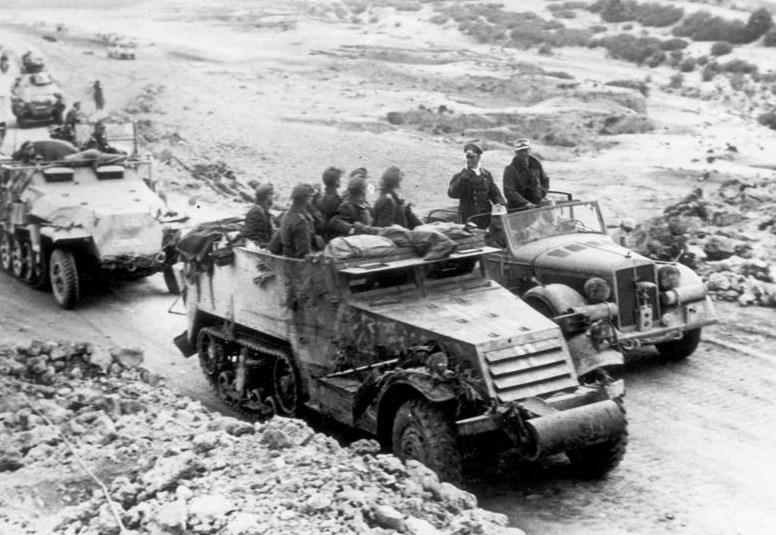
The Axis attack relied on experienced German and Italian formations under the operational direction of Erwin Rommel and elements of the Afrika Korps. German units included components associated with the 5th Panzer Army and Italian armored and infantry divisions. Axis forces are often collectively described as Axis troops in contemporary accounts. Allied defenders comprised primarily inexperienced American soldiers of the II Corps and units from the United States Army, alongside British formations of the British 1st Army. The battles occurred on Tunisian soil, a key theater in the struggle for control of Tunisia and access to the wider Mediterranean and North Africa.
Course of the fighting
The early phase of the battle saw the Axis exploit gaps in Allied dispositions, achieving local breakthroughs that forced American units to withdraw from forward positions. Confusion over command arrangements, limited combat experience among many U.S. formations, and problems with coordination left Allied forward defenses vulnerable. Axis armored thrusts pressed through passes and threatened rear areas, prompting hurried countermeasures.
- Initial Axis successes pushed some Allied forces back from Faid and Kasserine.
- Allied resistance stiffened at key defensive points, aided by British brigades, artillery, and air support.
- Logistical constraints and the arrival of reinforcements halted further Axis exploitation, and Rommel eventually withdrew to more defensible lines.
Consequences and lessons
The battle had immediate and lasting effects. It exposed shortcomings in U.S. training, tactical doctrine, intelligence, and command arrangements. Senior American commanders were replaced, and the Army accelerated reforms in staff organization, unit training, combined-arms coordination, and use of air-ground cooperation. These changes contributed to improved Allied performance in subsequent Tunisian operations.
Significance and legacy
Although not a strategic Axis victory, Kasserine Pass was a sobering learning experience for U.S. forces and a notable episode in the wider North African campaign. Historians view the engagement as a turning point in American battlefield professionalism: costly in human terms, it nevertheless prompted reforms that made later Allied operations more effective. The battle remains studied for lessons in leadership, logistics, and coalition warfare.
Questions and answers
Q: What was the Battle of Kasserine Pass?
A: The Battle of Kasserine Pass was a battle fought in Tunisia as part of the Tunisia Campaign. It took place from 19 February 1943 to 24 February 1943 and is remembered for being the first major battle between the Americans and Germans in World War Two.
Q: Who commanded the Axis forces?
A: The Axis forces were commanded by Erwin Rommel, mostly made up of Afrika Korps and Italian Centauro Armoured Division, with some divisions from the German 5th Panzer Army.
Q: Who led the American II Corps?
A: The American II Corps were led by Lloyd Fredendall.
Q: Who led the British 1st Army?
A: The British 1st Army was led by Kenneth Anderson.
Q: How did this battle affect American military organization?
A: This battle caused a change in American military organization, to better prepare them for war in North Africa. Major General Lloyd Fredendal was sent home to the United States after this battle.
Q: What happened at the beginning of this battle?
A: At the beginning of this battle, it was very costly for Americans who were forced to retreat 50 miles (80 km) from their starting position at Faid Pass.
Q: How did reinforcements help turn things around during this battle?
A: Reinforcements helped turn things around during this battle as they forced Rommel to retreat to better positions when they arrived on both sides - American and British reinforcements.
Related articles
Author
AlegsaOnline.com Battle of the Kasserine Pass (February 1943) Leandro Alegsa
URL: https://en.alegsaonline.com/art/9566
Sources
- europa1939.com : "Historia de las Fuerzas Armadas alemanas. Kasserine 1943" · web.archive.org
- bjuniornewblog.blogspot.com : Italians in Tunisia & Maghreb