
Battle of the Atlantic (1939–1945)
Longest continuous World War II campaign to control Atlantic sea lanes. Allied convoys, German U-boats, air patrols, and codebreaking shaped supply routes, technology, and the outcome of the war.
Overview
The Battle of the Atlantic was the prolonged maritime struggle for control of the Atlantic sea routes during World War II. Fought from 1939 until 1945, it pitted Allied attempts to keep supply lines open against German efforts to sever them. Britain relied on maritime imports for food, fuel and war materiel, while Germany sought to isolate the British Isles through a submarine and surface blockade reminiscent of earlier naval strategies.
Image gallery
10 Images




Forces and tactics
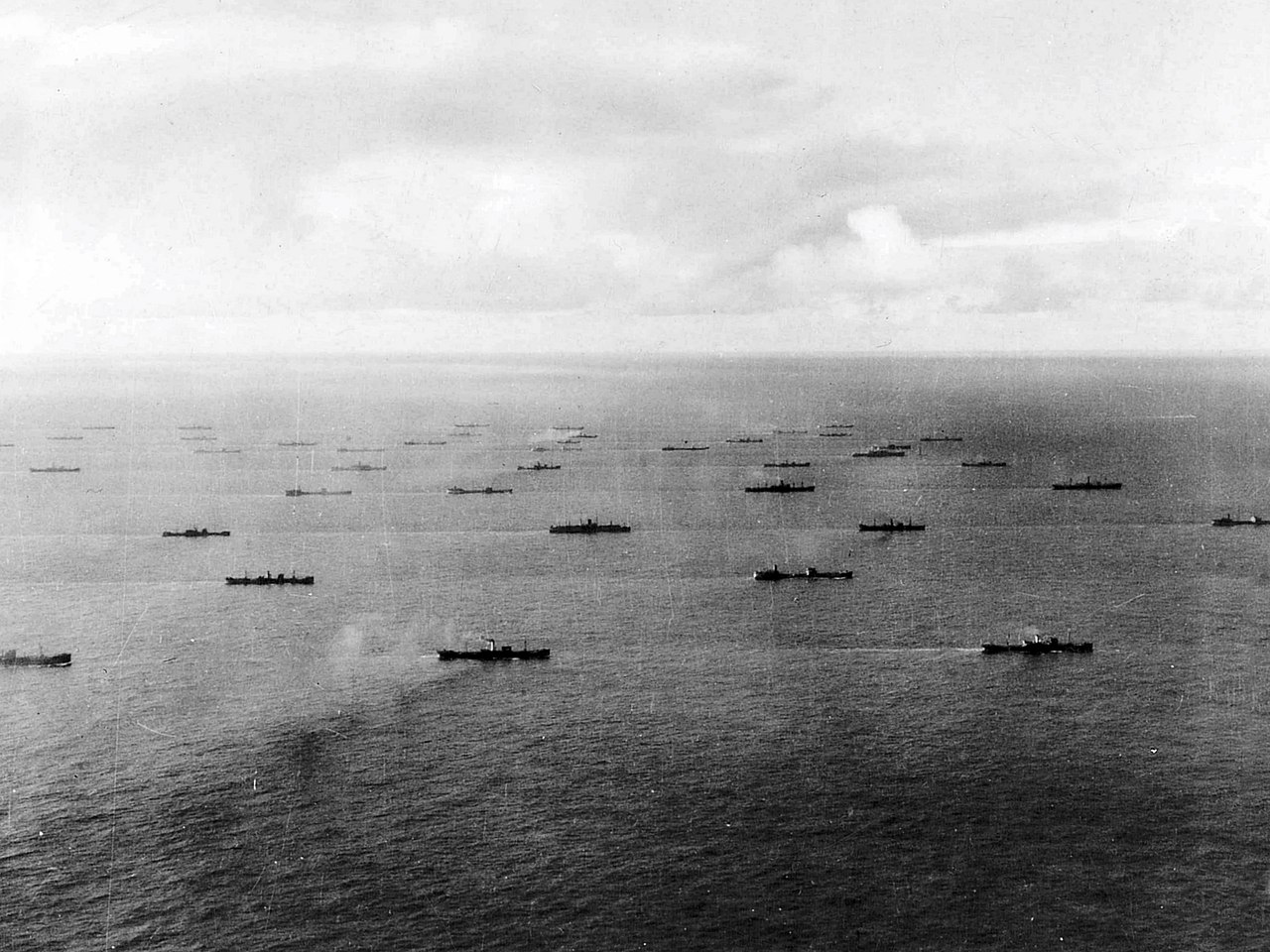
On the Allied side, the campaign revolved around convoys of merchant ships protected by escort vessels, including destroyers, corvettes and later escort carriers and long-range aircraft. German naval forces used submarines known as U-boats, supported at times by surface raiders and aircraft, and developed coordinated "wolfpack" tactics to overwhelm individual convoys. Escort commanders used sonar (ASDIC), depth charges, and later ahead-throwing weapons and airborne radar to detect and attack submarines.
Course and development
The campaign evolved in phases. Early German successes threatened Allied shipping, especially where air cover was limited. As the war progressed, improvements in technology, tactics and intelligence gradually reduced losses. The introduction of escort carriers, long-range patrol aircraft, improved anti-submarine weapons, and more effective convoy procedures closed critical gaps. Allied codebreaking and radio direction-finding also allowed escorts to anticipate and counter U-boat operations.
Key technologies and intelligence
Advances such as radar, sonar, high-frequency direction finding, and more effective depth-charge patterns changed the tactical balance. Signals intelligence and the breaking of German naval codes gave Allied commanders an operational picture that could be exploited to reroute convoys or intercept U-boat groups. These innovations, combined with increased shipbuilding and trained escort crews, were decisive in shifting the campaign's momentum.
Importance and consequences
Keeping Atlantic sea lanes open was essential to the Allied war effort: supplies, troops and equipment for Europe and other theaters passed across these routes. The campaign affected wartime strategy, industrial output, and civilian resilience, and it included notable auxiliary efforts such as the Arctic convoys to the Soviet Union and operations to maintain Mediterranean links. The struggle persisted until the collapse of Germany in 1945, and is widely regarded as the longest continuous military campaign of the war.
Further reading and distinctions
- Strategic blockade parallels: the Royal Navy’s efforts recalled earlier practices—see Royal Navy histories and the earlier blockade of Germany.
- Study of submarine warfare and countermeasures offers insight into modern anti-submarine tactics and maritime logistics.
- Technical and operational histories of U-boat design, convoy procedures and Allied codebreaking are available for deeper research; introductory resources can be found via general overviews and archives on U-boats or wartime naval doctrine.
Questions and answers
Q: What was the Battle of the Atlantic?
A: The Battle of the Atlantic was a military campaign aimed at defeating the Germans during World War II.
Q: How long did the Battle of the Atlantic last?
A: The Battle of the Atlantic was the longest continuous military campaign in World War II.
Q: What was the objective of the British Royal Navy in the Battle of the Atlantic?
A: The British Royal Navy wanted to repeat the blockade of Germany that was used during World War I.
Q: What tactic did Germany use in the Battle of the Atlantic?
A: Germany attempted to blockade Britain by using U-boats.
Q: When did the Battle of the Atlantic take place?
A: The Battle of the Atlantic took place during World War II.
Q: Which side won the Battle of the Atlantic?
A: The British Royal Navy was ultimately successful in defeating the Germans in the Battle of the Atlantic.
Q: Why was the Battle of the Atlantic significant in World War II?
A: The Battle of the Atlantic was significant in World War II because it determined whether Britain would be cut off from the rest of the world by German blockade.
Author
AlegsaOnline.com Battle of the Atlantic (1939–1945) Leandro Alegsa
URL: https://en.alegsaonline.com/art/9560