
Adèle Dumilâtre: French Romantic-era Ballerina (1821–1909)
Biography and significance of Adèle Dumilâtre, a leading French ballerina of the Romantic era who created notable roles at the Paris Opéra and performed across Europe before retiring in 1848.
Adèle Alphonsine Dumilâtre (30 June 1821 – 4 May 1909) was a prominent French ballerina of the Romantic period. Remembered for her lyrical presence and rapid rise at the Paris Opéra, she became associated with the era's hallmark roles and the new aesthetic of ethereal, supernatural ballet. Her career, though relatively brief at the top, included the creation and first performances of parts that remain central to nineteenth-century dance history.
Image gallery
3 Images

Early life and entry into dance
Dumilâtre was born in Paris into a theatrical family: her father, Michel Dumilâtre, was an actor with the Comédie-Française and had envisaged a dramatic career for his daughter. Instead, Adèle's aptitude for movement led her to the ballet school of the Paris Opéra, where she advanced rapidly through the ranks. By her late teens she was entrusted with leading choreography and at eighteen danced the central role in La Sylphide, a work that exemplified the defining traits of Romantic ballet.
Principal roles and premieres
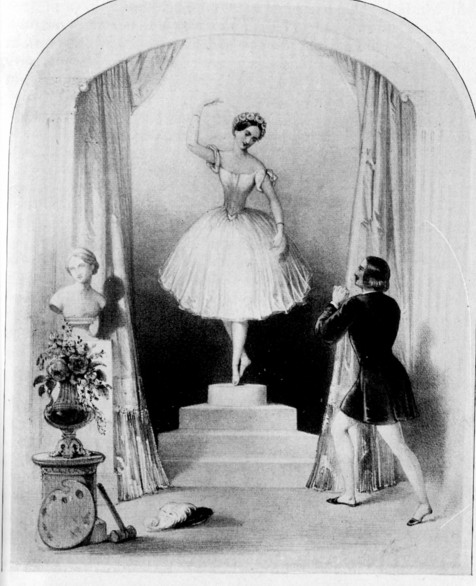
During the 1840s Dumilâtre moved from minor parts to principal roles at the Opéra. She is credited with creating Myrtha, the imperious queen of the Wilis, in the original production of Giselle, a signature Romantic ballet that combined pastoral drama with supernatural vengeance. She also originated the title role in the ballet often called Lady Henriette and took leading parts in other new works staged at the Paris Opéra. Outside Paris she danced in important European cultural centers: she performed in Milan and in London, where in 1845 she created the title role of Arthur Saint-Léon's The Marble Maiden.
Style, context and significance
Dumilâtre's stage persona fit the Romantic ideal: delicate, seemingly weightless on pointe, and able to convey otherworldly emotion. The period emphasized female dancers as the visual and dramatic focus of ballets—ballets populated by sylphs, wilis and supernatural heroines—and performers often relied on patronage and enthusiastic public support. Contemporary accounts remark on the speed of Dumilâtre's ascent at the Opéra and on her ability to make new characters convincing to audiences eager for the Romantic vision.
Later life and legacy
In 1848 Dumilâtre retired from the stage after marrying Louis Drake y del Castillo; the couple had three children. Like many dancers of her generation, she withdrew from professional life after marriage, though her roles continued to be performed and taught. She died in Paris in 1909 and was buried in the Montmartre Cemetery. Her elder sister Sophie Dumilâtre was also a noted Parisian ballerina, and together they figure in histories of French dance as representatives of the Opéra's mid-century repertory and style.
Selected roles
- La Sylphide — danced at age eighteen; early example of Romantic ethereality (La Sylphide).
- Myrtha — creation in Giselle, the queen of the Wilis.
- Lady Henriette — title role in a Paris Opéra premiere.
- The Marble Maiden — title role created in London for Arthur Saint-Léon (1845).
Adèle Dumilâtre is principally remembered today as a figure of the Romantic ballet tradition: a performer whose work helped shape the repertory and performance practices that would influence generations of dancers and choreographers. For further reading on the era, the Paris Opéra and particular ballets linked above, see specialist histories and archives of nineteenth-century dance.
Comédie-Française is cited here to note her family's theatrical connections; for deeper biographical detail consult dedicated dance history resources and collections.
Questions and answers
Q: Who was Adèle Alphonsine Dumilâtre?
A: Adèle Alphonsine Dumilâtre was a French ballerina associated with the romantic ballet, born in Paris to Michel Dumilâtre.
Q: What did Michel Dumilâtre hope for his daughter Adele?
A: Michel Dumilâtre hoped that Adele would become a tragedienne.
Q: What led Adele to the ballet of the Paris Opéra?
A: Despite her father's hopes that she would become a tragedienne, her dance talent led her to the ballet of the Paris Opéra.
Q: What principal roles did Adele play during her career as a ballerina?
A: Adele rose quickly from minor parts to principal roles, and at eighteen she danced La Sylphide. She created the roles of Myrtha in Giselle and the title role in Lady Henriette.
Q: Where did Adele perform besides Paris?
A: Adele performed in Milan and London, where she created the title role in The Marble Maiden (1845) by Arthur Saint-Léon.
Q: Whom did rich gentlemen sustain Adele's power at the Opéra?
A: Rich gentlemen sustained Adele's power at the Opéra.
Q: Was Adele Dumilâtre the only ballerina in her family?
A: No, Adele's older sister Sophie was also a prominent Parisian ballerina.
Related articles
Author
AlegsaOnline.com Adèle Dumilâtre: French Romantic-era Ballerina (1821–1909) Leandro Alegsa
URL: https://en.alegsaonline.com/art/956