
Battle of the Alamo: 1836 siege and its place in Texas history
The 1836 siege of the Alamo in San Antonio was a pivotal clash in the Texas Revolution where Mexican forces under Santa Anna overran Texan defenders, shaping the struggle for Texas independence.
Overview
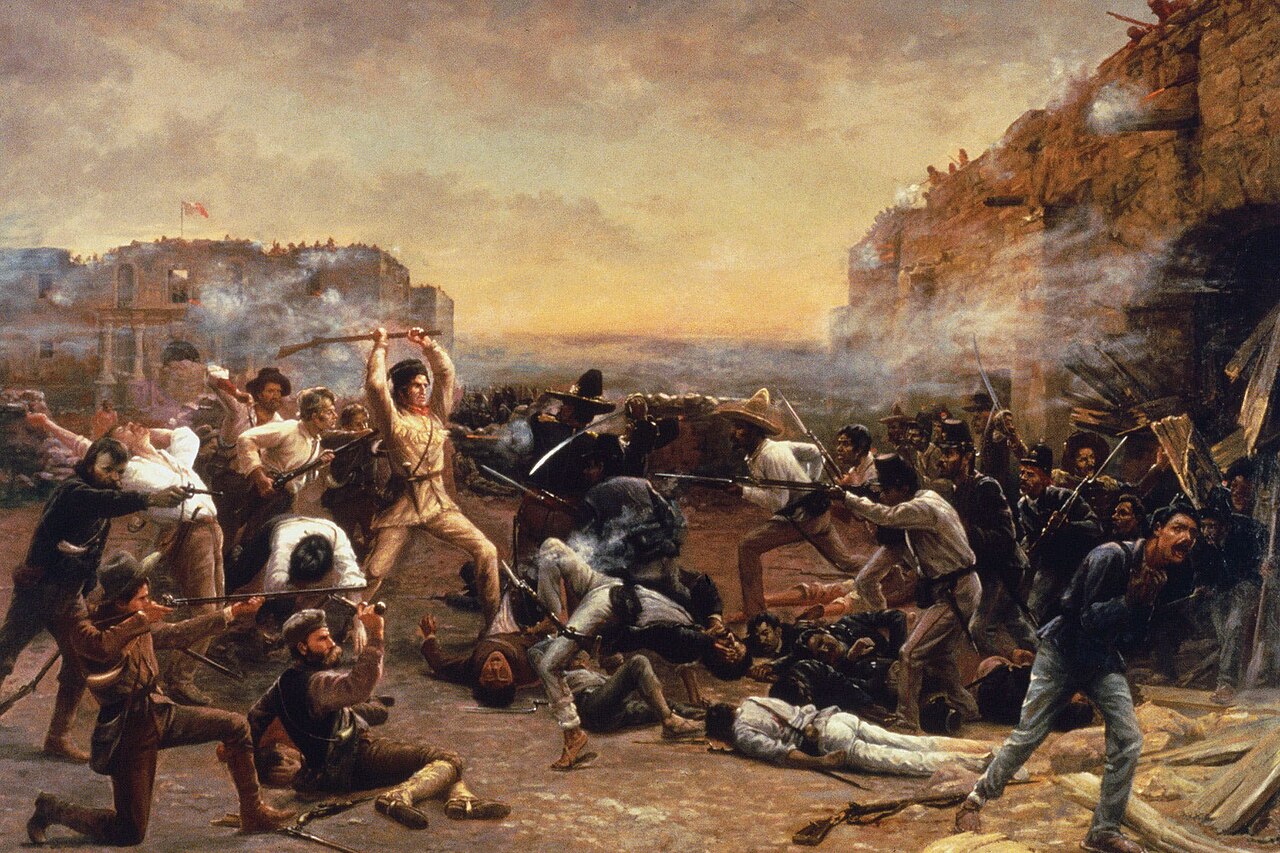
The Battle of the Alamo was a short, intense siege and assault fought in early 1836 at the former mission compound known as the Alamo in San Antonio, in what is today Texas, United States. At the time of the fighting Texas was part of Mexico and a movement for independence had drawn settlers and local residents into armed conflict. The Alamo defenders—a small mixed force of Tejanos, settlers from the United States, and volunteers—held the position for about thirteen days before a large Mexican army attacked and captured the compound on March 6, 1836.
Image gallery
10 Images




Setting and fortifications
The Alamo began as a Spanish and later Mexican Franciscan mission; its masonry structures and courtyards were adapted into a defensive position by those who occupied it. The compound was not designed as a modern fortress: walls varied in height and strength, and the defenders attempted to strengthen weak points with earthworks and artillery. The site's layout shaped how the siege unfolded, limiting the defenders' ability to receive reinforcements or retreat once Mexican forces invested the city.
Commanders and forces
- Mexican side: Commanded by General Antonio López de Santa Anna, the Mexican army numbered in the thousands and aimed to reassert control over the rebellious province.
- Texan defenders: Led in the field by junior commanders and notable volunteers, the garrison included people such as Jim Bowie and the frontiersman Davy Crockett (also referenced by name in many accounts). Orders from the Texas provisional government and military leadership—among them Sam Houston—reflected differing strategies about holding or abandoning the position.
Siege, assault and immediate outcome
The Mexican army surrounded the Alamo and maintained pressure through artillery and troop deployments. After nearly two weeks the besiegers launched a coordinated pre-dawn assault. The defenders fought fiercely in close quarters, but the numerical superiority and planning of the Mexican forces overcame the garrison. Almost all of the defenders inside the Alamo were killed during or immediately after the final assault; Mexican losses were significant but the exact numbers have been debated by historians.
Aftermath and significance
Although a tactical victory for Santa Anna, the fall of the Alamo had strategic and symbolic consequences that favored the Texan cause. News of the battle spread rapidly and helped rally recruits and support for independence; the slogan “Remember the Alamo!” became a motivating cry during the remainder of the Texas Revolution. A few weeks later, Texan forces under Sam Houston won a decisive victory at the Battle of San Jacinto, which led to the capture of Santa Anna and ultimately accelerated the process that produced an independent Republic of Texas.
Legacy and memory
Over time the Alamo has become a powerful symbol in American and Texan memory—celebrated in monuments, literature, film, and public commemorations. The site in San Antonio is preserved and interpreted for visitors, though discussion continues about historical details, the roles of Tejanos and other participants, and the ways the event has been remembered or mythologized. Debates about particular individuals, casualty figures, and the precise conduct of the final hours illustrate how the Alamo remains both a well-known episode and a subject of ongoing historical inquiry.
Notable facts and distinctions
- The Alamo began as a mission under the Spanish Empire and later served military functions under Mexican and Texan control.
- Key personalities commonly associated with the battle include Jim Bowie, Davy Crockett, and commanders such as Santa Anna and Sam Houston.
- The siege lasted roughly thirteen days, ending with the storming of the compound on March 6, 1836, an event that strongly influenced the remainder of the Texas Revolution.
Questions and answers
Q: When did the Battle of the Alamo take place?
A: The Battle of the Alamo took place in 1836.
Q: Where did the Battle of the Alamo take place?
A: The Battle of the Alamo took place at the Alamo in what is now San Antonio, Texas, United States.
Q: Who led the Mexican Army during the Battle of the Alamo?
A: The Mexican Army was led by General Antonio López de Santa Anna during the Battle of the Alamo.
Q: How long did the Mexican Army surround the Alamo during the Battle?
A: The Mexican Army surrounded the Alamo for 13 days during the Battle.
Q: How many men from Texas were killed during the Battle of the Alamo?
A: All 187 men from Texas were killed during the Battle of the Alamo.
Q: Who sent Jim Bowie with orders to destroy the Alamo?
A: General Sam Houston sent Jim Bowie with orders to destroy the Alamo.
Q: Did Jim Bowie follow his orders to defend the city?
A: No, Jim Bowie went against his orders and failed to defend the city, which he had thought to be his duty.
Related articles
Author
AlegsaOnline.com Battle of the Alamo: 1836 siege and its place in Texas history Leandro Alegsa
URL: https://en.alegsaonline.com/art/9559