
Swedish Academy: history, role in literature and language, and notable functions
Independent cultural institution founded in 1786 to promote the Swedish language and literature; selects the Nobel Prize in Literature and publishes major Swedish dictionaries.
The Swedish Academy (Svenska Akademien) is a learned body established in the late 18th century to support Swedish letters and the national language. It is best known internationally for selecting the Nobel Prize in Literature, but its remit also includes compiling authoritative dictionaries and promoting literary life in Sweden. The Academy operates with a fixed complement of members, a historic meeting place in central Stockholm, and a public reputation that mixes cultural prestige with occasional controversy.
Image gallery
10 Images
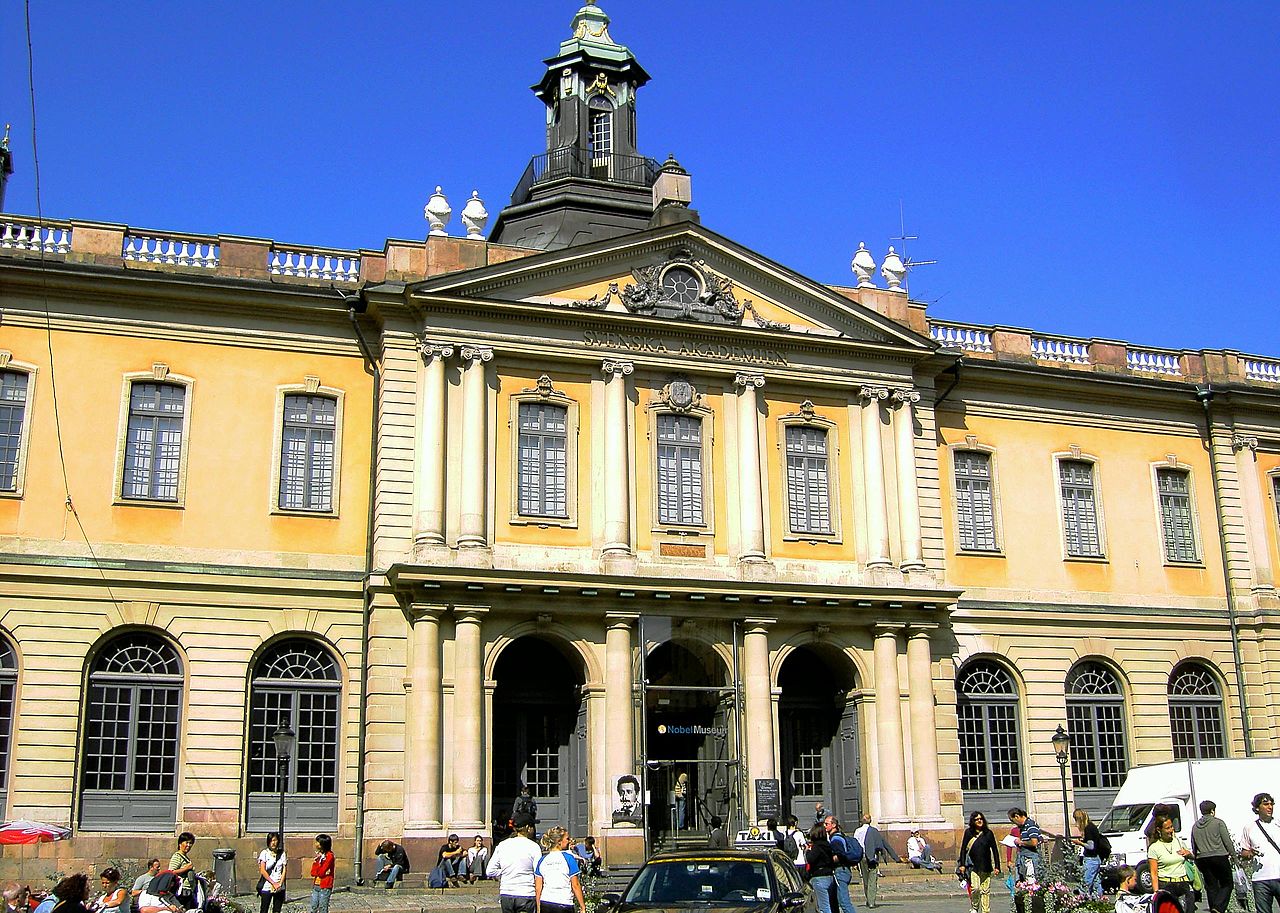


Origins and development
The Academy was founded in 1786 at the initiative of King Gustav III, who modeled it on the French Académie française and other European learned societies. From its first meeting the institution set out to raise the standing of Swedish letters, encourage literary production, and take care of the language. Its motto, often cited in Swedish, is "Snille och smak" ("Talent and Taste"). Over more than two centuries the Academy has evolved from a court-associated literary circle into an independent cultural institution with responsibilities that reach into publishing, awards, and linguistic stewardship. The connection with King Gustav III and the foundation year are central to accounts of its origins; further context on the founder and the era can be explored via contemporary biographies and historical overviews about Gustav III.
Primary roles and publications
The Academy’s work falls broadly into two areas: the promotion and guardianship of the Swedish language, and literary recognition. Since 1901 the body has had the responsibility of choosing the laureate for the Nobel Prize in Literature, an association that links its deliberations to a prize established in the will of Alfred Nobel (Alfred Nobel). The Academy also maintains long-term language projects, publishing reference works that document vocabulary, spelling, and usage.
- Svenska Akademiens ordlista (SAOL): a concise orthographic dictionary and spelling guide that appears in editions intended for general use and education. It is often cited in debates over spelling and official word lists (SAOL and related work).
- Svenska Akademiens ordbok (SAOB): a comprehensive historical dictionary produced in many volumes, similar in scope and intent to the Oxford English Dictionary for English; its publication has been a multigenerational project, with the first volumes appearing at the end of the 19th century and work continuing into the 21st century (comparisons, early volumes).
Membership, meetings, and seat
The Academy is composed of eighteen members, sometimes referred to as "chairs," who are elected for life. Members are selected from fields such as literature, linguistics, history, and public intellectual life; they meet regularly to conduct the Academy’s business, including prize deliberations. The institution’s traditional meeting place is the upper floor of the Stockholm Stock Exchange Building, a historic venue that was once a ballroom and trading floor. That building’s role in the city’s commercial and social life explains why it has been associated with the Academy’s gatherings since the late 18th century (building history, ballroom significance).
Importance, practice, and public profile
Because it supervises important reference works and takes the final decision on the Nobel Prize in Literature, the Swedish Academy occupies an influential position in world letters. Its rulings on language and spelling shape education and publishing in Sweden, while its Nobel choices help set international literary agendas (Nobel selection). The Academy is also formally one of the Royal Academies of Sweden, a group of institutions with long cultural and scientific roots (Royal Academies).
In modern times the Academy has adapted to changing attitudes about cultural authority and transparency: it continues to publish and curate linguistic resources, host lectures and events, and respond to public debates about literature and language. For readers and researchers the Academy’s collections, dictionaries, and prize history remain key starting points for understanding Swedish literary life and the ongoing development of the Swedish language.
Questions and answers
Q: What is the Swedish Academy?
A: The Swedish Academy is an organization that was started in 1786 by the Swedish King Gustav III. It was modeled after the Académie française, which was the first academy ever created. The Swedish Academy has 18 members and its motto is "Talent and Taste".
Q: What does the Swedish Academy do?
A: The main purpose of the Swedish Academy is to decide who will win the Nobel Prize in Literature each year. They also work to keep the Swedish language clean by publishing two dictionaries - Svenska Akademiens ordlista (SAOL) and Svenska Akademiens ordbok (SAOB).
Q: Where does the Swedish Academy meet?
A: The Swedish Academy meets at a building now known as Stockholm Stock Exchange Building. This building used to be used for dances, New Years Eve parties, etc., but in 1914, they were granted permission to use it forever for their own meetings.
Q: How many members are there in the Swedish Academy?
A: There are 18 members in total in the Swedish Academy.
Q: What is SAOL?
A: SAOL stands for Svenska Akademiens ordlista, which translates to 'Swedish Academies Word List'. It is a dictionary published by the academy that comes only one big book and had been up to its 14th edition as of 2015.
Q: What is SAOB?
A: SAOB stands for Svenska Akademiens ordbok, which translates to 'Swedish Academies Dictionary'. It consists of many volumes similar to Oxford English Dictionary and work had got as far as words beginning with letter 'V' by 2015.
Q: Why did King Gustav III start this organization?
A: King Gustav III started this organization because he wanted a place where he could hold winter events such as dances or New Year's Eve parties since it was one of few places that could be heated during winter season at that time.
Related articles
Author
AlegsaOnline.com Swedish Academy: history, role in literature and language, and notable functions Leandro Alegsa
URL: https://en.alegsaonline.com/art/95462