
Swahili people: culture, language and coastal heritage
The Swahili are a coastal East African community and cultural-linguistic tradition rooted in Indian Ocean trade. This article explains their origins, language, society, and modern significance.
Overview
The Swahili are a cultural and linguistic community associated with the East African coast and nearby islands. Historically centered on trading towns and ports, Swahili identity blends African Bantu roots with centuries of contact with Arab, Persian, Indian and later European traders. In everyday usage the word "Swahili" can mean an ethnic group inhabiting coastal towns or, more commonly today, anyone who speaks the Swahili (Kiswahili) language.
Image gallery
4 Images


Language and identity
Kiswahili is a Bantu language that absorbed many loanwords and influences, especially from Arabic, reflecting long maritime links across the Indian Ocean. The language functions as a regional lingua franca across much of East Africa and beyond: it serves as a common language for commerce, media, education and government in varying degrees. Some states formally recognize Kiswahili at the national or official level, and millions use it as a first or additional language. The distinction between "ethnic Swahili" and "Swahili speakers" is important: many people who are called Swahili are identified by language use rather than by shared ancestry.
Geographic distribution
Communities traditionally regarded as Swahili are concentrated along the coast and on islands of Kenya and Tanzania and reach into northern Mozambique and the Comoros. These coastal urban centers were historically nodes in long-distance trade networks. Modern migration and the language's wider role mean that Swahili-speaking populations now extend well inland across East Africa.
Historical development
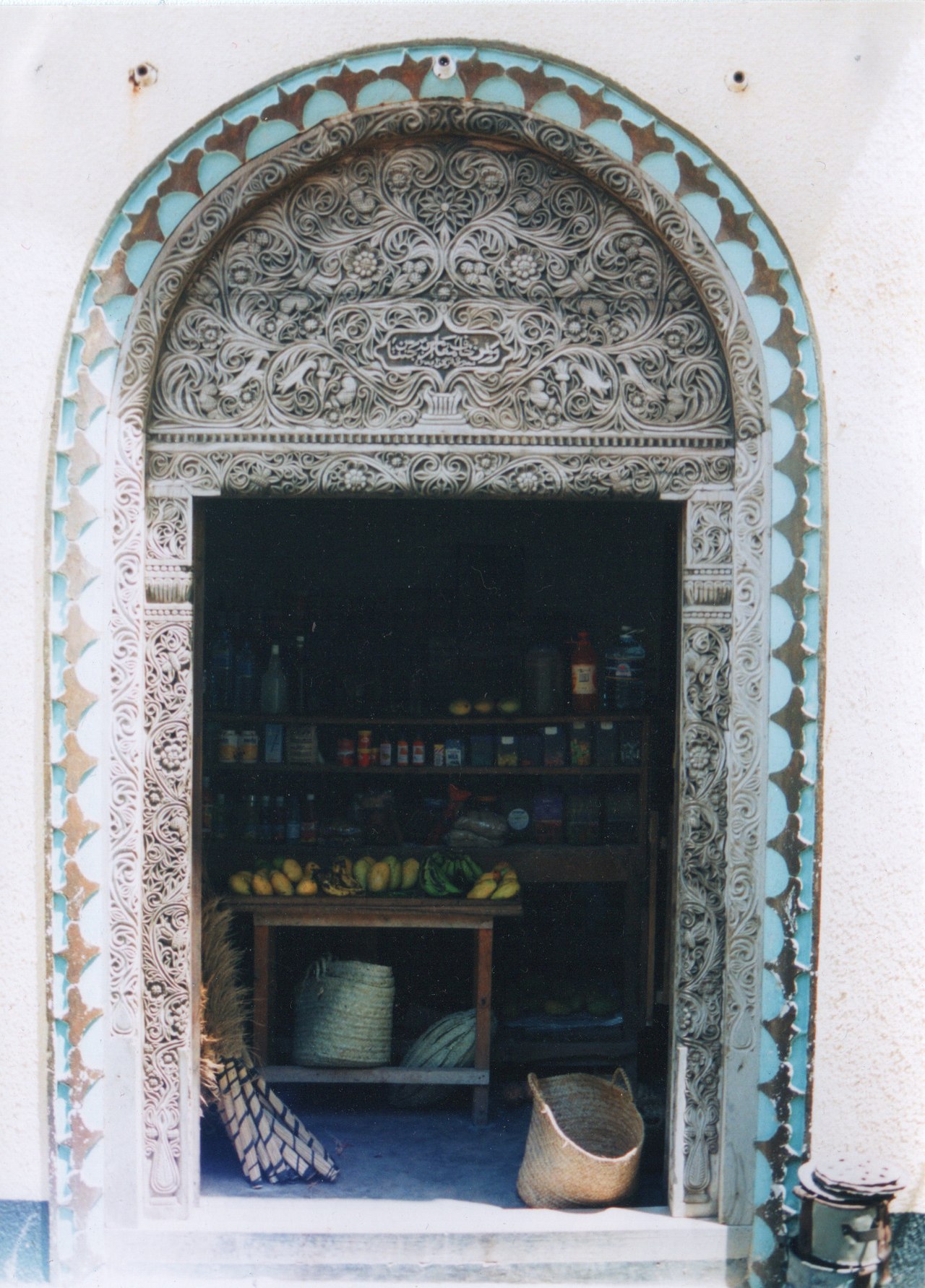
Swahili culture developed over many centuries through the interaction of local Bantu-speaking communities with traders from Arabia, Persia, India and later Europe. Coastal towns grew as commercial entrepôts, producing distinctive urban cultures and material forms: coral-stone architecture, ornate wooden doors, mosques and cosmopolitan marketplaces. Islam became an important element of Swahili religious life, adopted early by many coastal communities through trade and contact with Muslim merchants.
Characteristics and cultural life
- Urban and maritime orientation: many Swahili communities historically centered on port towns and seafaring.
- Material culture: notable for coral-stone buildings, carved doors, textile and craft traditions tied to trade and local resources.
- Religion: Islam is a predominant influence in coastal Swahili society, shaping law, ritual and education, while local customs and social institutions remain important.
- Language use: Kiswahili is central to identity for speakers; vocabulary and dialects vary across regions and islands.
Uses and modern importance
Today Kiswahili plays a major role as a regional lingua franca, in national media, education, literature and music. It facilitates communication across national borders and among communities with diverse origins. Urban Swahili culture continues to influence fashion, music (including taarab and contemporary pop), and regional politics. Governments and international organizations increasingly recognize Kiswahili's practical value in administration and education.
Distinctions and notable facts
Because the term "Swahili" can refer both to an ethnic group and to speakers of the language, discussions about Swahili identity require attention to context: an individual may be ethnically from an inland community yet be socially identified as Swahili through language and lifestyle. The etymology of the name reflects coastal life: the term is derived from an Arabic word meaning "coasts" or "coastal dwellers" (see origin). For information about the geographic spread of Swahili communities, see regional resources (coastal East Africa). The language's status varies across neighboring countries and interacts with other official languages such as English and Portuguese in different states (language contexts), and distinctions between first-language and second-language speakers are frequently noted in demographic discussions (linguistic notes).
Understanding the Swahili requires attention to both the cultural heritage tied to coastal towns and the wider linguistic role Kiswahili plays today: one is a rooted, historical urban culture; the other is a living, evolving language and regional medium of communication.
Questions and answers
Q: Where are the Swahili people and culture found?
A: The Swahili are found on the East coast of Africa, mainly the coastal regions and the islands of Kenya and Tanzania, and north Mozambique.
Q: How many Swahili people are there?
A: The Swahili number is around 1,328,000.
Q: How many Swahili speakers are there?
A: The number of Swahili speakers is around 90 million people.
Q: What is the meaning of the name Swahili?
A: The name Swahili comes from the Arabic word Sawahil and means "coastal dwellers".
Q: Is Swahili an official language in Kenya and Mozambique?
A: Swahili is not an official language in Kenya and Mozambique. Swahili speakers who live elsewhere in East Africa also have to use the official languages of their respective countries: English in Kenya, Portuguese in Mozambique, and French in Comoros.
Q: Are all Swahili speakers ethnic Swahilis?
A: No, only a small part of those who use Swahili are first language speakers and even fewer are ethnic Swahilis. The term 'Swahili' can mean 'those who speak Swahili' or it can mean 'ethnic Swahili people'.
Q: How is the Swahili linguistic tradition related to the use of the term 'Swahili'?
A: The Swahili linguistic tradition in which those who speak the language are often called Swahili (Waswahili) regardless of their actual ethnic origins. In other words, the term 'Swahili' can mean 'those who speak Swahili' or it can mean 'ethnic Swahili people'.
Related articles
Author
AlegsaOnline.com Swahili people: culture, language and coastal heritage Leandro Alegsa
URL: https://en.alegsaonline.com/art/95403
Sources
- africa.upenn.edu : East Africa Living Encyclopedia
- joshuaproject.net : Swahili people listing
- uiowa.edu : Swahili People
- historycooperative.org : Coastal East Africa and the Western Indian Ocean
- blackjadeworld.com : Swahili Sailors in Early China
- bbc.co.uk : The Story of Africa -