
Svalbard Global Seed Vault
A secure, long-term facility on Svalbard that stores duplicate seed samples from genebanks worldwide to safeguard crop diversity for the future.
The Svalbard Global Seed Vault is a long-term seed storage facility built to preserve plant genetic diversity by holding duplicate samples of seeds from genebanks around the world. Often described as an insurance policy for global agriculture, it stores duplicates rather than original collections and does not take ownership of deposited material. The facility is known in Norwegian as the Svalbard globale frøhvelv and is located on the island of Spitsbergen, near the settlement of Longyearbyen, in the Arctic Svalbard archipelago, within the country of Norway. The vault lies about 1,300 kilometres from the North Pole and is carved into permafrost-bearing rock to take advantage of natural cold and geological stability.
Image gallery
7 Images


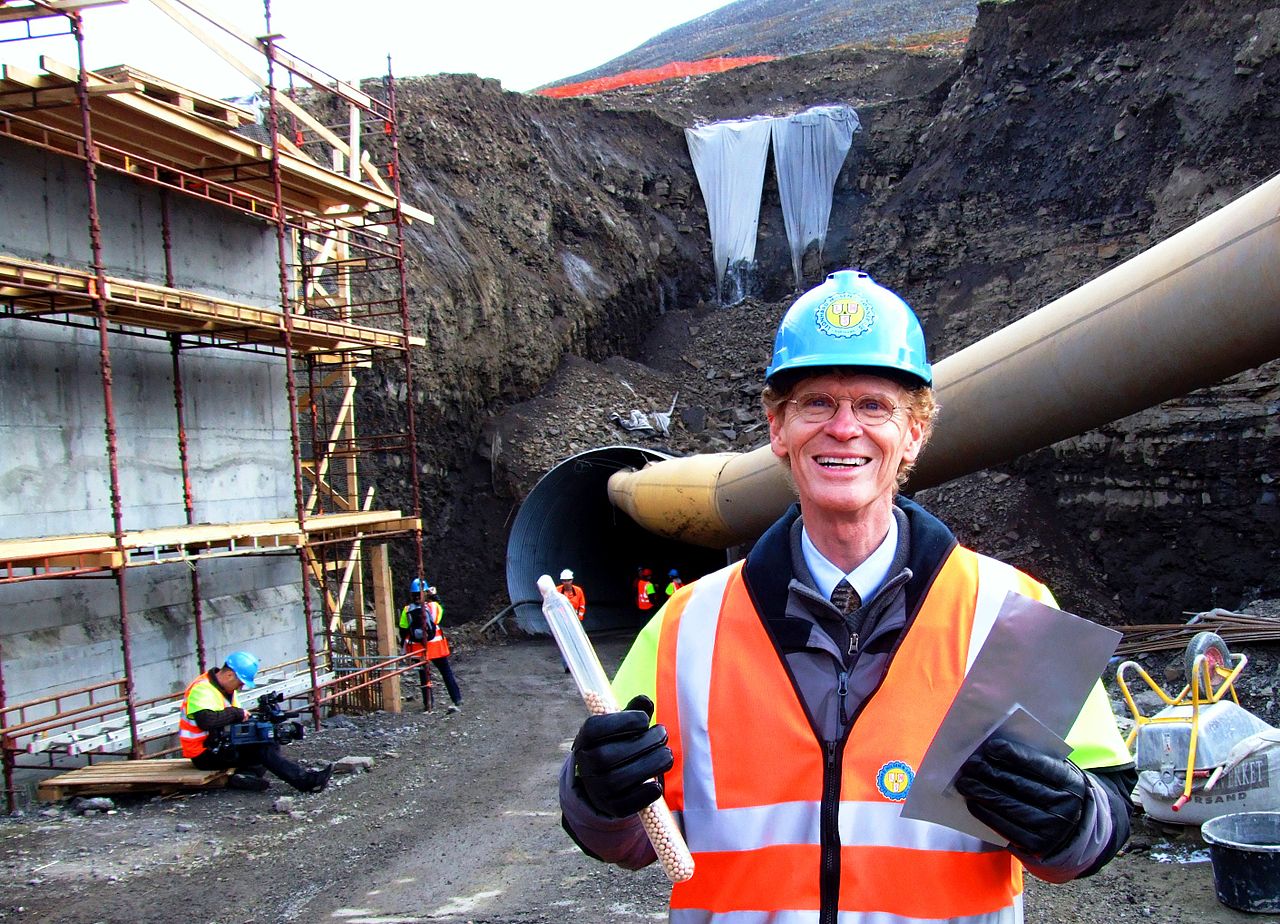

Purpose and operation
The primary purpose of the vault is to act as a global backup for seeds preserved in national, regional and international genebanks. Depositors send seed samples—small packets of dried, viable seeds—which are sealed in long-term storage boxes and placed within polyethylene tubes inside tunnels deep in the mountain. Depositors retain ownership and control of their collections and may withdraw samples if their original holdings are lost or need replenishment. The vault maintains sub-zero temperatures (typical seed-bank storage standards aim for around −18°C) and low humidity to maximize seed longevity.
Organization, funding and access
Management of the facility is a partnership: the Government of Norway provides the site and finances construction and maintenance; the Global Crop Diversity Trust (commonly called the Crop Trust) helps coordinate international participation; and the Nordic Genetic Resource Center (NordGen) oversees day-to-day operations and technical administration. Storage is offered free of charge to depositing institutions. The Crop Trust and contributing governments supply operational funds, and philanthropic foundations including the Bill & Melinda Gates Foundation have supported related international efforts.
Access to seeds is limited to the original depositor or parties authorized by them. The vault is security-controlled and normally closed to the public; its role is passive, keeping duplicates safe until retrieval is necessary for restoration or research under the depositor’s terms.
History, notable events and significance
The idea for a remote global backup arose from concern about wars, natural disasters, funding shortages, and degradation of regional collections. Conservationists and international agricultural researchers promoted the concept to safeguard crop diversity that underpins food security. Since opening, the vault has received hundreds of thousands of distinct seed samples representing many crop species and landraces, making it one of the most extensive ex-situ conservation facilities globally.
The vault has also highlighted challenges of a changing climate and infrastructure resilience. In one instance, warmer-than-expected conditions affected surface permafrost and led to water intrusion around the entrance; adjustments to drainage and insulation were made to maintain long-term stability. The facility remains a symbolic and practical tool for conserving genetic resources that support plant breeding, food security and adaptation to future environmental changes.
Features and practical notes
- Storage type: duplicate seed collections (backups) from genebanks worldwide.
- Climate: deeply refrigerated, low-humidity environment; designed for long-term viability.
- Ownership: depositors retain legal ownership and control over withdrawals.
- Security and governance: cooperation between Norway, international organizations and seed-holding institutions; deposits are catalogued but publicly accessible information focuses on depositor and accession counts rather than detailed inventory.
- Role in conservation: provides continuity when local or national genebanks face loss or degradation.
For more information on procedures, participating institutions and deposit guidelines, see official sources and partners linked by international conservation organizations and national genebanks. The vault stands as a global example of cooperative stewardship of crop diversity intended to reduce the risk that important plant genetic material could be irretrievably lost.
Examples of participating partners and detailed historical overviews can be found through national genebanks, international research centres, and institutions that have worked with the vault since its inception.
Questions and answers
Q: What is the Svalbard Global Seed Vault?
A: The Svalbard Global Seed Vault is a seed bank in Norway that is located on the island of Spitsbergen in the Arctic Svalbard archipelago.
Q: Where is the Svalbard Global Seed Vault located?
A: The Svalbard Global Seed Vault is located on the island of Spitsbergen, near Longyearbyen, in the Arctic Svalbard archipelago in Norway.
Q: Why was the Svalbard Global Seed Vault created?
A: The Svalbard Global Seed Vault was created to save many different kinds of plant seeds in case the seeds in other places around the world are lost.
Q: Who worked with the Consultative Group on International Agricultural Research (CGIAR) to start the vault?
A: Conservationist Cary Fowler worked with the Consultative Group on International Agricultural Research (CGIAR) to start the vault.
Q: Who decided how to manage the Svalbard Global Seed Vault?
A: The Norwegian government, the Global Crop Diversity Trust (GCDT), and the Nordic Genetic Resource Center (NordGen) decided how to manage the Svalbard Global Seed Vault.
Q: Who paid for building the Svalbard Global Seed Vault?
A: The Norwegian government paid for building the Svalbard Global Seed Vault. It cost about 45 million Norwegian kroner (US$9 million) to build.
Q: Who pays to operate the Svalbard Global Seed Vault?
A: Norway and the Global Crop Diversity Trust (GCDT) pay to operate the Svalbard Global Seed Vault. The GCDT gets money from organizations such as the Bill & Melinda Gates Foundation and from different governments worldwide.
Related articles
Author
AlegsaOnline.com Svalbard Global Seed Vault Leandro Alegsa
URL: https://en.alegsaonline.com/art/95360
Sources
- news.bbc.co.uk : "Work begins on Arctic seed vault"
- msnbc.msn.com : "'Doomsday' seed vault opens in Arctic"
- regjeringen.no : "Svalbard Global Seed Vault: The Location"
- doi.org : 10.1126/science.312.5781.1730b
- pubmed.ncbi.nlm.nih.gov : 16794050
- ngm.nationalgeographic.com : "Food Ark"
- worldcat.org : 741814684
- nordgen.org : "What is NordGen?"
- regjeringen.no : "Svalbard Global Seed Vault: Frequently Asked Questions"
- croptrust.org : "Donors"