
Battle of Plataea (479 BC) — Decisive Greek victory in the second Persian invasion
Final major land battle of the second Persian invasion (479 BC). Greek allied hoplites defeated Mardonius's Persian force at Plataea, ending Persia's attempt to conquer mainland Greece.
Overview
The Battle of Plataea (479 BC) was the concluding major land engagement of the second Persian invasion of Greece. Fought near the Boeotian city of Plataea, it ended with a decisive Greek victory over a Persian expeditionary force commanded in the field by the general Mardonius. A coalition of Greek allies—most notably the hoplite armies of Sparta and Athens, together with contingents from Corinth, Megara and other city-states—defeated the Persian force and preserved the autonomy of the Greek poleis.
Image gallery
10 Images




Strategic background
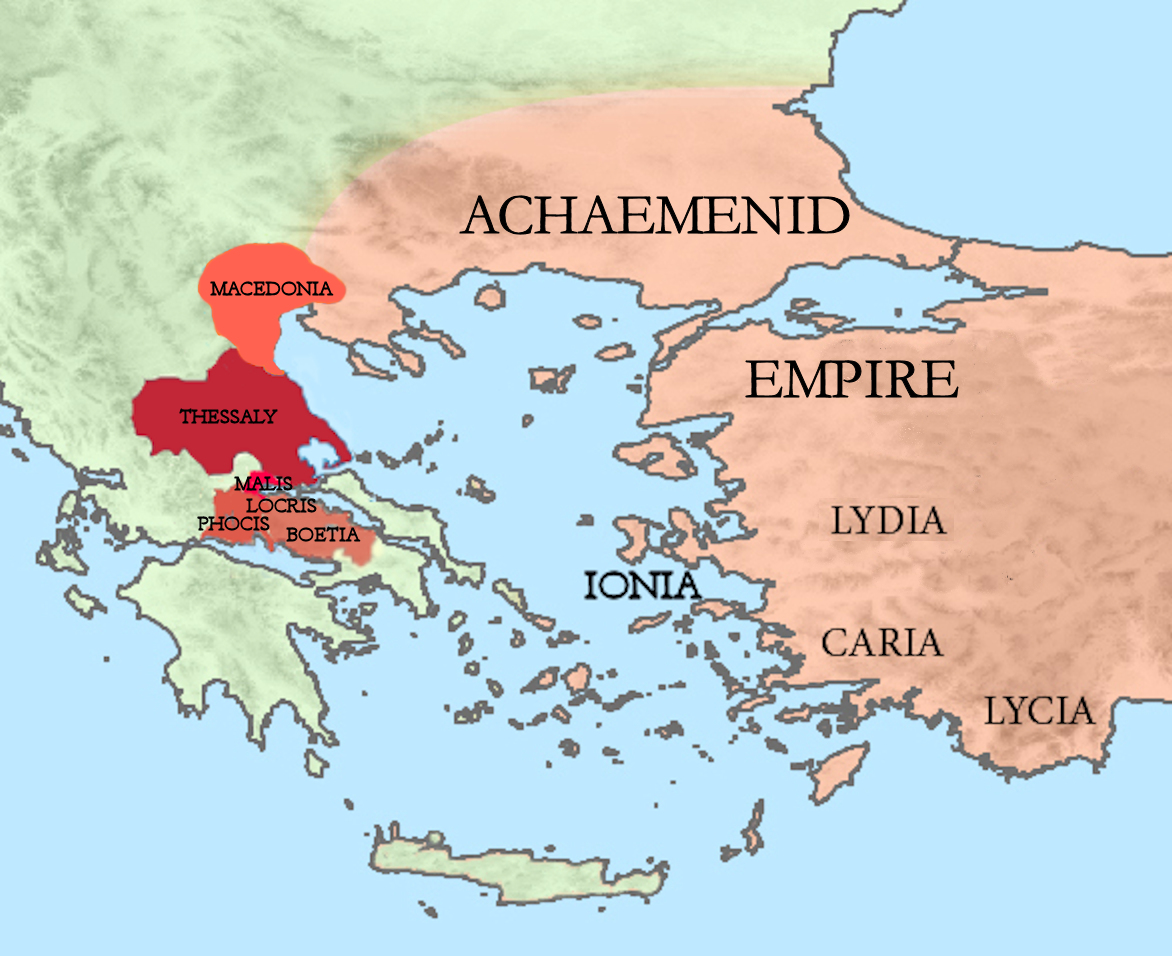
The clash at Plataea followed a campaign in which Xerxes I of the Persian Empire had invaded Greece and won several early successes. In 480 BC Persian advances on land and sea included operations at Thermopylae and the naval actions around Artemisium, although the decisive naval engagement at Salamis checked Persian plans. The Persians had occupied broad regions such as Thessaly and Attica, but after the setbacks at sea Xerxes returned to Asia, leaving Mardonius with a substantial force to continue the campaign.
Forces and dispositions
The Greek allied field army was notable for its concentration of hoplite heavy infantry in a phalanx formation supported by lighter troops. The Persian contingent under Mardonius combined traditional Persian infantry, subject levies and a significant cavalry element; Persian commanders preferred maneuver and sought to use the open ground that favored mounted troops, especially their cavalry. Each side therefore brought contrasting tactical strengths—Greek cohesion and heavy armor versus Persian mobility and numbers.
The battle and immediate events
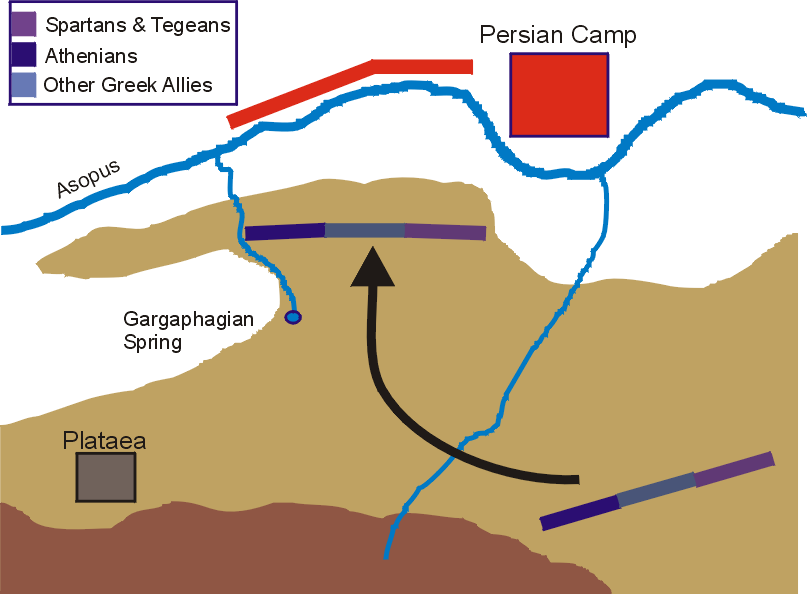
In the summer of 479 BC the armies confronted one another near Plataea and a cautious stalemate developed. The Greeks avoided offering open ground to Persian horsemen and supply concerns forced movements and skirmishes over several days. When the Greek line withdrew to secure provisioning routes, its order briefly broke and the Persians advanced, believing the allied host in retreat. Key Greek contingents—in particular troops from Sparta, Tegea and Athens—then counter-attacked, turning on the pursuing Persians. The Persian infantry was routed and Mardonius was killed in the fighting; many of the remaining Persian forces were trapped and overwhelmed in their camp.
Aftermath and significance
The destruction of the Persian army at Plataea, together with a contemporaneous Greek sea and land victory at Mycale, ended the immediate Persian threat to mainland Greece and marked a shift from defensive alliance to more assertive Greek operations in the Aegean. The victory guaranteed the independence of the Greek allies and altered the strategic balance in the eastern Mediterranean. Although decisive in strategic consequence, Plataea did not attain the same lasting popular fame as individual episodes such as the Battle of Marathon or the heroic narrative of Thermopylae.
Notable points and legacy
- The engagement illustrated the strengths of heavily armed hoplite formations against lighter infantry when battle lines held and cohesion was maintained.
- Plataea is an example of effective, if temporary, cooperation among rival city-states—especially between Sparta and Athens—which would later contest leadership in the Greek world.
- Its outcome enabled the Greeks to take the initiative in subsequent campaigns against Persian positions in the Aegean and Asia Minor, reshaping political and military dynamics across the region.
Questions and answers
Q: What was the Battle of Plataea?
A: The Battle of Plataea was the final land battle during the second Persian invasion of Greece. It took place in 479 BC near the city of Plataea in Boeotia and was fought between the Greek allies (the city-states, of Sparta, Athens, Corinth and Megara), and the Persian Empire of Xerxes I.
Q: When did it take place?
A: The Battle of Plataea took place in 479 BC near the city of Plataea in Boeotia.
Q: Who were involved in this battle?
A: This battle was fought between the Greek allies (the city-states, of Sparta, Athens, Corinth and Megara), and the Persian Empire led by Xerxes I.
Q: What happened before this battle?
A: Before this battle, there had been a series other battles including Thermopylae and Artemisium which had been won by Xerxes' forces as well as a surprise victory for Allied Greek navy at Salamis which stopped their conquest.
Q: How did it end?
A: The Battle ended with a decisive victory for the Greeks when they routed lightly armed Persian infantry and killed Mardonius. Much of their army were caught in their camp and slaughtered which marked an end to their invasion.
Q: Was it more famous than other battles such as Marathon or Thermopylae?
A: No, even at that time it does not seem to have been as famous as either Athenian victory at Marathon or Allied defeat at Thermopylae.
Related articles
Author
AlegsaOnline.com Battle of Plataea (479 BC) — Decisive Greek victory in the second Persian invasion Leandro Alegsa
URL: https://en.alegsaonline.com/art/9535
Sources
- perseus.tufts.edu : Perseus online version
- perseus.tufts.edu : IX, 81