
Battle of Okinawa (April–June 1945)
Major late‑war Allied amphibious campaign on Okinawa Island; prolonged ground, naval and air fighting with very high military and civilian casualties and lasting strategic impact.
Overview
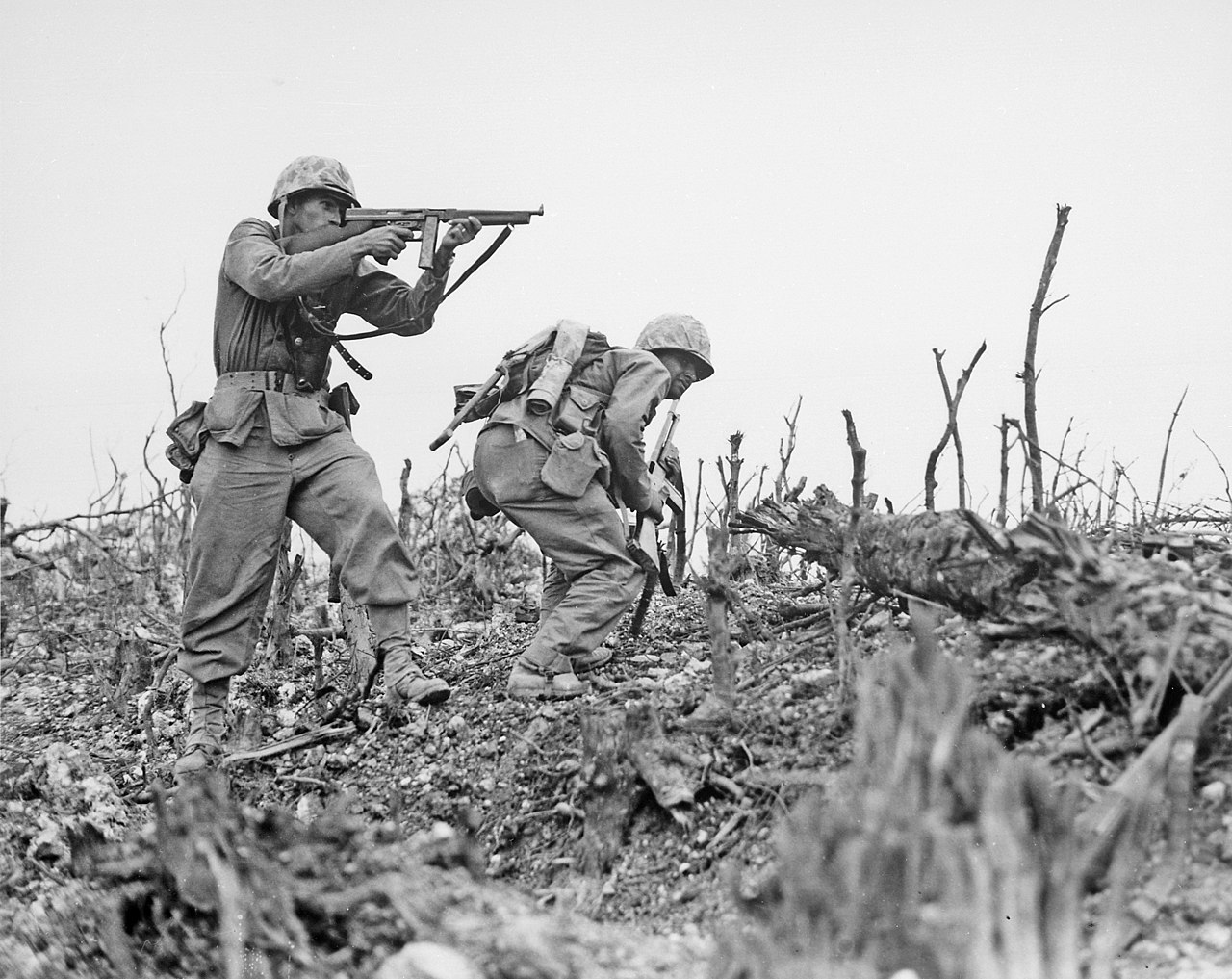
The Battle of Okinawa, codenamed Operation Iceberg by the Allies, was fought on Okinawa Island in the Ryukyu Islands during the final months of World War II. Major operations took place from April through June 1945. The campaign combined a large amphibious invasion, sustained naval gunfire and air strikes, and protracted ground combat against well‑prepared Japanese defenses. The battle produced very high casualties among both combatants and Okinawan civilians and influenced Allied planning for the final phase of the Pacific War.
Image gallery
10 Images


Strategic background
Okinawa lies to the south of Japan’s four main islands and offered an important forward base for air operations and logistical support. Allied planners sought to secure the island to support air raids on the Japanese home islands and to prepare for any contemplated invasion of Japan itself. For the Japanese military, Okinawa became a critical defensive position intended to delay Allied advances and inflict heavy casualties to weaken the attacker’s will to invade Japan proper.
Preparations and opposing forces
The Allied invasion force included large numbers of infantry, armor, artillery, naval vessels and aircraft, primarily from the United States with significant naval and air support. Japanese defenders, anticipating a decisive engagement, developed extensive fortifications, including cave systems, tunnels, interlocking fields of fire, and prepared strongpoints in the island’s hilly interior. Japanese tactics emphasized depth of defense, counterattacks and, in the air and at sea, organized suicide attacks that targeted Allied ships and landing operations.
Course of the campaign
Allied forces landed on Okinawa on 1 April 1945 after intensive pre-invasion bombardment. Initial landings secured beachheads, but the fighting quickly transitioned into stalemated and costly battles over ridgelines, defensive belts and fortified positions. The Japanese changed from contesting the beaches to a defense-in-depth strategy, drawing American troops into attritional battles that included close-quarters combat and repeated counterattacks. Naval forces provided gunfire support and amphibious logistics, and air forces sought to interdict reinforcements and supply lines.
Kamikaze attacks and naval combat
The campaign saw a notable intensity of Japanese kamikaze (suicide aircraft) attacks against Allied ships. These attacks inflicted damage on a number of vessels and contributed to naval losses and personnel casualties. Naval aviation and anti‑air defenses responded, and the interaction between air, sea and land forces became a defining characteristic of the campaign.
Civilian experience and humanitarian impact
Okinawa had a substantial civilian population when the fighting began. Civilians were caught in the crossfire, subjected to aerial and naval bombardment, and often forced into caves or makeshift shelters. In some areas civilians were influenced by Japanese military guidance and propaganda about the threat of capture, which contributed to tragic episodes of mass deaths and suicides. The battle devastated towns and villages and caused widespread displacement, loss of property and long-term social disruption.
Casualties and losses
The human toll was severe. Estimates and counts vary by source, but the battle produced very high Japanese military losses and substantial Allied casualties. Many historical summaries note that tens of thousands of Japanese soldiers were killed and relatively few taken prisoner. Allied forces suffered thousands of killed, missing and wounded. Civilian casualties were very large: many tens of thousands of Okinawan civilians were killed or wounded, with some estimates citing catastrophic percentages of the island’s prewar population. Exact totals differ among researchers, and historians often emphasize the difficulty of producing a single authoritative figure.
Aftermath and significance
After weeks of hard fighting the Allies secured Okinawa and established bases that supported subsequent operations and the final air campaign against Japan. The ferocity of the fighting and the scale of casualties influenced Allied assessments of what an invasion of Japan’s main islands might entail, shaping strategic decisions in the closing weeks of the war. Okinawa also entered the postwar era under U.S. administration for a period, and the presence of U.S. military facilities on the island has remained an important political and social issue in Okinawa–Japan–United States relations.
Memory, commemoration and study
The Battle of Okinawa has been the subject of many memorials, museums and annual remembrance events on the island and abroad. It is studied by military historians as an example of large amphibious operations, combined arms coordination, defensive depth and the challenges of protecting civilians in high‑intensity warfare. The battle’s legacy influences debates about war, occupation, reconciliation and the protection of noncombatants.
Key points
- Dates: primarily April–June 1945, during the final phase of the Pacific War.
- Codename: Operation Iceberg (Allied designation).
- Combatants: Imperial Japan defending the island; Allied forces (mainly U.S. Army and Marine units with naval and air support).
- Nature of fighting: large amphibious landings followed by prolonged ground combat, heavy naval gunfire and aerial operations; significant use of kamikaze attacks by Japan.
- Consequences: severe military and civilian casualties, strategic bases for Allied operations, and lasting postwar political and social effects on Okinawa.
Further reading and sources
Questions and answers
Q: What was the Battle of Okinawa?
A: The Battle of Okinawa was a great battle of World War II that took place on Okinawa Island in the Ryukyu Islands, south of the four big islands of Japan. It was between the military forces of the Empire of Japan and the Allies, and it is considered to be the last major battle of World War II.
Q: When did this battle take place?
A: The Battle of Okinawa took place from April to June 1945.
Q: What is Okinawa's status today?
A: Today, Okinawa is Japanese territory, but there are still American military bases there.
Q: How many casualties were there during this battle?
A: There were at least 150,000 civilian casualties during this battle, 18,900 killed or missing American soldiers and 53,000 injured American soldiers. Additionally, about 100,000 Japanese soldiers were killed and 7,000 captured.
Q: What name has been given to this battle in English?
A: This battle has been called "Typhoon of Steel" in English.
Q: How did some civilians respond to Japanese propaganda regarding Americans?
A: Some civilians believed Japanese propaganda which said that Americans were barbarians who would do terrible things to prisoners if they were captured; as a result some civilians killed their families and themselves rather than risk capture by Americans.
Related articles
Author
AlegsaOnline.com Battle of Okinawa (April–June 1945) Leandro Alegsa
URL: https://en.alegsaonline.com/art/9524
Sources
- history.army.mil : Okinawa: the last battle
- books.google.com : Creating Military Power: The Sources of Military Effectiveness
- history.navy.mil : "World War II Casualties"
- history.army.mil : "OKINAWA: THE LAST BATTLE, Chapter 4, Page 102"
- ibiblio.org : "Action in the North, Chp 6 of Okinawa: Victory in the Pacific by Major Chas. S. Nichols, Jr., USMC and Henry I. Shaw, Jr" · web.archive.org
- japanfocus.org : ""The World is beginning to know Okinawa": Ota Masahide reflects on his life from the Battle of Okinawa to the Struggle for Okinawa"