
Suprematism: Origins, Visual Language, and Cultural Legacy
Suprematism is a Russian-born abstract art movement emphasizing basic geometric forms and pure feeling over depiction, founded by Kazimir Malevich around 1915 and influential on 20th-century abstraction.
Overview
Suprematism is an early 20th-century art movement that began in Russia around 1915. It championed non‑objective composition: artworks built from simple geometric elements and color planes rather than representational subjects. Often described as a form of geometric abstraction, Suprematism aimed to communicate pure sensation — what its founder called the supremacy of artistic feeling — through stripped-down visual language.
Image gallery
6 Images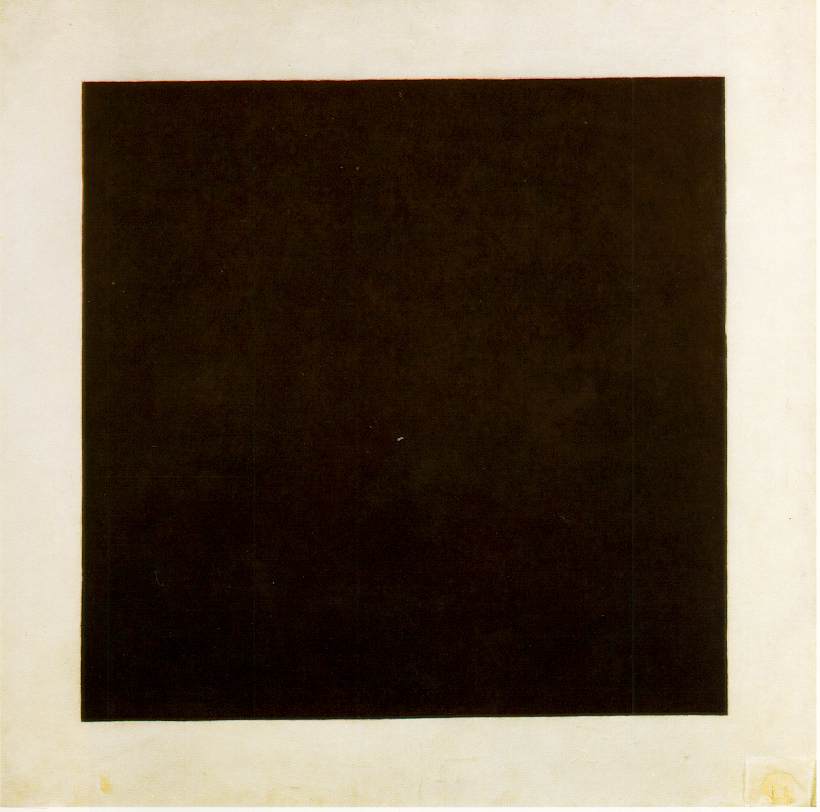



Founder and key works
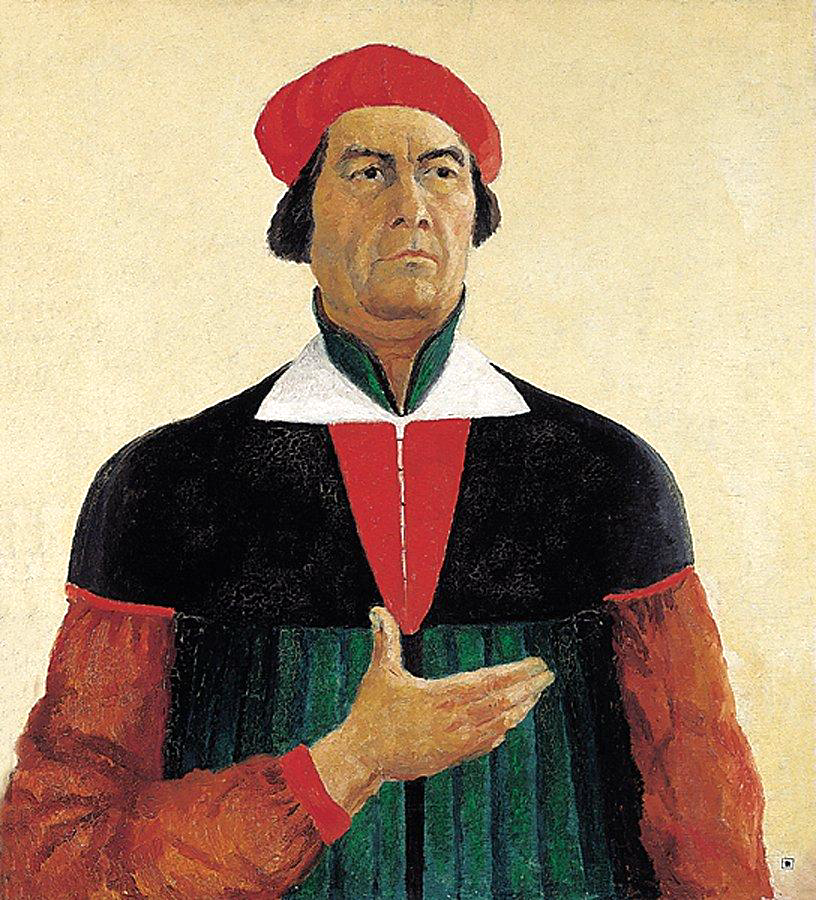
The movement is most closely associated with Kazimir Malevich, who articulated its ideas and displayed early Suprematist paintings in the mid‑1910s. His iconic Black Square, first shown in 1915, is commonly cited as a turning point: a flat, isolated square on a white ground meant to act as a visual and spiritual emblem. Malevich later published theoretical statements that summarized his approach, and some of his writings were circulated internationally in the 1920s, linking Suprematism to wider modernist debates and institutions such as the Bauhaus.
Visual characteristics
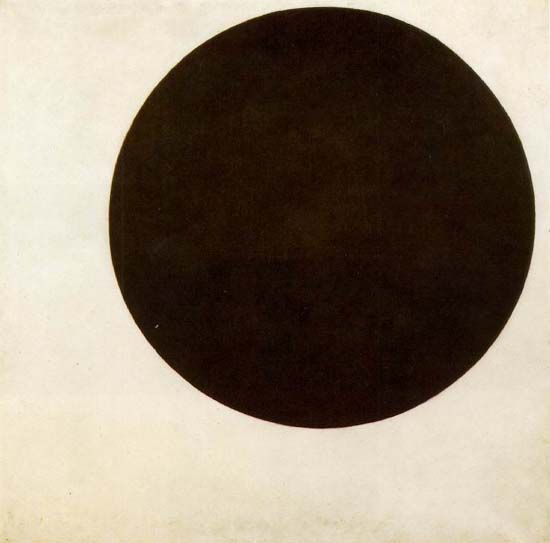
Suprematist works emphasize a small set of formal elements. Typical features include flat geometric shapes (squares, circles, rectangles and lines), a restricted color palette or monochrome fields, and an attention to spatial relationships between forms. The movement often explored the tension between figure and ground, using white space as an active component. Malevich’s shift from vibrant, polychrome arrangements toward canvases like White on White illustrates the move from pictorial variety to stark, minimal presence.
Concepts, geometry and titles
Many Suprematist paintings have titles that reflect processual or spatial thinking rather than descriptive content: phrases such as “in the state of movement” or “dynamic composition” hint at a concern with time, motion and abstracted spatial order. This interest in alternative spatial logic sometimes evokes comparisons with non‑Euclidean ideas about space and continuum; Malevich and his circle used such notions loosely to suggest forms that imply motion, depth, or multiple perspectives rather than literal depiction (non‑Euclidean geometry).
History, exhibitions and context
Suprematism emerged amid the ferment of pre‑revolutionary and revolutionary cultural life. Major public showings in the 1910s introduced the language to artists and critics and established a vocabulary that other movements would adapt. While Suprematism remained largely theoretical and painterly, its emphasis on geometry and abstraction influenced applied arts, theatrical design and architecture debates in the following decades.
Influence, distinctions and legacy
Suprematism is often set beside Constructivism, another Russian movement that shared an interest in abstract form but differed in purpose: where Suprematism prioritized inner sensation and autonomous composition, Constructivism aligned art with social utility, industrial materials and functional design. Suprematist principles, however, filtered into graphic design, stage sets and modernist architecture and helped shape international abstract art in the 20th century.
- Typical elements: geometric forms, flat color, white space, emphasis on feeling.
- Notable works: Black Square (Malevich), White on White (Malevich), dynamic compositions and early Suprematist studies.
- Related topics: square and circle motifs, material abstraction, avant‑garde exhibitions.
- Further reading: biographies and primary texts by and about Malevich, archives and museum catalogues (Russian collections and international retrospectives).
For readers seeking deeper detail, museum catalogues and scholarly overviews provide chronologies, technical analyses and contextual essays tracing how Suprematist ideas circulated beyond painting to shape modern visual culture. Introductory summaries can be followed by focused studies on individual canvases, exhibition histories, and the theoretical writings that explain why simple geometric abstractions exerted such a lasting impact on 20th‑century art.
External reference points and online resources include institutional pages and curated essays that survey early exhibitions, primary texts, and the movement’s reception across Europe and beyond (Bauhaus connections, monochrome works, and comparative studies on alternative geometries).
For visual exploration and collections, search museum databases and specialist catalogues that list Suprematist works and document their provenance and exhibition history (geometric abstraction, shape studies, and archival entries in Russian and international institutions).
Questions and answers
Q: What is Suprematism?
A: Suprematism is an abstract art movement started in Russia, 1915/1916. It focussed on basic geometric forms such as the square and circle and is an example of geometric abstraction.
Q: Who founded Suprematism?
A: Suprematism was founded by Kazimir Malevich.
Q: What inspired Malevich to create the powerful image of the black square on a white ground?
A: In his book The Non-Objective World, published abroad as a Bauhaus Book in 1927, Malevich described that he felt only night within him which inspired him to create the new art which he called Suprematism.
Q: What painting marked a breakthrough from polychrome to monochrome suprematism?
A: White on White painted by Malevich marked a breakthrough from polychrome to monochrome suprematism.
Q: When did Malevich exhibit his early experiments in suprematist painting?
A: In 1915, Malevich exhibited his early experiments in suprematist painting.
Q: What was the centerpiece of his show? A: The centerpiece of his show was the Black Square, placed in what is called the red/beautiful corner in Russian Orthodox tradition, the place of the main icon in a house.
Q: What titles did some paintings from 1915 express? A: Some of the titles to paintings from 1915 expressed concepts related to non-euclidean geometry which imagined forms in movement or through time; titles such as Two dimensional painted masses in the state of movement.
Related articles
Author
AlegsaOnline.com Suprematism: Origins, Visual Language, and Cultural Legacy Leandro Alegsa
URL: https://en.alegsaonline.com/art/95115
Sources
- books.google.com : A history of architectural theory