
Battle of Maserfield (Cogwy), 642 — Oswald of Northumbria vs Penda of Mercia
The Battle of Maserfield (5 August 642) saw King Oswald of Northumbria defeated and killed by King Penda of Mercia. The battle altered power in early Anglo-Saxon England and shaped later memory and cults.
Overview
The Battle of Maserfield, recorded in medieval sources under the Welsh name Cogwy, was fought on 5 August 642. Contemporary and near-contemporary accounts present it as a clash between the forces of the Christian ruler King Oswald and those of King Penda of Mercia. The engagement ended in Oswald's death and a decisive victory for Penda, marking a significant shift in the balance of power among early Anglo-Saxon kingdoms.
Image gallery
1 Image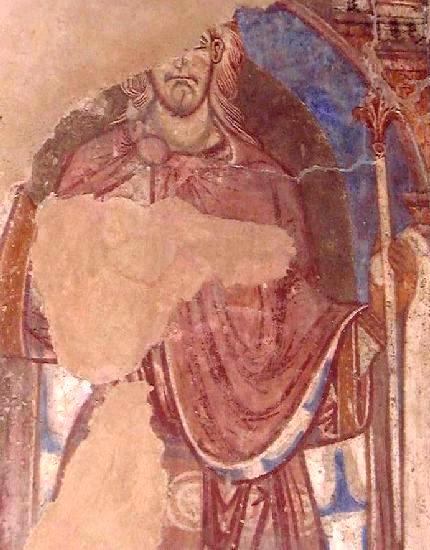
Background
In the early 7th century the English midlands and north were politically volatile. Northumbria, ruled by Oswald, had been a leading power and an agent of Christian expansion; sources emphasize Oswald's piety and his patronage of the church. Mercia, under Penda, was consolidating power and resisting Northumbrian dominance. Later chroniclers stress a religious contrast—calling Oswald a Christian and Penda a pagan—but the political rivalry between kingdoms was the primary context for the battle.
The battle and primary sources
Details of tactics and force size are not preserved. The main narrative comes from Bede's Ecclesiastical History and other annals that summarize the outcome rather than give a blow‑by‑blow account. These writers also tell of grisly treatment of Oswald's remains and of his rapid veneration as a martyrly saint after his death. Modern historians treat some late details cautiously because the surviving sources were written with religious or dynastic aims rather than impartial military reporting.
Location and identification
The traditional site is the town now called Oswestry in Shropshire, where local toponymy and medieval tradition link the place to Oswald. The name Maserfield itself appears in later Anglo‑Saxon lists and charters associated with the region. Scholarly discussion continues about exact battlefield archaeology and the geography of the engagement.
Aftermath and significance
Politically, Penda's victory checked Northumbrian ascendancy and reinforced Mercian influence in midlands politics for a generation. Oswald's brother and successors ultimately continued Northumbrian resistance; Penda himself remained powerful until his defeat some years later. The death of Oswald helped create a cult around him: churches and commemorations promoted his memory and contributed to the religious landscape of northern England.
Key facts and notable points
- Date traditionally given as 5 August 642; the battle is briefly noted in early annals.
- Primary narratives are found in works like Bede's history and later chronicles, which frame events with ecclesiastical concerns.
- The engagement is linked to the place-name evidence around Northumbria and to Mercian expansion under Penda's opponents and allies across Britain.
- Modern interest combines historical, archaeological and local-heritage study; debates about precise details and location continue.
For further contextual reading, see works on early Anglo‑Saxon kingship, the Christianization of England, and the regional history of Mercia and Oswestry, where local tradition preserves memory of the clash.
Questions and answers
Q: When did the Battle of Maserfield take place?
A: The Battle of Maserfield took place on 5 August 642.
Q: Who were the main participants in the Battle of Maserfield?
A: The battle was mainly fought between the armies of King Oswald of Northumbria and King Penda of Mercia.
Q: What was the outcome of the Battle of Maserfield?
A: The battle ended in the defeat of Oswald's army and his death.
Q: Where is the site of the Battle of Maserfield located?
A: The site of the Battle of Maserfield is reported to be at Oswestry in Shropshire.
Q: Was King Oswald of Northumbria a Christian or a Pagan?
A: King Oswald of Northumbria was a Christian.
Q: Was King Penda of Mercia a Christian or a Pagan?
A: King Penda of Mercia was a Pagan.
Q: What was the significance of the Battle of Maserfield?
A: The Battle of Maserfield was significant because it marked the end of King Oswald's reign and the rise of King Penda's power in Mercia. It also represented a clash between Christianity and Paganism in Anglo-Saxon England.
Related articles
Author
AlegsaOnline.com Battle of Maserfield (Cogwy), 642 — Oswald of Northumbria vs Penda of Mercia Leandro Alegsa
URL: https://en.alegsaonline.com/art/9510