
Sundarbans National Park: mangrove reserve, tiger habitat and coastal ecosystem
Sundarbans National Park in West Bengal, India, is a protected mangrove forest, tiger reserve and biosphere area known for tidal waterways, rich biodiversity and crucial coastal protection.
Overview
The Sundarbans National Park is a protected area in the tidal delta of the Ganges–Brahmaputra system, located in the Indian subcontinent within the state of West Bengal. Established as a national park on 4 May 1984, it is managed as a tiger reserve and designated biosphere reserve. The park forms part of the larger Sundarbans mangrove landscape that spans the international border and is recognised for its unique estuarine ecology and cultural connections to local communities.
Image gallery
10 Images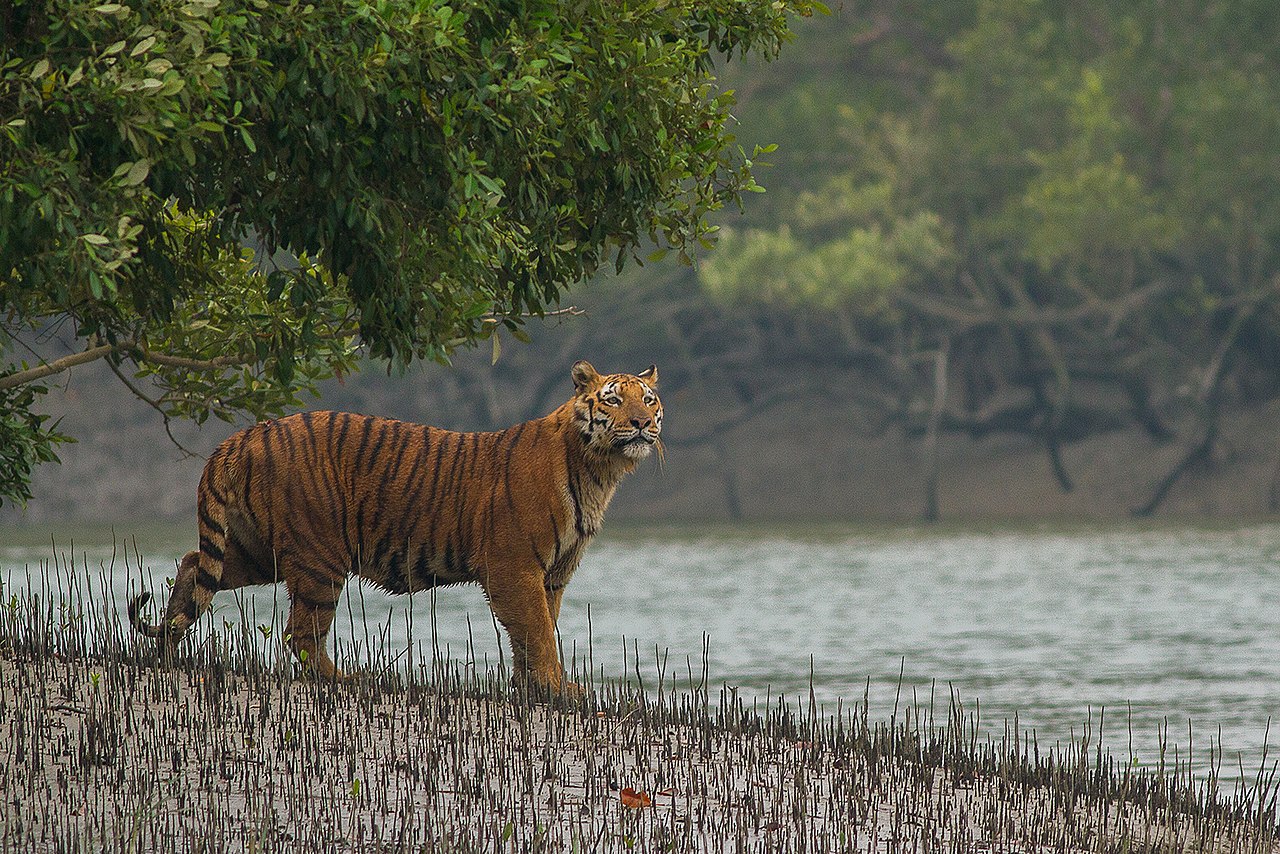


Landscape and ecological characteristics
Sundarbans is characterised by an intricate network of tidal waterways, mudflats and small islands shaped by sediment deposition. The region contains several principal rivers and countless creeks and channels that drain south toward the sea, creating a dynamic environment driven by tides and saline influence. Much of the terrain is dominated by dense mangrove forests adapted to brackish water and periodic inundation; these plants stabilise shorelines and form the structural backbone of the reserve.
Biodiversity and notable species
The park supports a wide array of wildlife adapted to its saline, tidal habitats. It is one of the better-known reserves for the Bengal tiger, including tigers that have adapted to swimming between islands. The fauna also includes many species of birds, fishes, amphibians and reptiles, and a rich invertebrate fauna essential to food webs. Prominent inhabitants include estuarine crocodylians such as the salt‑water crocodile and other reptile species, while numerous invertebrate groups, molluscs and crustaceans thrive in the intertidal zones.
Importance and human use
The Sundarbans delivers important ecosystem services: it buffers coastal areas from storm surges and cyclones, supports fisheries and aquaculture by serving as nursery habitat, and stores carbon in its soils and vegetation. Local communities depend on the forest for limited resources and livelihoods, including small-scale fishing and honey collection; at the same time regulated eco‑tourism provides income and raises awareness.
History, protection and conservation challenges
Over decades the Sundarbans has been recognised both nationally and internationally for its natural values and conservation importance. Protection measures include the national park status, tiger reserve management, and inclusion in biosphere and transboundary conservation conversations. Despite protection, the area faces multiple threats: rising sea levels and changing salinity linked to climate change, increased frequency of intense cyclones, habitat fragmentation, pollution and human‑wildlife conflict. Poaching and unsustainable resource extraction also pose risks to key species.
Management and outlook
Conservation efforts emphasise habitat protection, scientific monitoring, community participation and conflict mitigation, such as promoting alternative livelihoods and safety measures for people living on the forest fringe. Maintaining the ecological integrity of the Sundarbans is critical for biodiversity conservation, coastal resilience and the well‑being of millions who depend on the wider delta region.
- Key features: tidal mangrove ecosystem, tiger reserve, biosphere reserve.
- Ecosystem services: coastal protection, fisheries nursery, carbon storage.
- Main concerns: climate change, cyclones, habitat loss, human‑wildlife conflict.
For broader context and resources, see regional summaries and conservation program pages: Sundarbans delta overview, general information about the Indian protected area network, details about West Bengal conservation initiatives, and background on mangrove ecology, the Bengal tiger, reptilian fauna (reptile), invertebrate communities (invertebrate), and the salt‑water crocodile.
Questions and answers
Q: What is the Sundarbans National Park?
A: The Sundarbans National Park is a National Park, tiger reserve, and a Biosphere Reserve in the Sunderban delta.
Q: Where is the Sundarbans National Park located?
A: The Sundarbans National Park is located in the Indian state of West Bengal.
Q: What type of forests are found in the Sundarbans National Park?
A: The Sundarbans National Park is densely covered by mangrove forests.
Q: What kind of animals can be found in the Sundarbans National Park?
A: The Sundarbans National Park is home to a variety of bird, reptile and invertebrate species, including the salt-water crocodile.
Q: Why was the Sundarbans National Park made a National Park?
A: On May 4, 1984, the Sundarbans National Park was made a National Park.
Q: How many rivers and watercourses are there at the delta of Sundarbans National Park?
A: There are seven main rivers and many watercourses forming a network of channels at this delta.
Q: What type of environment is suitable for mangroves in the Sundarbans National Park?
A: The coastal area has many mudflats, which are the right environment for mangroves.
Related articles
Author
AlegsaOnline.com Sundarbans National Park: mangrove reserve, tiger habitat and coastal ecosystem Leandro Alegsa
URL: https://en.alegsaonline.com/art/94878
Sources
- rsis.ramsar.org : "Sundarban Wetland"
- unep-wcmc.org : "Natural site datasheet from WCMC"
- unesco.org : "Sunderban"