
Sun of May (El Sol de Mayo)
A stylized sun emblem used by Argentina and Uruguay, tied to the May Revolution of 1810 and inspired by Andean sun imagery. Appears on flags, coats of arms, currency and national iconography.
The Sun of May (Spanish: El Sol de Mayo) is a heraldic sun symbol widely recognized as a national emblem of both Argentina and Uruguay. It commemorates events around the May Revolution of 1810 that began the region's break with colonial rule and later moves toward independence from Spanish rule. The motif combines a human face with radiating rays and is treated as a civil and patriotic symbol in public life.
Image gallery
10 Images





Design and symbolism
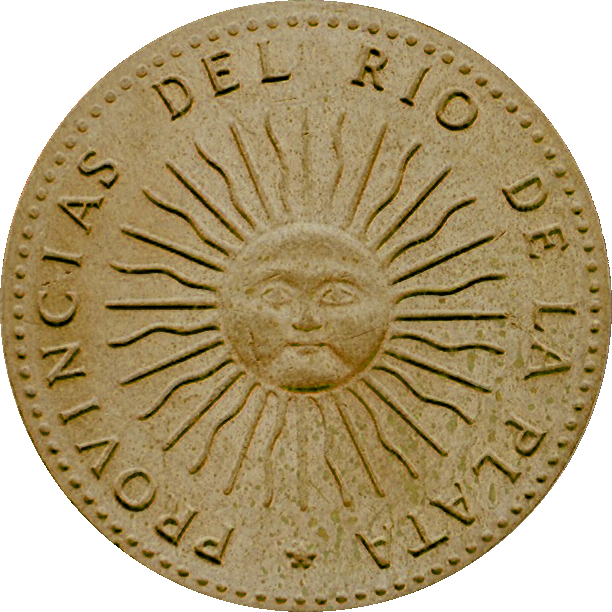
Visually the Sun of May usually shows a stylized sun with a human visage and alternating straight and wavy rays. Its form draws on pre-Columbian Andean sun imagery—most notably the Inca sun god Inti—while adapted to a European heraldic context. Different manufacturers and national renderings vary in exact proportions, color and the number of rays, but the face and alternating-ray motif are consistent features.
Historical background
The name comes from the popular observances in May 1810 in Buenos Aires: during a large public assembly on 25 May the weather reportedly cleared and the sun appeared, an occurrence that contemporaries interpreted as a favorable sign. That moment is remembered as the start of Argentina’s revolutionary government and a symbolic genesis for the emergent nations; accounts of this event are often summarized in histories of Buenos Aires and the wider Río de la Plata region. The notion that the sun’s appearance was a good omen has become part of the emblem’s folk significance.
Uses and examples
- Flag: A depiction of the sun appears on the national flag of Argentina and on the flag of Uruguay in a simplified form.
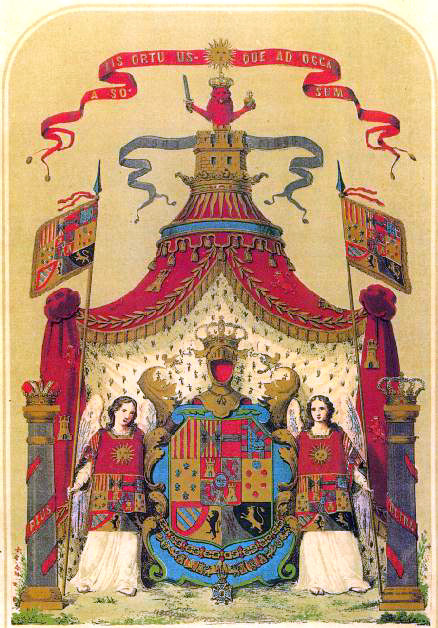
- Coat of arms and seals: The emblem is incorporated into official shields and government insignia in different styles.
- Currency and monuments: The Sun of May is commonly used on coins, medals and public monuments as a symbol of national identity.
Although the emblem is shared between neighboring countries, each state applies its own graphic rules: line thickness, facial expression, color tones and ray treatment can differ according to legislation, artistic tradition or printing needs. The Sun of May therefore functions both as a shared historical reference to the May Revolution and as a flexible visual motif that adapts to modern heraldry and design.
Author
AlegsaOnline.com Sun of May (El Sol de Mayo) Leandro Alegsa
URL: https://en.alegsaonline.com/art/94851
Sources
- donquijote.org : "Argentina Flag"
- uruguayflag.facts.co : "Uruguay Flag - Information"