
Second Battle of Guam (1944)
The 1944 recapture of Guam by U.S. forces from Japan during the Pacific campaign of World War II; an amphibious assault that secured bases in the Marianas for future operations.
Overview
The Second Battle of Guam (July 21–August 10, 1944) was the Allied operation to retake Guam from Japanese control during the larger Pacific campaign of World War II. Guam had been a U.S. possession before 1941 and its recapture was part of a broader effort to seize the Mariana Islands and secure forward bases for long-range air operations and naval logistics.
Image gallery
10 Images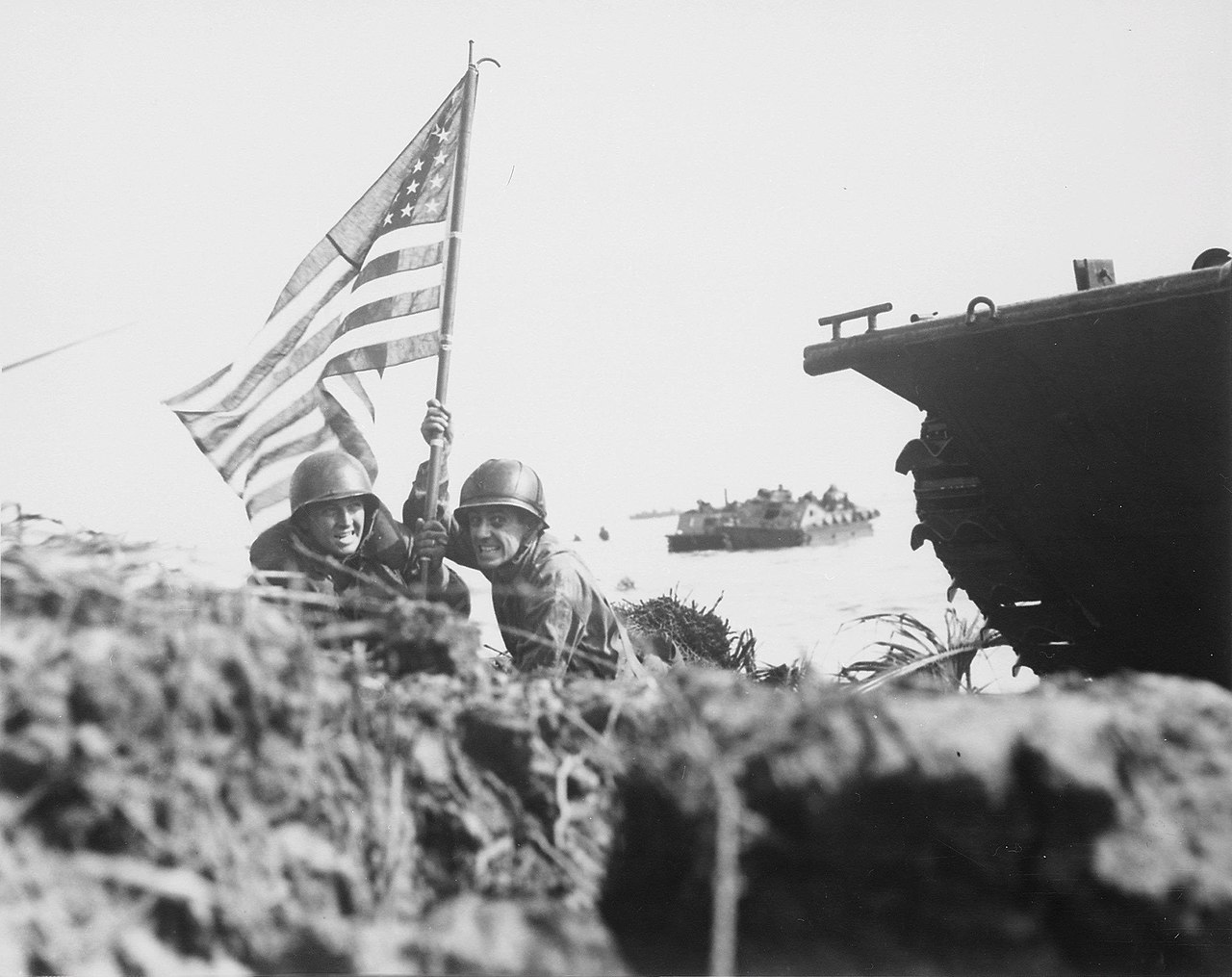


Opposing forces and defences
The assault was conducted principally by United States forces, including Marine and Army units, supported by substantial naval gunfire and carrier-based air strikes from U.S. naval and air forces. Japanese defenders on Guam were regular army units and naval personnel who had fortified positions, cave systems and prepared inland strongpoints. The defenders conducted a determined defense using terrain and tunnels to slow the attackers.
Course of the battle
The campaign began with amphibious landings on July 21, followed by rapid inland advances and hard fighting to clear fortified positions. Naval bombardment, close air support, and coordinated infantry and armor attacks were used to break Japanese resistance. Operations transitioned from large-scale maneuvers to localized clearing of cave networks and isolated pockets of defenders as U.S. forces consolidated control.
Aftermath and significance
By the end of combat operations in early August the island was under Allied control. The capture of Guam provided secure harbors and airfields for the Japanese theater's former occupiers being replaced by U.S. air power, enabling subsequent strategic bombing and logistical support for operations deeper into the western Pacific. The battle also had a heavy human cost, including military and civilian casualties and lasting effects on the island’s population and infrastructure.
Notable features
- Phase structure: amphibious landing, inland advance, and mop-up of fortified positions.
- Combined-arms cooperation among navy, air force, and ground troops played a decisive role.
- After capture, Guam became a major forward base that influenced the later course of the Pacific war.
The Second Battle of Guam is remembered as a key example of high-intensity island warfare in the Pacific, illustrating the tactical challenges of assaulting heavily fortified islands and the strategic value of securing forward bases in a maritime theater.
Questions and answers
Q: When did the Second Battle of Guam take place?
A: The Second Battle of Guam took place from July 21 to August 10, 1944.
Q: Who took control of Guam during the Second Battle of Guam?
A: The United States took control of Guam from Japanese control during the Second Battle of Guam.
Q: Was Guam under Japanese control during World War II?
A: Yes, Guam was under Japanese control during World War II.
Q: Was Guam a U.S. territory during World War II?
A: Yes, Guam was a U.S. territory during World War II.
Q: What was the location of Guam during World War II?
A: Guam was located in the Mariana Islands during World War II.
Q: Was the Second Battle of Guam a part of the Pacific campaign of World War II?
A: Yes, the Second Battle of Guam was a part of the Pacific campaign of World War II.
Q: How long did the Second Battle of Guam last?
A: The Second Battle of Guam lasted for 21 days, from July 21 to August 10, 1944.
Author
AlegsaOnline.com Second Battle of Guam (1944) Leandro Alegsa
URL: https://en.alegsaonline.com/art/9483
Sources
- archive.org : Video: Allies Study Post-War Security Etc. (1944)