
Battle of Ellandun (825) — Turning point in Anglo‑Saxon England
The 825 clash in which King Egbert of Wessex defeated Beornwulf of Mercia, breaking Mercian supremacy in southern England and enabling Wessex to assert dominance among the Anglo‑Saxon kingdoms.
Overview
The Battle of Ellandun was fought in 825 and is widely regarded as a decisive confrontation between the forces of Egbert of Wessex and those led by Beornwulf of Mercia. Contemporary annals record a clear victory for King Egbert, an outcome that ended decades of Mercian pre-eminence and shifted the balance of power in Mercian and southern English politics.
Image gallery
1 Image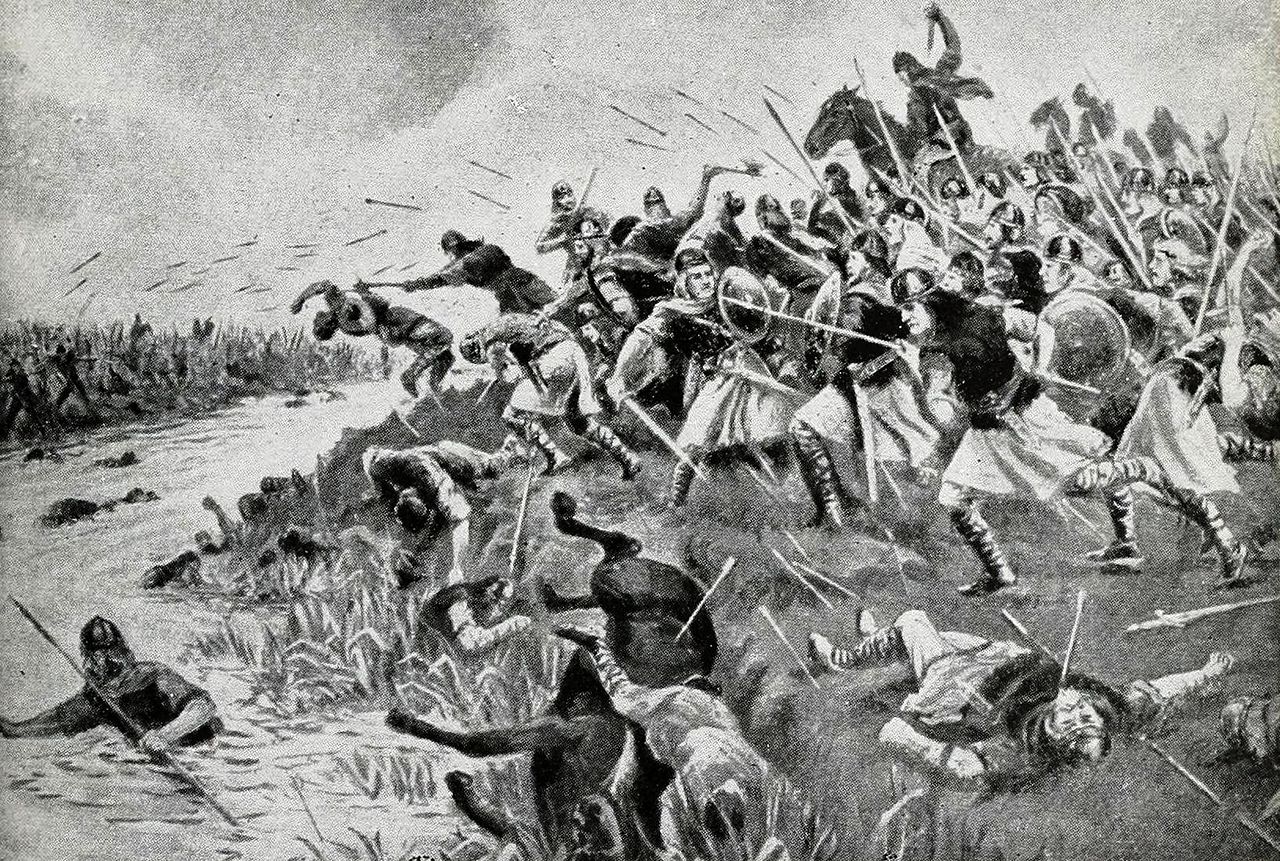
Context and causes
In the early ninth century, Mercia had been the dominant Anglo‑Saxon kingdom. Tensions with Wessex grew as rulers sought control over nearby client kingdoms, trade routes and strategic towns. The clash at Ellandun reflected this rivalry: Egbert had consolidated power in Wessex and challenged Mercian influence over southern England, while Beornwulf aimed to preserve Mercian authority.
Location and conduct of the battle
The battle took place at a site traditionally identified with Ellandun, near modern Wiltshire. Exact details of troop numbers, formations and the course of fighting are not preserved in detail; surviving sources emphasize the sharpness of Egbert's victory rather than tactical minutiae. The engagement was costly, but its political consequences far outweighed its immediate military toll.
Aftermath and significance
Following Ellandun, Egbert quickly asserted control over several southern polities. He established Wessex supremacy over kingdoms such as Kent and Sussex and extended influence into southeastern territories, often appointing loyal sub‑rulers or allies. These gains consolidated Wessex as the principal power among the Anglo‑Saxon kingdoms in the south and altered patterns of allegiance and royal patronage for decades.
Longer‑term consequences and legacy
The defeat of Mercia at Ellandun marked the decline of a Mercian hegemony that had lasted much of the eighth century. Within roughly a century, the political trajectory set in motion by Egbert and his successors contributed to the emergence of a single English kingship: the leadership and institutions that originated in Wessex played a central role in forming the later kingdom that historians call England.
Notable facts and sources
- Primary contemporary evidence is brief and comes from chronicles compiled after the events; historians therefore combine those accounts with archaeological and prosopographical study to reconstruct the period.
- Ellandun is often treated as the pivotal moment when southern loyalties shifted from Mercia to Wessex, making it a frequent subject in studies of early English state formation.
Questions and answers
Q: When was the Battle of Ellandun fought?
A: The Battle of Ellandun was fought in 825.
Q: Who were the two armies involved in the Battle of Ellandun?
A: The armies of Egbert of Wessex and Beornwulf of Mercia were involved in the Battle of Ellandun.
Q: Who emerged victorious in the Battle of Ellandun?
A: King Egbert of Wessex emerged victorious in the Battle of Ellandun.
Q: What was the outcome of the Battle of Ellandun?
A: The Battle of Ellandun effectively brought an end to Mercian supremacy in southern England and gave Wessex dominance over the remaining Anglo-Saxon kingdoms in the south.
Q: In what century did the kingdom of Wessex become the kingdom of England?
A: The kingdom of Wessex became the kingdom of England a century after the Battle of Ellandun.
Q: How significant was the Battle of Ellandun in English history?
A: The Battle of Ellandun was significant in English history as it marked the end of Mercian dominance in southern England and paved the way for the eventual unification of England under the Wessex monarchy.
Q: Was the Battle of Ellandun costly to both sides?
A: Yes, the Battle of Ellandun was costly to both the armies of Egbert of Wessex and Beornwulf of Mercia.
Related articles
Author
AlegsaOnline.com Battle of Ellandun (825) — Turning point in Anglo‑Saxon England Leandro Alegsa
URL: https://en.alegsaonline.com/art/9466