
Sudeley Castle, Gloucestershire — history, architecture and significance
Sudeley Castle near Winchcombe, Gloucestershire: a late medieval and Tudor country house, site of royal residence, Civil War damage, notable burials and later conservation, with gardens, archaeology and public access.
Overview
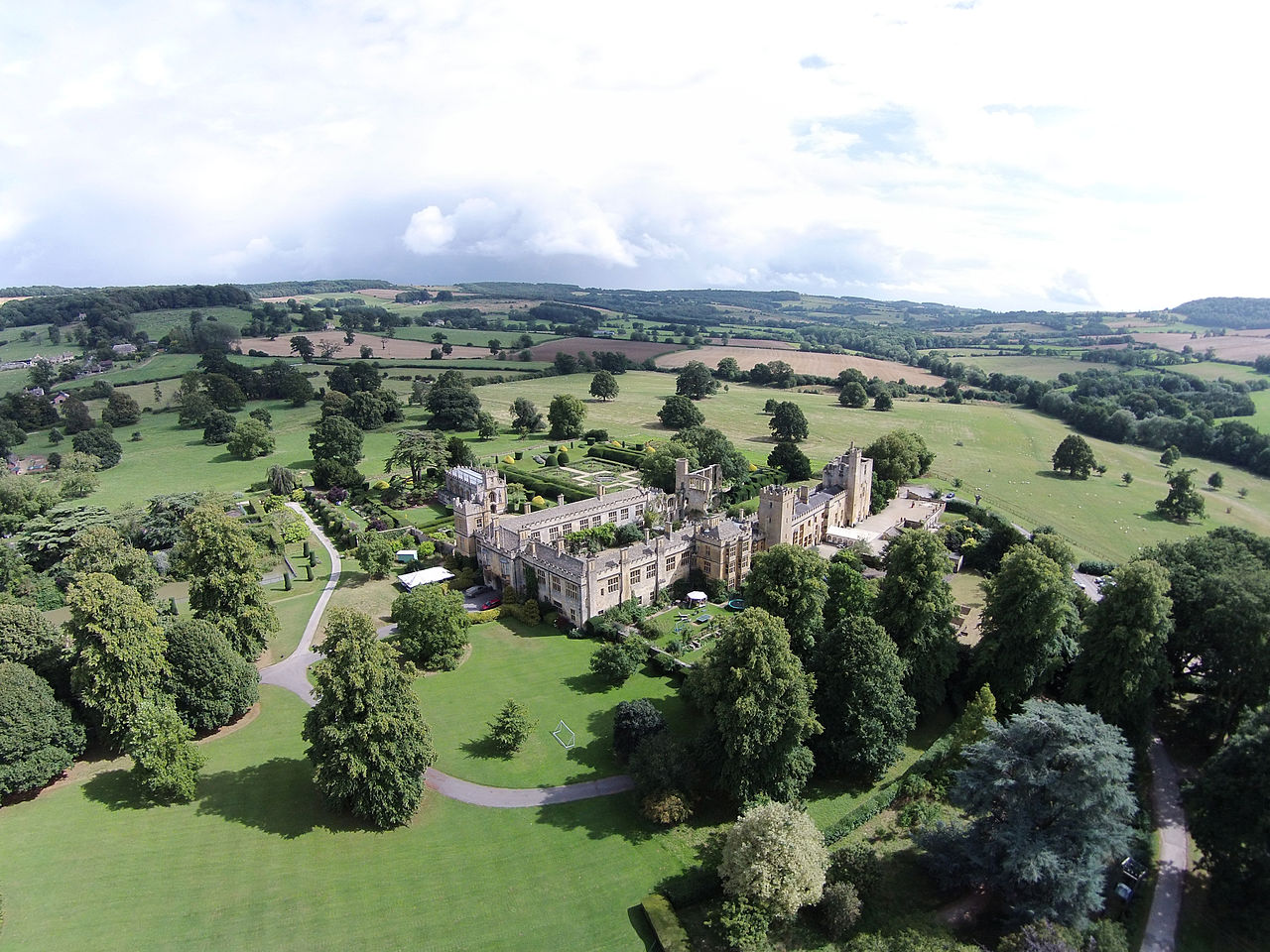
Sudeley Castle stands near Winchcombe in Gloucestershire, England. Founded in the mid-15th century, it occupies a prominent site within parkland and gardens on the Cotswold limestone. Over more than five centuries the place has been alternately a fortified house, a royal and noble residence, a partly ruined estate and, more recently, a restored historic site open to the public. Its story illustrates changing patterns of architecture, courtly life, religion and conservation from the late medieval period to the present.
Image gallery
10 Images


Origins and architectural character
The main late medieval building phase dates from the 1440s and is generally associated with the Boteler family. The castle originally combined defensive features—gatehouse, curtain walls and a towered profile—with substantial domestic accommodation grouped around courtyards. Later Tudor rebuilding and repair altered the plan to suit a more comfortable, residential use: larger windows, domestic chimneys and reorganised private apartments. Subsequent centuries added garden terraces and Victorian-era repairs. Surviving fabric therefore presents a sequence of phases rather than a single unified design.
Tudor connections and royal residents
Sudeley is especially noted for its Tudor associations. During the 16th century the estate passed into royal hands and accommodated figures from Henry VIII’s court. Henry visited Sudeley in the 1530s and it was linked to leading families of the period. In the 1540s the house was home to Catherine Parr, the sixth wife of Henry VIII, after her marriage to Thomas Seymour; she died following childbirth at Sudeley and was buried in the chapel. The household at Sudeley at times contained a large number of retainers and attendants, typical of an important noble or quasi-royal household of the period.
Catherine Parr, Thomas Seymour and notable residents
Catherine Parr’s presence at Sudeley, and her interment in the chapel, are among the site’s best-known personal stories. Her husband Thomas Seymour undertook building works and household reorganisation during their short residence. The castle was also associated with other important contemporaries: young royal wards and nobles were connected with the household, and figures such as Lady Jane Grey and the future Elizabeth I are recorded in sources as having links with the wider Seymour circle and its properties.
16th-century politics and later ownership
Sudeley’s ownership reflected the turbulent politics of mid-16th-century England. Following the fall of Thomas Seymour the estate changed hands several times. Under different monarchs the castle was granted, confiscated or regranted in ways that mirror broader political and religious shifts of the era. During Elizabeth I’s reign the house remained in private aristocratic hands and the queen visited or was entertained there on more than one occasion, indicating the site’s continuing social importance.
Civil War, decline and rediscovery
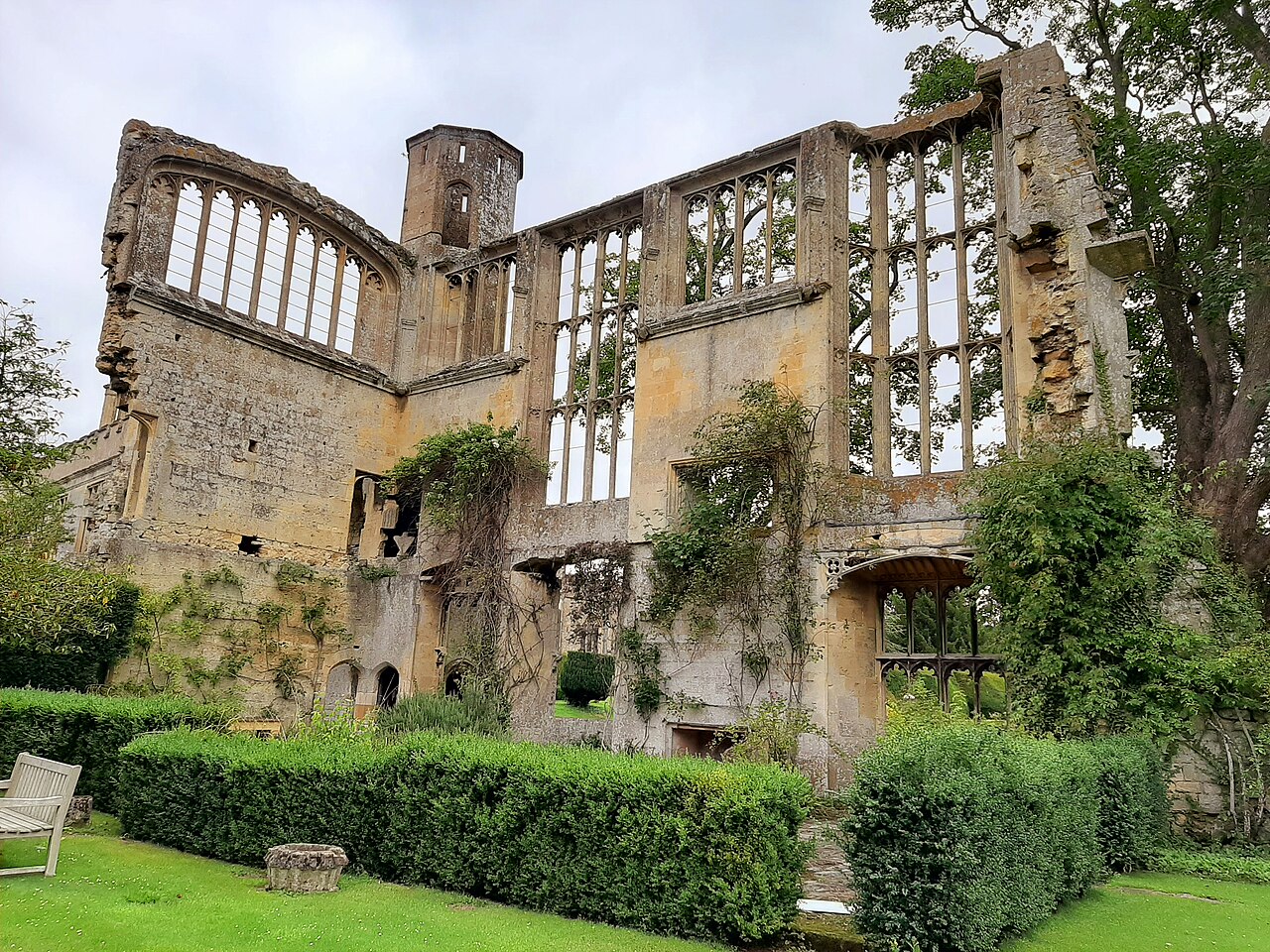
In the 17th century the English Civil War brought damage to many country houses; Sudeley suffered serious demolition and the chapel and some ranges were left in ruin. For a prolonged period parts of the castle lay derelict, and antiquarian interest in the 18th century recorded fragments of architecture and the existence of earlier burials. Rediscovery and antiquarian investigations in later decades led to the identification of historic features and to episodes of reinterment for notable figures connected with the castle’s past.
Burials and chapel history
The castle chapel is a focal point for Sudeley’s memorial history. Catherine Parr was buried in the chapel after her death at the castle; her grave was later identified by antiquaries and the remains were reinterred during the 19th century. The chapel and its monuments provide a tangible link to the personal and dynastic stories tied to the site, and they remain an important element for visitors and researchers interested in funerary practice and commemoration in the Tudor period.
Gardens, parkland and landscape
Beyond the built fabric, Sudeley is famed for its gardens and landscape setting, which have been progressively developed from formal terraces and kitchen gardens to more modern ornamental plantings and award-winning displays. Historic planting patterns, avenues and specimen trees sit alongside later borders and contemporary horticultural projects. The garden component contributes strongly to the visitor experience, offering both an historic context and a living, evolving aspect of the estate.
Archaeology and conservation
Archaeological work at Sudeley has helped clarify the sequence of phases from the medieval core through Tudor remodelling and post-medieval decline. Conservation efforts in the 19th, 20th and 21st centuries have aimed to stabilise surviving masonry, conserve the chapel and open restored rooms for interpretation. Work balances respect for original fabric with the need to reveal and explain the castle’s complex history to the public while protecting buried archaeological deposits in the grounds.
Public access, interpretation and uses
Today Sudeley Castle functions as a heritage site with visitor facilities, guided interpretation and seasonal events, including educational programmes and garden-focused activities. The site hosts exhibitions on Tudor life, on the castle’s later history and on the horticultural work that sustains its living collections. Interpretation seeks to present the changing uses of the castle over time: as a fortified household, a royal and noble residence, a Civil War ruin and a conserved historic place.
Significance and scholarly interest
Sudeley is an important case study for scholars of late medieval and Tudor domestic architecture, for students of courtly patronage and for those interested in the social history of elite households. Its layers of construction, episodes of destruction and later rebuilding make it a useful example of how continuity and change operate at an English country house over many centuries. Garden historians and conservation specialists also value Sudeley for its documented sequence of landscape development and its ongoing horticultural programmes.
Timeline and notable facts
- Mid-15th century: principal late medieval construction associated with the Boteler family and aristocratic occupation.
- 16th century: royal connections intensified; visits and residence by figures of Henry VIII’s court.
- Catherine Parr: died after childbirth at Sudeley and was buried in the chapel; the burial site attracted later antiquarian attention.
- 17th century: serious damage during the English Civil War left parts of the castle in ruin.
- 18th–19th centuries: antiquarian recording, rediscovery of burials and conservation measures began to preserve remains.
- Modern era: restored rooms, gardens and public interpretation continue the site’s role as a cultural landmark.
Further reading and resources
For general orientation and site-specific information consult reputable local histories, county architectural surveys and published studies of Tudor households. The following links offer a starting point for readers seeking maps, archival descriptions and interpretive resources:
- Sudeley Castle location and visitor overview
- Context and heritage of Gloucestershire
- England historic houses and garden guides
- United Kingdom heritage listings and general resources
- Studies of the 15th-century building phase
- Documents on 15th-century confiscations and transfers
- Later medieval and Yorkist ownership notes
- Royal itineraries and 1530s visits
- Sources relating to Anne Boleyn and the Tudor court
- Estate grants under Edward VI
- Thomas Seymour, Catherine Parr and household records
- Connections with Lady Jane Grey and mid-16th-century politics
- 18th-century antiquarian discoveries at Sudeley
- The impact of the English Civil War on country houses
- Records of 19th-century reinterment and local rectorships
- Regranting of estates during Mary I’s reign
- Context on Mary I and mid-Tudor politics
- Elizabethan visits and entertainments at country houses
- Pageantry, anniversaries and late-16th-century festivities
Sudeley Castle continues to be the subject of historical and archaeological study and remains a significant destination for visitors interested in architecture, Tudor history and garden culture. Local archives and published monographs provide fuller documentary detail for those undertaking deeper research, while the castle’s public interpretation encourages wider appreciation of its layered past.
Questions and answers
Q: When was Sudeley Castle built?
A: Sudeley Castle was built in 1441 by Ralph Boteler.
Q: Who confiscated the castle from Ralph Boteler?
A: Edward IV of England confiscated the castle from Ralph Boteler.
Q: Who did Edward IV give the castle to?
A: Edward IV gave Sudeley Castle to his brother, who later became Richard III of England, and then gave it to his uncle Jasper Tudor, Duke of Bedford.
Q: What happened when Henry VIII succeeded?
A: When Henry VIII succeeded, the castle was again owned by the Crown.
Q: Who lived at Sudeley Castle during Thomas Seymour's time there?
A: During Thomas Seymour's time at Sudeley Castle he moved in with Catherine Parr and brought with them ladies to attend on the Queen Dowager, as well as gentlemen of the household and Yeomen of the guard. The castle was then home to over 100 people. Lady Jane Grey also came to live in the castle as a ward of Seymour's, as well as young Elizabeth I of England.
Q: What happened after Thomas Seymour was arrested and beheaded?
A: After Thomas Seymour was arrested and beheaded, Sudeley Castle became property of Catherine Parr's brother William Parr who was Marquess of Nothampton.
Q: Who gave Sudeley Castle John Brydges Lord Chandos in 1554 ?
A: Mary I of England gave Sudeley Castle John Brydges Lord Chandos in 1554 .
Related articles
Author
AlegsaOnline.com Sudeley Castle, Gloucestershire — history, architecture and significance Leandro Alegsa
URL: https://en.alegsaonline.com/art/94588