
Battle of Chancellorsville (April 30 – May 6, 1863)
A major American Civil War engagement in Virginia where Confederate General Robert E. Lee won a risky tactical victory but lost Lt. Gen. Thomas 'Stonewall' Jackson to friendly fire.
The Battle of Chancellorsville took place from April 30 to May 6, 1863, in Virginia during the American Civil War. It is widely regarded as one of Confederate General Robert E. Lee’s most audacious and successful battlefield maneuvers. Facing a larger Union force under Major General Joseph Hooker, Lee accepted the risk of dividing his army to strike an unforeseen flank, producing a decisive local victory that stunned contemporaries and later historians alike.
Image gallery
10 Images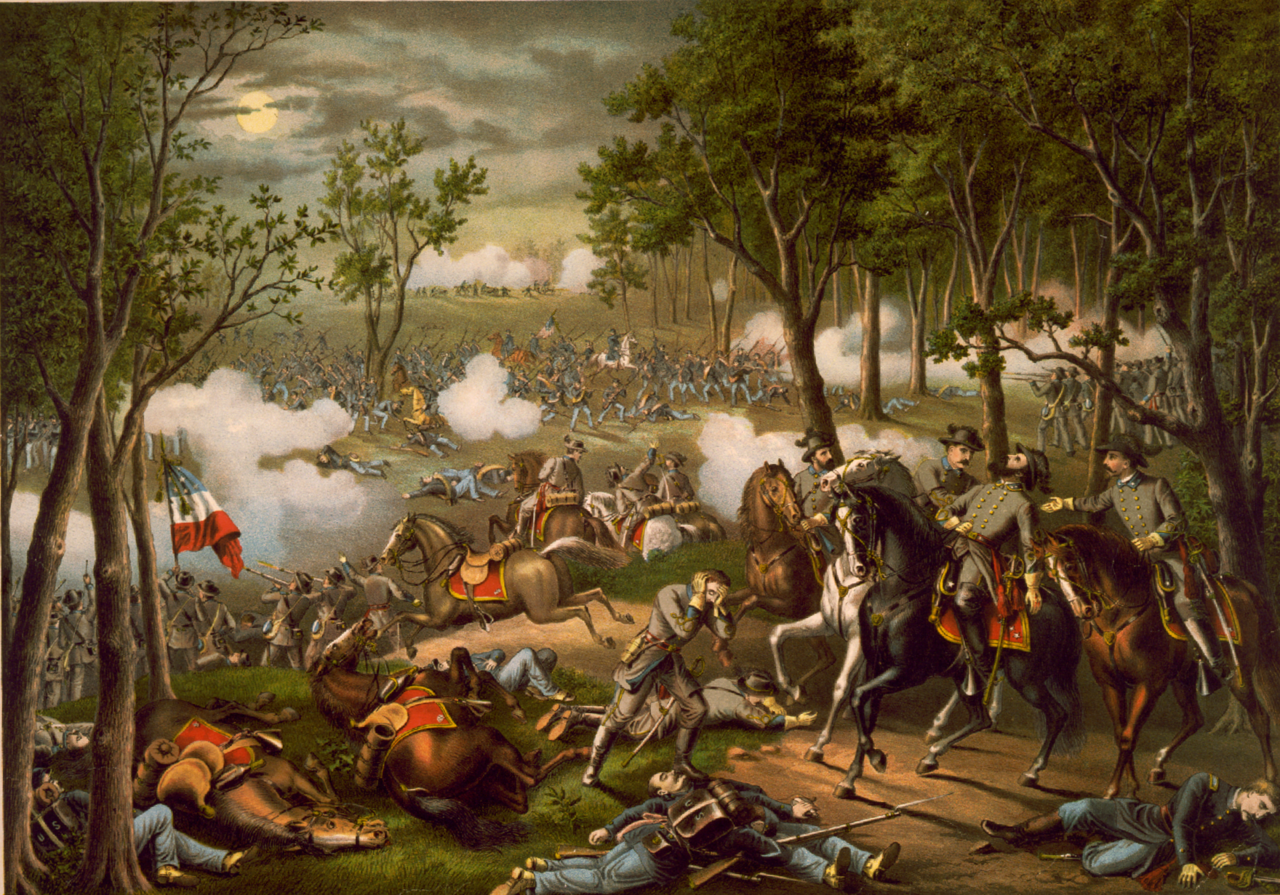




Opposing forces and commanders
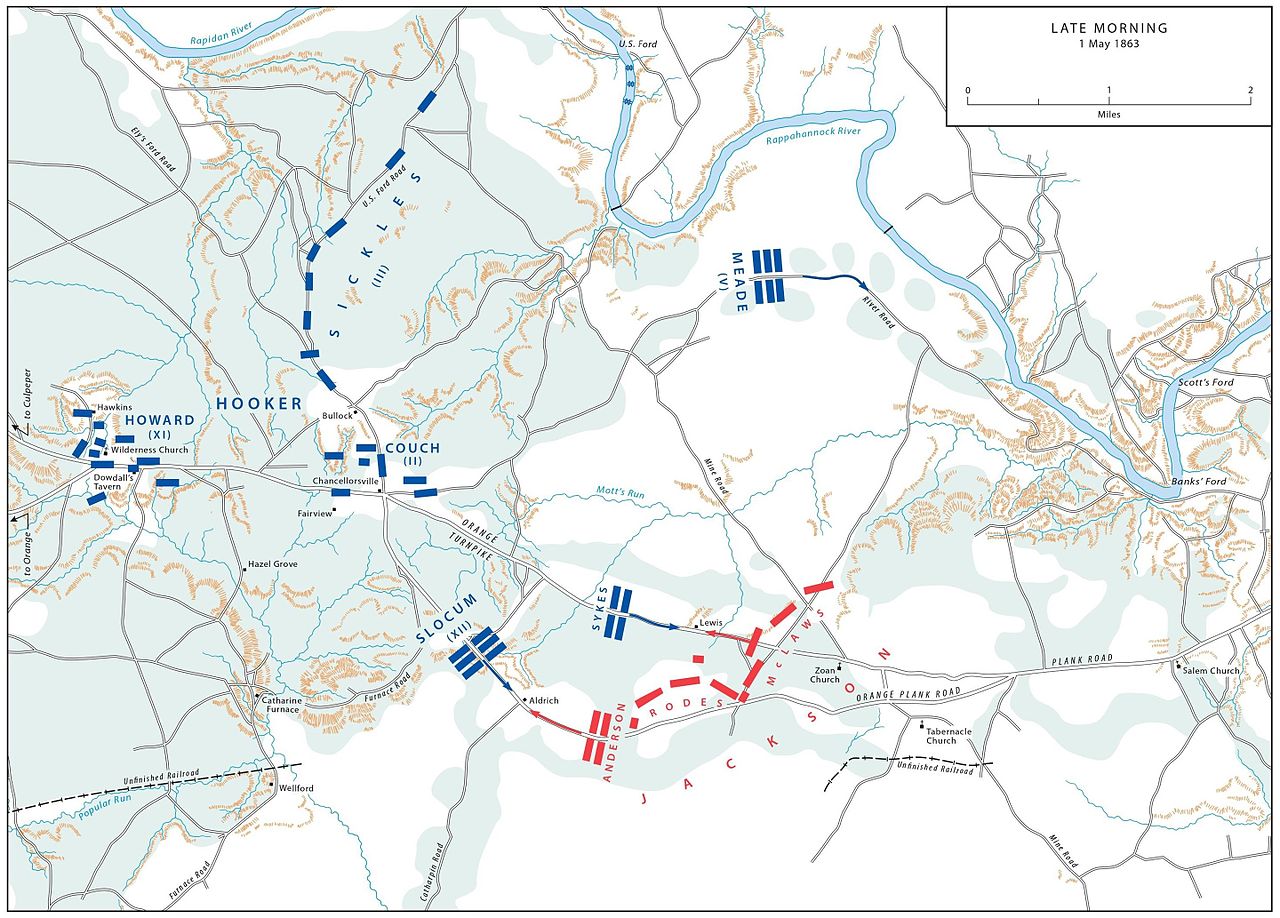
On the Confederate side, the Army of Northern Virginia was led by Robert E. Lee and included corps commanders such as Lieutenant General Thomas J. 'Stonewall' Jackson. The Union Army of the Potomac was commanded by Major General Joseph Hooker. Both sides maneuvered through dense woods and limited roads near the hamlet of Chancellorsville, creating confusion that shaped the course of the fighting.
Course of the battle
Lee’s most famous decision at Chancellorsville was to move a substantial portion of his force in a wide, concealed march to hit the Union right flank. This flanking movement, led by Jackson, succeeded brilliantly and forced Hooker to withdraw from exposed positions. The fighting involved rapid assaults, counterattacks, and close-quarters combat in the tangled and wooded terrain.
Tragically for the Confederacy, the victory was marred by a severe loss when Jackson was mistakenly shot by his own pickets during a night reconnaissance. The general was wounded and later died of complications; his wounding and subsequent death after being hit by friendly fire are commonly noted as a major Confederate misfortune. Contemporary accounts and later studies reference this incident when discussing confusion and the hazards of night operations in wooded battlefields (details, accounts).
The engagement inflicted heavy casualties on both sides and demonstrated the value—and danger—of aggressive, independent action by subordinate commanders. While Confederate forces won tactically, the loss of experienced leaders reduced the longer-term benefits of the victory. Many historians regard Chancellorsville as both a masterpiece of battlefield audacity and a Pyrrhic victory in human terms.
Aftermath and significance
- The battle affirmed Lee’s reputation for bold, risk-taking command but depleted Confederate leadership when it most needed continuity (analysis).
- Union morale suffered but the Army of the Potomac remained a potent force; strategic effects were complex rather than decisive (perspectives).
- Chancellorsville helped set the stage for subsequent campaigns in 1863, including Lee’s invasion of the North culminating at Gettysburg (context).
For readers seeking deeper study, standard military histories and primary-source collections provide orders of battle, soldier accounts, and mapped troop movements. The Battle of Chancellorsville remains a focal point in discussions of leadership, fog of war, and the interplay between tactical brilliance and strategic cost.
Questions and answers
Q: What was the Battle of Chancellorsville?
A: The Battle of Chancellorsville was a major battle in the American Civil War.
Q: When did the Battle of Chancellorsville take place?
A: The Battle of Chancellorsville took place from April 30 to May 6, 1863.
Q: What is the significance of the Battle of Chancellorsville?
A: The Battle of Chancellorsville is generally considered to be Confederate General Robert E. Lee’s greatest victory over the Union Army.
Q: How was the Confederate victory at Chancellorsville lessened?
A: The Confederate victory was lessened by the loss of Lieutenant general Stonewall Jackson, who was shot and mortally wounded by his own men who mistook the general and his staff for Union cavalry.
Q: Why was Lee's win at Chancellorsville considered a pyrrhic victory?
A: Lee's win at Chancellorsville was considered a pyrrhic victory because it came at a great cost - the loss of one of his most important generals, Stonewall Jackson.
Q: Who shot and mortally wounded Stonewall Jackson at the Battle of Chancellorsville?
A: Stonewall Jackson was shot and mortally wounded by his own men who mistook the general and his staff for Union cavalry.
Q: What is a pyrrhic victory?
A: A pyrrhic victory is a victory that is won at great cost, such that the cost of the victory outweighs its benefits.
Related articles
Author
AlegsaOnline.com Battle of Chancellorsville (April 30 – May 6, 1863) Leandro Alegsa
URL: https://en.alegsaonline.com/art/9458
Sources
- history.com : "Battle of Chancellorsville"
- historynet.com : "Battle Of Chancellorsville"
- history.com : "5 Famous Pyrrhic Victories"
- encyclopediavirginia.org : "Chancellorsville Campaign"
- nps.gov : "Battle of Chancellorsville History"
- civilwar.org : "Chancellorsville"
- nps.gov : "Chancellorsville"
- nps.gov : "Battle of Chancellorsville History: The Opening of the Campaign"
- civilwar.org : "T. J. "Stonewall" Jackson"
- americancivilwar.com : "Chancellorsville Virginia Civil War"
- civilwar.org : "10 Facts about Chancellorsville"