
Sudbury Basin
Ancient impact structure in Ontario, Canada, known for its origin as a meteorite crater, shock-modified rocks, and large deposits of nickel, copper and platinum-group metals.
The Sudbury Basin is a prominent geologic feature in central Ontario that originated as a large meteorite impact early in Earth's Proterozoic history. It is widely recognized as one of the oldest and second-largest verified impact structures on Earth. The basin sits within the Canadian Shield and forms the core of the urban and industrial region around Greater Sudbury.
Image gallery
9 Images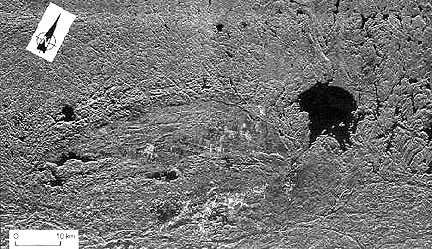


Overview and physical characteristics
The structure is an elliptical depression composed of an uplifted rim and a central zone of shock-metamorphosed rock and impact melt. The original impact produced a thick layer of melted and fractured rock; subsequent geological processes have modified the basin but leave clear signs such as shatter cones, breccias and an extensive melt sheet. The Sudbury Basin extends across part of Ontario and is often described in regional geology references as a defining landmark and a major geologic unit.
Origin and age
Most researchers agree the basin formed from a single, very large bolide that struck roughly 1.85 billion years ago. Evidence supporting an impact origin includes shock features in minerals, unique melt rocks and the distribution of altered crustal material. The event occurred long before the appearance of complex life and left a lasting imprint on the surrounding crust.
Economic and scientific importance
One of the basin's most consequential outcomes is its concentration of economically important sulfide mineralization. The Sudbury region hosts world-class deposits of nickel, copper and platinum-group elements, which have powered mining and metallurgical industries for more than a century. Scientific study of the basin has advanced understanding of impact processes, regional metamorphism and ore formation.
Notable facts and context
- The basin is located in Canada and is commonly called "The Valley" by local residents.
- It is the second-largest verified impact crater after the Vredefort structure and is routinely cited in catalogs of terrestrial impact sites marked on impact crater listings.
- Nearby geological features exist but are generally unrelated in origin to the Sudbury impact.
As both a natural laboratory and an economic engine, the Sudbury Basin remains a focus of geological research and industrial activity, illustrating how a single ancient event can shape landscape, resources and human settlement for billions of years.
Questions and answers
Q: Where is the Sudbury Basin located?
A: The Sudbury Basin is located in Ontario, Canada, specifically in the city of Greater Sudbury.
Q: What is the Sudbury Basin?
A: The Sudbury Basin is a major geologic structure that is the second-largest verified impact crater on Earth and one of the oldest.
Q: What is the Sudbury Basin referred to locally as?
A: The Sudbury Basin is referred to locally as "The Valley".
Q: Where does the urban core of the former city of Sudbury lie in relation to the Sudbury Basin?
A: The urban core of the former city of Sudbury lies on the southern outskirts of the Sudbury Basin.
Q: What are some other geological structures near the Sudbury Basin?
A: There are several other geological structures near the Sudbury Basin.
Q: Are the other geological structures near the Sudbury Basin directly related to it?
A: No, the other geological structures near the Sudbury Basin are not directly related to it in the sense of coming from the same geophysical processes.
Q: What kind of landform is the Sudbury Basin?
A: The Sudbury Basin is an impact crater, specifically one that was created by a meteorite impact.
Related articles
Author
AlegsaOnline.com Sudbury Basin Leandro Alegsa
URL: https://en.alegsaonline.com/art/94579
Sources
- passc.net : Deep Impact – Sudbury. Earth Impact Database