
Subtropical Storm Andrea (2007) — early-season subtropical cyclone
Subtropical Storm Andrea formed off Florida in May 2007 as the first named and first subtropical cyclone of the Atlantic season. It produced dangerous surf, caused indirect fatalities, and dissipated after a brief lifecycle.
Overview
Subtropical Storm Andrea was the first named storm and the first subtropical cyclone of the 2007 Atlantic hurricane season. It developed unusually early in May 2007 from a non-tropical low pressure area located offshore of eastern Florida, producing strong surf and hazardous coastal conditions for several days before weakening and losing identity. The system prompted short-lived advisories from the National Hurricane Center and is remembered chiefly for its timing and its impacts on beaches from Florida to the Carolinas.
Image gallery
7 Images


Formation and structure
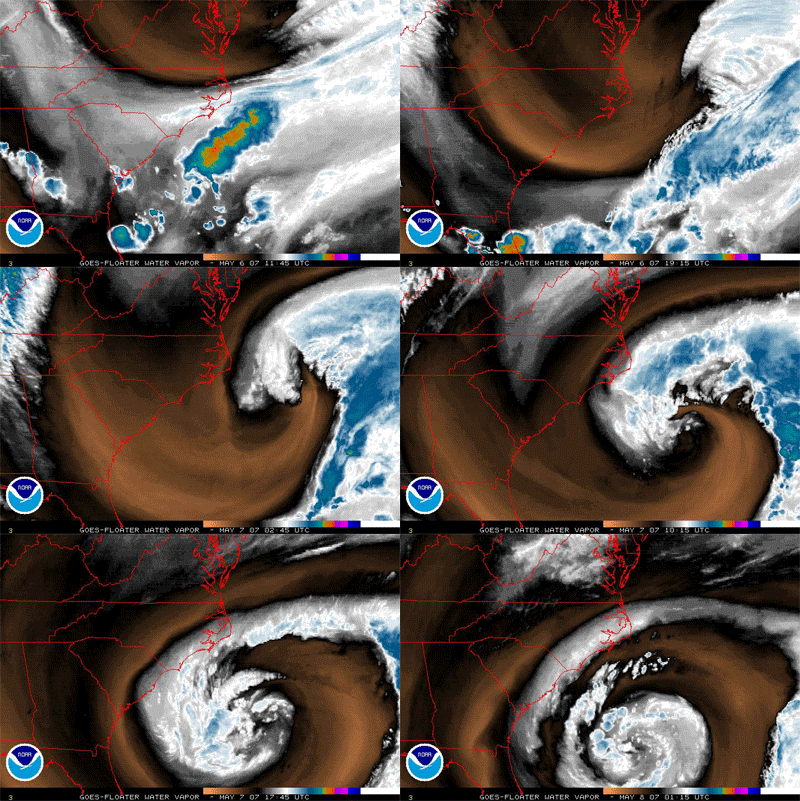
Andrea formed when a broad, non-tropical rain area off the coast of Daytona Beach acquired enough organized circulation and convective bursts to be classified as a subtropical cyclone on May 9. Subtropical cyclones are hybrid storms with characteristics of both tropical cyclones and mid-latitude low pressure systems: they commonly have a wider wind field, less concentrated central convection, and cooler cloud tops than fully tropical systems. Analysts cited increasing organization followed by the intrusion of dry air and persistent vertical wind shear as factors that limited Andrea's intensification and prompted its downgrade to a subtropical depression on May 10. The National Hurricane Center discontinued advisories the following day after the system weakened further.
Impacts and hazards
Andrea never made a classic landfall as a strong tropical storm, but its winds and swell generated dangerous surf, rip currents, and beach erosion along much of the eastern U.S. coastline from Florida to North Carolina. Local authorities reported multiple sea rescues and closures of some beaches during the event. The storm was associated with several indirect fatalities: official counts attribute a small number of deaths to drowning and accident-related incidents linked to hazardous ocean conditions while the system was in a non-tropical or extratropical phase.
Chronology and advisories
Key dates in the lifecycle of Andrea included its classification as a subtropical storm on May 9, weakening to a subtropical depression on May 10 as environmental conditions became unfavorable, and the cessation of advisories on May 11. Meteorologists tracked the system as an early example of how non-tropical lows over warm shelf waters can acquire subtropical characteristics outside the traditional June–November hurricane season.
Notable records and comparisons
Andrea was noteworthy for forming well before the official start of the Atlantic hurricane season (June 1). It was the first pre-season named storm since Tropical Storm Ana (2003) and the first storm given a May name since Arlene (1981). Observers also referenced the distinction between subtropical and tropical systems when explaining why Andrea behaved differently from ordinary tropical storms; see general descriptions of a subtropical cyclone and the 2007 Atlantic hurricane season for broader context.
Further reading and sources
- Daytona Beach regional reports
- State-level coastal advisories (Florida)
- Discussion of dry air and wind shear effects
- Extratropical transition and related hazards
Note: This article summarizes widely reported facts about the storm's lifecycle, impacts, and meteorological character without presenting exhaustive technical analyses. For official post-storm assessments and detailed advisories consult the National Hurricane Center and regional meteorological services.
Questions and answers
Q: What was Subtropical Storm Andrea?
A: Subtropical Storm Andrea was the first named storm and first subtropical cyclone of the 2007 Atlantic hurricane season.
Q: When did Subtropical Storm Andrea form?
A: Subtropical Storm Andrea formed on May 9, three weeks earlier than when the 2007 season was supposed to start.
Q: Where did Subtropical Storm Andrea form from?
A: Subtropical Storm Andrea started from a non-tropical rain weather area off the coast of Daytona Beach, Florida.
Q: Why did Subtropical Storm Andrea weaken into a subtropical depression?
A: Subtropical Storm Andrea weakened into a subtropical depression after coming near to dry air and wind shear.
Q: What was the impact of Subtropical Storm Andrea on the beach areas?
A: Subtropical Storm Andrea made bad surf along the beach areas from Florida to North Carolina.
Q: How many people died due to Subtropical Storm Andrea?
A: Andrea killed a total of 6 people not in a direct way, and 5 of those deaths happened when Andrea was extratropical before being a subtropical storm.
Q: When was the last time a tropical storm formed before the official start of the hurricane season?
A: The last time a tropical storm formed before the official start of the hurricane season was in April 2003 with Tropical Storm Ana from the 2003 season.
Related articles
Author
AlegsaOnline.com Subtropical Storm Andrea (2007) — early-season subtropical cyclone Leandro Alegsa
URL: https://en.alegsaonline.com/art/94537
Sources
- nhc.noaa.gov : "Hurdat Data for Tropical Cyclones 1851-2006"
- nhc.noaa.gov : "Subtropical Storm Andrea Discussion One"
- nhc.noaa.gov : "Subtropical Depression Andrea Discussion Five"
- nhc.noaa.gov : "Subtropical Depression Andrea Discussion Seven"
- nhc.noaa.gov : "Subtropical Storm Andrea Public Advisory One"
- wistv.com : "Forecasters: Subtropical Storm Andrea has formed"
- nhc.noaa.gov : Tropical Cyclone Report for Subtropical Storm Andrea