
Subcompact car: definition, characteristics, history and uses
A subcompact car is a small passenger vehicle class smaller than a compact. This article explains size definitions, typical features, history, common uses, examples and how it relates to similar segments.
Overview
A subcompact car is the American term for a small passenger automobile class that sits below the compact category in size and interior volume. In United States regulatory and industry usage the label helps distinguish vehicles intended primarily for urban or economical use from larger family sedans. The phrase "subcompact" is used in everyday language and in official classifications; it can be seen as the U.S. counterpart to small European segments.
For basic reference, some subcompact models are roughly no longer than about 165 inches (4,191 mm), and the United States Environmental Protection Agency classifies a passenger car as subcompact when its combined passenger and cargo interior volume measures between 85 and 99 cubic feet. These numeric thresholds are commonly cited in buyer guides and regulatory documents to separate microcars, subcompacts and compacts.
Image gallery
7 Images


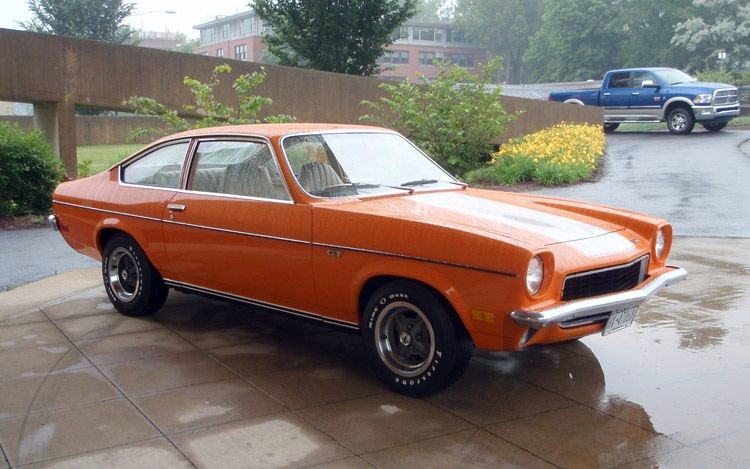
Key characteristics
- Compact exterior dimensions that favor city driving, easier parking, and lower curb weight.
- Interior space balanced for two to four occupants; some room for modest cargo but less than compacts.
- Smaller engines and fuel-efficient drivetrains are typical, prioritizing economy over performance.
- Lower purchase and operating costs compared with larger classes, though safety and comfort features vary by model and model year.
Terminology and related segments
In global automotive taxonomy, subcompact cars correspond broadly to the European A-segment and B-segment. The A-segment (sometimes called "city cars") includes the smallest purpose-built models, while the B-segment covers slightly larger small cars. In British usage, similar vehicles are called superminis. Readers can find parallel discussions of these groupings in industry reviews and regional regulatory resources.
Different sources use varied labels: in the U.S. you will see American usage contrasted with international terms; the word automobile is the general category; and the classification as noted by the EPA gives a practical interior-volume threshold. The equivalence to European segments is discussed in many automotive comparisons (A- and B-segment, city car, supermini, British terminology).
History and development
Small cars have evolved from early 20th-century compact models and postwar microcars into the modern subcompact class. Economic pressures, urbanization and advances in engine and safety technology encouraged manufacturers to offer vehicles that combine low running costs with acceptable comfort. Over time, safety regulations, emission standards and consumer expectations pushed subcompacts to adopt features once reserved for larger classes, narrowing performance and safety gaps.
Uses, examples and importance
Subcompact cars are popular where parking, maneuverability and fuel economy matter most: cities, commuting, first-time buyers and budget-conscious households. They often serve as secondary family cars or as primary transport in dense urban areas. Notable examples often cited in market coverage include models such as the Chevrolet Spark, Ford Fiesta and the Chevrolet Sonic/Aveo; ultra-short city cars include vehicles like the Smart Fortwo. Media outlets have described the global small-car market as spanning several distinct segments and use these model comparisons to explain differences in reporting.
Advantages, limitations and buyer considerations
- Advantages: lower fuel consumption, easier parking, typically lower purchase price and reduced environmental footprint.
- Limitations: less cabin and cargo space, fewer luxury or advanced features as standard, and sometimes lower perceived crashworthiness (though modern safety engineering has improved this).
- Buyer tips: check interior volume and cargo capacity figures, examine available safety features, and compare real-world fuel-economy ratings to match needs for commuting or family use.
In sum, the subcompact car remains a distinct and practical category that balances economy and functionality. Its exact boundaries depend on regional definitions and evolving market offerings, but the concept—small, efficient, and city-friendly transport—remains consistent.
Questions and answers
Q: What is a subcompact car?
A: A subcompact car is an automobile with a size smaller than a compact car and usually not longer than 165 inches (4,191 mm).
Q: How is the size of a subcompact car determined by the United States Environmental Protection Agency (EPA)?
A: According to the EPA, a passenger car is classified as subcompact if it has between 85 cubic feet (2,407 L) and 99 cu ft (2,803 L) of interior volume.
Q: What is the equivalent of the subcompact group in Europe?
A: The subcompact group in the United States is roughly the same as A-segment and B-segment cars in Europe, which are also similar in size to a city car and supermini in British terminology.
Q: How many main segments do small cars span in the global vehicle market according to the New York Times?
A: According to the New York Times, today’s small cars actually span three main segments in the global vehicle market.
Q: What are the differences between the A-segment cars and B-segment cars?
A: The tiny A-segment cars are extremely short and very light while the slightly larger B-segment cars include models like the Ford Fiesta and Chevrolet Sonic.
Q: What are some of the most popular subcompact cars?
A: The most popular subcompact cars include the Chevrolet Sonic/Aveo and the Ford Fiesta.
Q: How does the size of a subcompact car compare to a microcar and a compact car?
A: The size of a subcompact car is larger than a microcar and smaller than a compact car.
Related articles
Author
AlegsaOnline.com Subcompact car: definition, characteristics, history and uses Leandro Alegsa
URL: https://en.alegsaonline.com/art/94467
Sources
- fueleconomy.gov : "FAQ - How are vehicle size classes defined?"
- fueleconomy.gov : fueleconomy.gov/
- nytimes.com : "Taking the 'Cheap' Out of the Small Car"
- commons.wikimedia.org : Subcompact car