
Siege and Sack of Baghdad (1258) — Mongol conquest under Hulagu Khan
The 1258 Mongol capture of Baghdad ended the Abbasid caliphate's political power, involved a brutal sack and cultural losses, and reshaped Middle Eastern history.
Overview
The Battle (more accurately the siege and sack) of Baghdad in 1258 was a decisive campaign by the Mongol forces led by Hulagu Khan, a grandson of Genghis Khan. The assault ended the effective political authority of the Abbasid caliphs and resulted in widespread destruction, loss of life, and long-term changes to the region's political and cultural landscape.
Image gallery
5 Images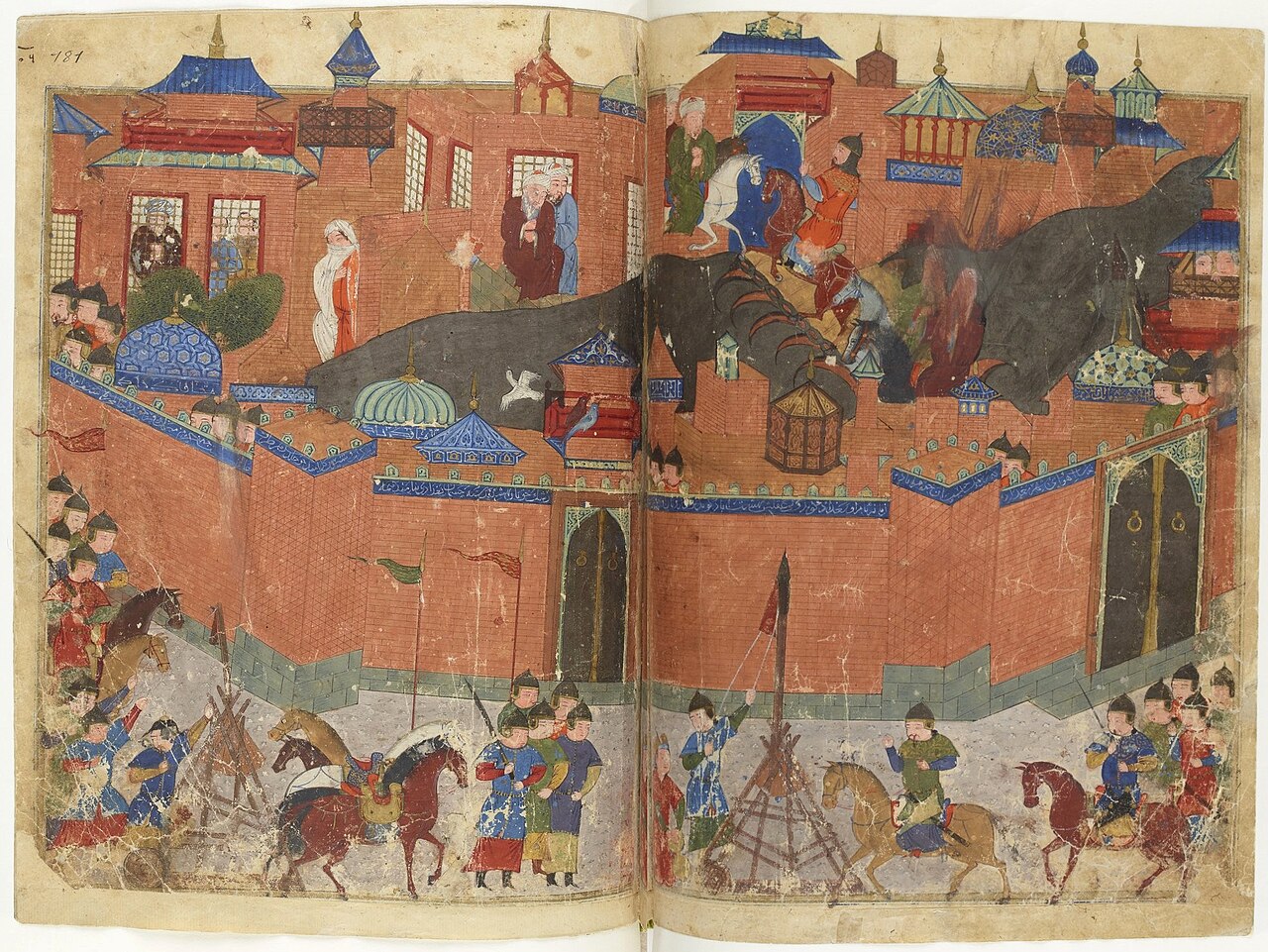


Background and belligerents
Baghdad was the capital of the Abbasid dynasty, the spiritual and administrative center of a major Islamic realm centered in what is now Iraq. The reigning caliph, al‑Musta'sim, faced an organized Mongol advance after the Mongol Empire under the Great Khan ordered a western campaign. Hulagu assembled a large multinational force that included contingents of local Christian allies and auxiliaries identified in some sources as Christian troops, and technical specialists, notably teams of Chinese military engineering experts who provided siege engines and expertise.
The siege and capture
Hulagu's army arrived outside Baghdad after a campaign that began in late 1257. The defenders were poorly prepared for the scale and intensity of the Mongol assault. Siege engines and coordinated assaults breached the city's defenses; traditional narratives describe intense street fighting and the eventual fall of the caliphal palace. Contemporary and later chronicles report that the city was systematically sacked, many inhabitants were killed or sold into slavery, and large portions of buildings and libraries were razed or looted.
Aftermath and significance
The removal and death of the caliph marked the end of the Abbasids as an independent political force, though the title later reappeared in diminished form elsewhere. The sack of Baghdad severed the city’s role as the preeminent center of the classical Islamic world. Economically and intellectually the immediate results were catastrophic; manuscript collections and institutions traditionally associated with Baghdad suffered severe losses, though the precise scale of cultural destruction remains debated among historians.
Notable facts and legacy
- The campaign was ordered by the Mongol Great Khan and executed by Hulagu with a notably large force drawn from across the empire, reflecting the imperial priorities of the time.
- Accounts emphasize the use of sophisticated siege technology, including engines operated by specialists often described as coming from China and other regions.
- The event accelerated shifts in regional power: successor states, including the Mamluks in Egypt and other regional dynasties, contested Mongol influence in the decades that followed.
For further reading on leaders, forces, and the broader context, see profiles of Hulagu, the lineage of Genghis, the city of Baghdad, the Islamic world of the period, geography of Iraq, the office of the caliph, the Mongol Empire, contemporary Christian allies, and technical articles on Chinese military engineering.
Questions and answers
Q: Who won the Battle of Baghdad in 1258?
A: The Mongol leader Hulagu Khan won the Battle of Baghdad in 1258.
Q: What was the capital of the Abbasid Empire?
A: The capital of the Abbasid Empire was Baghdad.
Q: What dynasty were the Abbasid caliphs?
A: The Abbasid caliphs were the second of the Islamic dynasties.
Q: Who led the Mongol army in the Battle of Baghdad?
A: The Mongol army in the Battle of Baghdad was led by Hulagu Khan and the Chinese commander Guo Kan in vice-command.
Q: When did the Mongol army set out for Baghdad?
A: The Mongol army set out for Baghdad in November of 1257.
Q: How big was the army led by Hulagu in the Battle of Baghdad?
A: Hulagu marched with what was probably the largest army ever fielded by the Mongols. By order of Mongke Khan, one in ten fighting men in the entire Mongol Empire were gathered for Hulagu's army.
Q: Did the attacking army have any Christian forces and Chinese military engineering troops?
A: Yes, the attacking army also had a large contingent of Christian forces and of Chinese military engineering troops.
Related articles
Author
AlegsaOnline.com Siege and Sack of Baghdad (1258) — Mongol conquest under Hulagu Khan Leandro Alegsa
URL: https://en.alegsaonline.com/art/9437