
Struggle for Existence: concept, history and role in evolution
The struggle for existence describes how organisms compete and depend on one another for survival. Central to Darwin and Wallace's development of natural selection, it remains a foundational ecological and evolutionary concept.
Overview
The term "struggle for existence" is commonly used as a descriptive phrase in natural history to indicate how organisms interact through competition, dependence and limitation of resources. In scientific usage it functions as a broad metaphor that encompasses many kinds of biological interactions: direct contests for food or territory, indirect competition mediated by the environment, and more subtle dependencies such as pollinator relationships or predator–prey dynamics. Writers often link this idea to the basic ecological fact that populations cannot grow indefinitely; limits imposed by resources, disease and climate shape how many individuals survive and reproduce. For discussion of its cultural and historical uses see secondary literature and historical overviews that treat the phrase as a metaphor rather than a literal all-out fight. For the simple notion that life involves competition and hazard see general introductions to ecology and evolution at introductory resources.
Image gallery
4 Images

Historical development
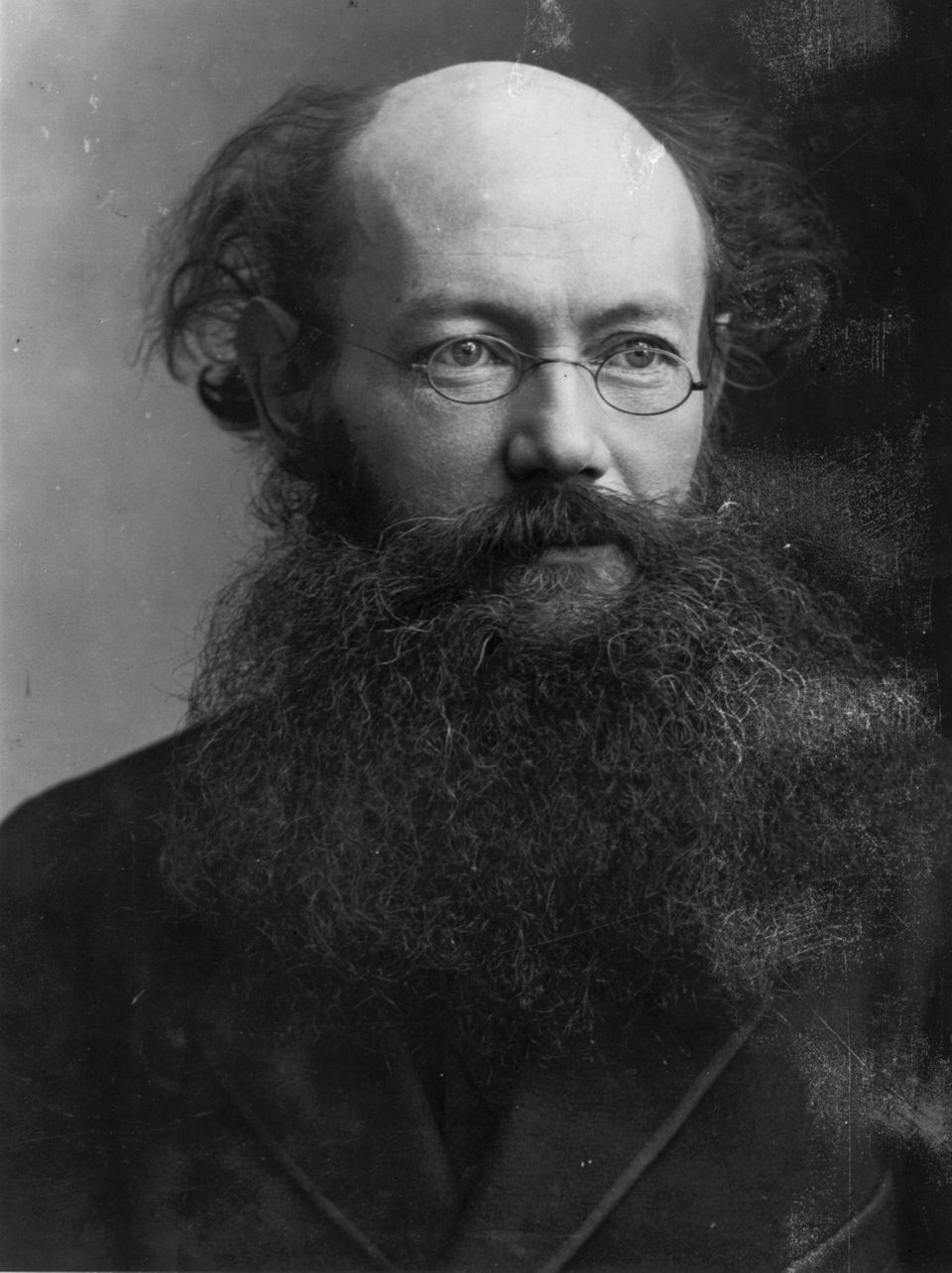
The phrase became scientifically prominent after the mid-19th century, largely because of its repeated use by Charles Darwin. Darwin employed it in the third chapter of his 1859 work On the Origin of Species, and he credited the demographic ideas of Thomas Malthus as an important influence. Malthus had argued that human populations have the potential to expand faster than the supply of food and other necessities, creating a persistent tension between population growth and available resources; historians often cite Malthus when tracing the intellectual antecedents of the concept (see material on population growth and limits at population theory). Alfred Russel Wallace arrived at similar conclusions independently, and his correspondence and parallel essays helped precipitate the joint presentation of natural selection. The term was already present in earlier naturalist writings that noted fierce competition among organisms, but Malthus directed attention to intra‑species struggles for sustenance and reproduction, rather than only interspecies rivalry; readers can find discussions of resource competition and scarcity at resources and limits.
Darwin, Wallace and the synthesis of ideas
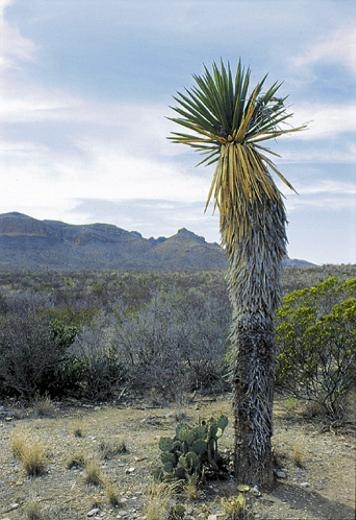
During his voyage on the HMS Beagle Darwin collected many observations about variation, distribution and adaptation that later bore on the idea of struggle. Reports say that Darwin first encountered Malthusian arguments through family correspondence and through contemporary writers such as Harriet Martineau; he later discussed these influences in London meetings and private notes, where he emphasized both the reproductive potential of organisms and the checks that prevent unbounded growth. Darwin explicitly broadened the notion of struggle beyond violent conflict to include dependence and indirect competition: for example, a plant surviving at the edge of a desert is engaged in a struggle when coping with moisture scarcity. Wallace, writing from different fieldwork, used a similar phrase and drew on the same Malthusian sources; his independent formulation strengthened the case that natural selection could explain adaptation. For biographical and documentary sources on these exchanges see materials on Wallace and contemporaries at Wallace studies and accounts of Victorian intellectual networks at Victorian writers.
Conceptual elements and how it works
The struggle for existence combines several distinct ideas that are important to understand separately. First, organisms have the capacity to produce more offspring than the environment can support; unchecked, many species show potential for geometric or exponential increase. Second, environmental limits—food, space, water, shelter, suitable mates, climate stability and disease—act as checks that prevent infinite growth. Third, individuals differ in heritable traits that influence survival and reproduction; those differences determine who leaves most descendants. These points together form the conceptual bridge from the observation of competition to the mechanism of natural selection, and from natural selection to the broader theory of evolution. The role of heredity and transmission of traits is central: without some stability in inherited characteristics the differential success of individuals would not produce cumulative change. For accessible summaries of heredity and transmission see resources at heredity basics.
Types of struggle and modern interpretations
Modern ecologists and evolutionary biologists interpret the struggle for existence in a variety of, sometimes complementary, ways. It may be direct and aggressive, as when animals fight over mates or territory; it may be exploitative, as when individuals remove shared resources that others could have used; it may be apparent, mediated by differential vulnerability to parasites and predators; or it may be ecological, manifested as sensitivity to abiotic conditions such as drought or cold. Contemporary theory uses precise terms—competition, predation, parasitism, mutualism, density dependence—to describe these dynamics and to model population responses and evolutionary outcomes. The classical image of a continuous, individual-to-individual fight tends to be replaced by networked and context-dependent views: organisms are simultaneously competitors, prey, mutualists and environmental responders. For practical and theoretical discussions of these categories see overviews at species interactions and applied ecology texts linked at ecology resources.
Usage, misuses and notable distinctions
Because the phrase "struggle for existence" is evocative, it has been applied outside biology in economic, political and social argumentation. Caution is needed: the biological concept does not prescribe ethical or political rules, and historical misapplications—often bundled under the label "Social Darwinism"—have used an impoverished reading of natural selection to justify social policies. Scientific discussion distinguishes between metaphorical language used to summarize complex interactions and precise causal claims supported by empirical data. Scholars also emphasize that "struggle" can mean dependence as much as conflict: many organisms rely on other species for food, shelter or reproduction, and such dependencies are part of the same web that ties individuals into population and community dynamics. For background on historical misuses and critical perspectives consult materials at evolutionary theory histories and on medical and colonial contexts at historical health accounts.
Examples and practical importance
Examples of the struggle are visible in simple field observations: seedlings competing for light under a closed canopy, territorial birds defending feeding grounds, pathogens spreading faster in crowded host populations, or drought reducing plant survival at a range margin. The concept remains central in conservation biology, pest management and understanding how populations respond to environmental change. Identifying which limiting factors operate in a population and how they translate into differential reproduction helps biologists predict trends and design interventions. For introductions to applied uses, consult materials on population dynamics and management at population dynamics and applied conservation guides at conservation resources.
- Key point: the phrase is a broad descriptive tool rather than a literal prescription for continuous fighting.
- Key point: Darwin and Wallace independently connected this idea with natural selection, drawing on prior demographic thought.
- Key point: modern ecology frames the struggle as multiple interacting processes—competition, predation, disease, and environmental stress—that together shape populations.
For further reading and source documentation see general histories and annotated editions of primary texts at textual histories, bibliographies of Victorian science at historical bibliographies, and curated online introductions at educational portals. Additional archival and biographical material may be found through reference collections and scholarly editions noted at archive guides and specialized bibliographies.
Questions and answers
Q: What is the struggle for existence?
A: The struggle for existence is a metaphor used to describe the competition between living things to survive. It was popularized by Charles Darwin in his book, Origin of Species.
Q: Who first coined the phrase "struggle for existence"?
A: The phrase "struggle for existence" was originally used by Thomas Malthus in his Essay on the Principle of Population.
Q: How did Darwin come across Malthus' ideas?
A: Darwin heard about Malthus' ideas from letters sent to him by his sister Fanny while he was voyaging on HMS Beagle. Fanny told him that Harriet Martineau, an early feminist writer, was promoting Malthus' ideas. Later, when he returned to London, Darwin met Martineau over dinner and began thinking more deeply about Malthus' work.
Q: What did Darwin realize about population growth?
A: Darwin realized that every species of living thing has the potential to increase geometrically (2, 4, 8, 16...), yet this pattern of population growth does not happen in practice due to competition between animals and limited resources such as food and water. He also noted that wars and disease can prevent populations from growing too quickly.
Q: What two additional ideas did Darwin combine with the struggle for existence?
A: In addition to noting competition between organisms as part of the struggle for existence, Darwin combined this idea with two other concepts - that some organisms are better suited than others to succeed in this struggle; and that characteristics must be at least partly inherited through heredity - which led him to develop his theory of evolution by natural selection.
Q: How did Wallace come up with a similar conclusion as Darwin's?
A: Wallace independently came up with a similar conclusion as Darwins after recovering from malaria in East Indies and sending an essay containing the phrase "The life of wild animals is a struggle for existence"to him 1858. He had not known much about Darwins ideas but reached it from one of later editions of Malthuss Essay on population
Related articles
Author
AlegsaOnline.com Struggle for Existence: concept, history and role in evolution Leandro Alegsa
URL: https://en.alegsaonline.com/art/94349
Sources
- wku.edu : "On the tendency of varieties to depart indefinitely from the original type"