
Straight-eight engine (inline-eight): design, history and usage
An inline-eight (straight-eight) engine places eight cylinders in a row on a single crankshaft. Once prized for smoothness in luxury and racing cars, it was largely superseded by more compact V8 layouts.
The straight-eight, or inline-eight, is an internal combustion configuration in which eight cylinders are arranged sequentially along a single crankshaft. This layout—sometimes written "straight-8"—was used with different fuels and induction systems, including gasoline and diesel, and with a variety of valve-train arrangements. In plain terms it is an internal combustion engine that mounts all eight cylinders in one straight line on a single long crankshaft.
Image gallery
7 Images


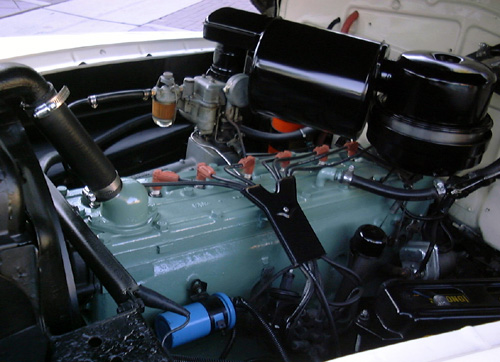
Design characteristics
The straight-eight's main engineering feature is its long crankshaft, which allows even spacing of firing events and can produce inherently smooth primary and secondary balance when properly timed. That smoothness made the configuration desirable where refinement was a priority. However, every engine has dynamic forces and crankshaft vibration can be significant in long, slender shafts. To control this torsional vibration a harmonic damper or similar damping device is normally fitted at the crank’s end; without adequate damping the shaft is vulnerable to fatigue and failure.
Advantages and disadvantages
- Advantages: Known for quiet, smooth operation and a linear packaging that simplified manifolding and cam drive arrangements in some designs.
- Disadvantages: The overall length demands a long engine bay, increases bending and torsional stresses on the crankshaft, and makes the block less rigid than shorter configurations. These packaging and strength drawbacks led manufacturers to prefer more compact formats.
History and applications
From the 1920s through the mid-20th century the straight-eight was widely used in luxury automobiles and in some racing cars because of its refinement and torque characteristics. As vehicle design evolved after World War II, the shorter, stiffer V8 engine and improved V-type and multi-bank arrangements offered similar power with far better packaging, leading to the decline of the inline-eight in mainstream production.
The straight-eight was not confined to road cars. Early aircraft manufacturers, including Mercedes and BMW, developed inline engines during World War I. In aeronautical contexts the slim profile of a straight-line cylinder bank could improve streamlining and frontal area, benefiting aerodynamics and cooling layout.
Legacy, modern use and distinctions
Today the straight-eight survives mainly in classic and vintage vehicles, historic racing, and specialist restorations. Enthusiasts value the characteristic smoothness and period-correct engineering. Technically, it remains an instructive example of how cylinder layout influences vibration, torsional dynamics and vehicle packaging. When comparing layouts, designers weigh the straight-eight’s refinement against modern alternatives that concentrate mass and shorten rotating assemblies for improved structural stiffness and space efficiency.
For further technical context and historical examples see related resources on engine balance, crankshaft dynamics and early 20th-century automotive engineering: technical overview, cylinder arrangements, crankshaft design, and discussions of fuel and ignition systems at gasoline and diesel technology sources. Additional reading on vibration control and dampers is available at harmonic damper guides, while comparative histories contrast the straight-eight with the V8 engine and other inline configurations. Historical manufacturer notes and wartime aviation applications can be explored via pages on Mercedes, BMW, and World War I powerplant development; aerodynamic considerations are summarized in resources linked at aerodynamics.
Questions and answers
Q: What is a straight-eight engine?
A: A straight-eight engine is an internal combustion engine with 8 cylinders that are mounted in a straight line along one crankshaft.
Q: What is another name for the straight-eight engine?
A: Sometimes, it is called an inline-eight engine.
Q: What types of fuels can power a straight-8 engine?
A: A straight-8 engine can be powered by different types of fuels, including gasoline and diesel.
Q: Why is the use of a harmonic damper important in a straight-8 engine?
A: The use of a harmonic damper is needed to prevent crankshaft vibration. Without the damper, the vibrations may lead to engine failure.
Q: What makes the straight-8 engine a popular choice in luxury and racing cars of the past?
A: The straight-8 engine is a smooth running engine, which makes it popular in luxury and racing cars of the past.
Q: Why is the basic design of the straight-8 engine unacceptable in modern vehicles?
A: The length of the straight-8 engine required a long engine compartment, which makes the basic design unacceptable in modern vehicles.
Q: Which companies made straight-8 aircraft engines during World War I?
A: Mercedes and BMW made straight-8 aircraft engines during World War I.
Related articles
Author
AlegsaOnline.com Straight-eight engine (inline-eight): design, history and usage Leandro Alegsa
URL: https://en.alegsaonline.com/art/94146
Sources
- freespace.virgin.net : "Welsh Motor Sport - Cars"
- freespace.virgin.net : Welsh Motor Sport History
- histomobile.com : "Histomobile: Leyland - 1920s"