
Stepanakert (Khankendi): a contested city in Nagorno-Karabakh
Stepanakert (Armenian) — Khankendi (Azerbaijani) is the largest city in Nagorno-Karabakh, long at the centre of the Armenia–Azerbaijan dispute; it has served as the de facto capital of Artsakh and has a complex recent history.
Overview
The city known in Armenian as Stepanakert and in Azerbaijani as Khankendi lies in the mountainous territory commonly called Nagorno-Karabakh. It has been at the heart of a long-standing territorial and ethnic dispute between Armenia and Azerbaijan. Legally the area is recognised by most states as part of Azerbaijan; for many years the city functioned as the de facto capital of the self-proclaimed Republic of Artsakh.
Image gallery
10 Images


Characteristics and urban profile
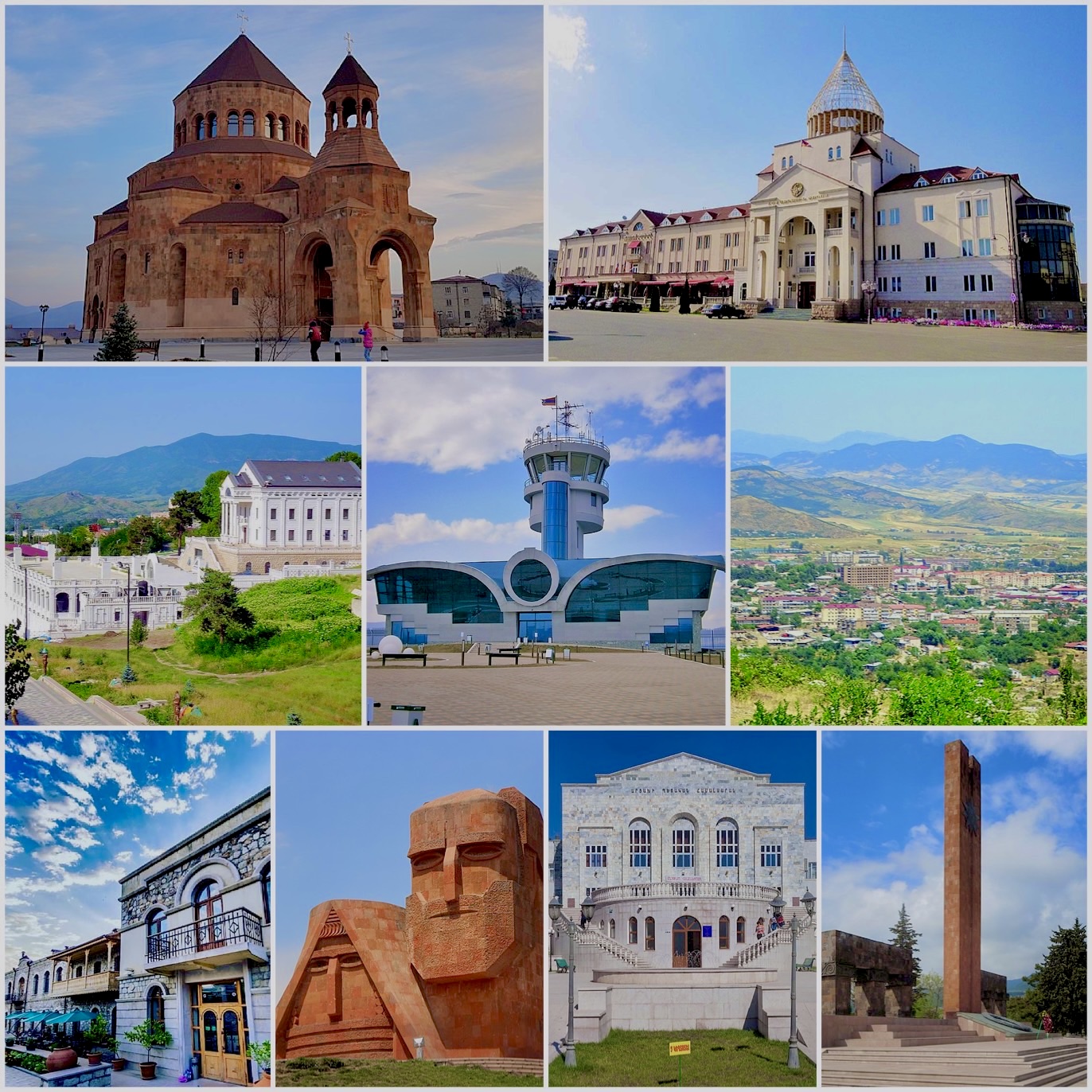
Stepanakert developed as the principal urban centre of the region, with civic administration, cultural venues, schools and basic services concentrated there. The cityscape includes a mix of Soviet-era apartment blocks, public monuments and newer construction when stability permitted rebuilding. Its economy historically relied on local services, administration and small-scale industry typical of regional centres.
Historical background
Under Soviet rule the town served as the administrative centre of the Nagorno-Karabakh Autonomous Oblast within the Azerbaijan SSR. Ethnic tensions that grew in the late 1980s led to armed conflict after the Soviet collapse. Fighting in the early 1990s resulted in a change of control and the displacement of many residents; during and after that period the city became dominated by an Armenian population.
Demographics and displacement
Before renewed hostilities in the 1990s the city had mixed communities; the entire Azerbaijani population left amid the war and subsequent insecurity, and the city became predominantly Armenian in composition. Estimates in the years that followed often cited a population figure around 40,000 (Armenian residents). Accounts and reports also describe the wartime departure of Azerbaijani inhabitants (see sources).
Recent developments and significance
The status and control of Stepanakert/Khankendi have changed with shifts in the military and political situation in the region. Periodic armed clashes, a large-scale conflict in 2020 and later political and military developments affected governance, movement and access. The city has high symbolic importance to both communities: for Armenians it was the administrative and cultural centre of Artsakh, while for Azerbaijan it is part of sovereign territory.
Notable facts and context
- Names: the dual naming reflects competing national narratives and languages.
- Administrative role: served as the central city for regional administration under different authorities.
- Cultural life: the city hosted theatres, schools and civic events when conditions allowed.
- International status: the local self-declared authorities were widely unrecognised internationally, while the territory is generally considered part of Azerbaijan.
For further reading on place names, administrative history and recent events consult specialist studies and contemporary reports linked to place-name and conflict overviews; local and international sources provide complementary perspectives on the city’s changing role and population dynamics. City information sources can offer additional administrative and demographic detail.
Questions and answers
Q: What is Stepanakert?
A: Stepanakert is a city in Nagorno-Karabakh.
Q: What is the official language of Stepanakert?
A: The official language of Stepanakert is Armenian.
Q: Who controls Stepanakert militarily?
A: Stepanakert is militarily controlled by the Armenian forces.
Q: What is the population of Stepanakert?
A: The city has about 40,000 Armenians.
Q: Is Stepanakert legally a part of Azerbaijan?
A: Yes, Stepanakert is legally a part of Azerbaijan.
Q: Is there any Azerbaijani population in Stepanakert?
A: No, the entire Azerbaijani population left the city during the Nagorno-Karabakh War and it is currently populated fully by Armenians.
Q: What is the alternative name of Stepanakert?
A: The alternative name of Stepanakert is Khankendi in Azerbaijani language.
Related articles
Author
AlegsaOnline.com Stepanakert (Khankendi): a contested city in Nagorno-Karabakh Leandro Alegsa
URL: https://en.alegsaonline.com/art/93737
Sources
- armeniapedia.org : Results of 2005 census of the Nagorno-Karabakh Republic