
Stellar classification: organizing stars by spectrum and temperature
System that groups stars by spectral characteristics and temperature. Describes spectral types (O–M), numeric subclasses, luminosity classes, history (Harvard, MK), uses, and notable special classes.
Stellar classification is the system astronomers use to group stars according to the appearance of their light, most commonly the detailed pattern of absorption and emission seen in a star's spectrum. Observing these spectral features reveals a star's surface temperature, chemical fingerprints and, with additional information, its size and luminosity. The practice is central to modern astronomy and underpins how scientists compare and interpret different stars.
Image gallery
10 Images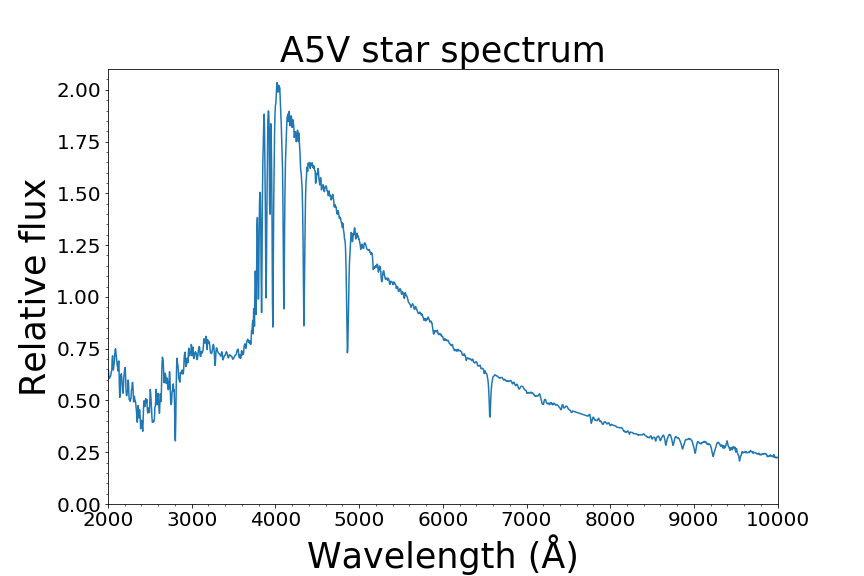




How the system works
Classification relies on spectroscopy: splitting starlight into its component colors and measuring the strengths of specific lines. Certain atoms and ions produce characteristic lines at given temperatures, so the pattern of lines is a proxy for surface temperature. The classical spectral sequence is ordered from hottest to coolest as O, B, A, F, G, K and M. Each letter is further divided into numeric subclasses 0–9 (for example, G2), which refine the temperature estimate, and a separate luminosity class (I to V) distinguishes supergiants from main-sequence stars.
- O: hottest, blue; strong ionized helium lines.
- B and A: blue-white to white; hydrogen lines often strongest in A-type.
- F and G: yellow-white to yellow; metal lines grow stronger (the Sun is a G-type).
- K and M: orange to red; molecules and neutral metal lines appear in cool M stars.
History and major systems
Early work at the Harvard College Observatory produced the letter sequence still in use today, refined by astronomers such as Annie Jump Cannon. In the 20th century the two-dimensional Morgan–Keenan (MK) system added luminosity classes to separate stars of similar temperature but different sizes and intrinsic brightness. Modern classification uses both visual spectra and calibrated photometric measurements and is continually refined with higher-resolution data.
Uses and practical significance
Knowing a star's spectral type gives a quick estimate of its temperature, color and typical mass range, and when combined with luminosity class it indicates evolutionary state (for instance, main-sequence, giant or supergiant). Classification is used to select candidates for further study, to build Hertzsprung–Russell diagrams that reveal stellar evolution, and to infer properties of star clusters and galaxies by their stellar populations.
Special classes and notable facts
Beyond O–M there are additional or specialized categories: Wolf–Rayet stars (often labeled W) show strong emission lines from heavy elements; carbon-rich stars are sometimes designated R or N; S-type stars have prominent s-process element features. White dwarfs use a separate notation (e.g., DA, DB) to describe their atmospheric composition. It is important to note that spectral type primarily indicates surface temperature and spectral features, not directly the star's mass or age, though those quantities are related through stellar evolution.
For concrete examples, the Sun is classified as a G-type star and more precisely as G2V in the MK system, indicating a yellow main-sequence star. Observational techniques and classification catalogs are available for further exploration via spectroscopy resources such as spectral databases and introductory materials on stellar temperature and light analysis. General references and outreach pages provide overviews of the topic (context on Earth's nearest star and the Sun), while technical archives and archives of stellar spectra can be found through specialized portals and observatory sites.
Classification remains a practical, evolving toolkit: as instrumentation improves, astronomers refine categories, discover peculiar spectra, and extend systems to unusual objects while keeping the basic O–M sequence as a foundational framework.
Questions and answers
Q: What is stellar classification?
A: Stellar classification is a way of grouping stars based on their temperature.
Q: How can the temperature of a star be measured?
A: The temperature of a star can be measured by looking at its spectrum, or the type of light that it shines.
Q: What are the seven main spectral types?
A: The seven main spectral types are M, K, G, F, A, B and O.
Q: Which type of star is the coldest?
A: M stars are the coldest stars.
Q: Which type of star is the hottest?
A: O stars are the hottest stars.
Q: Are there any other types in addition to these seven main ones?
A: Yes, there are other types such as W, R, N and S which are harder to find.
Q: What class is our closest star to Earth - the Sun - classified as?
A: The Sun is classified as a class G star.
Related articles
Author
AlegsaOnline.com Stellar classification: organizing stars by spectrum and temperature Leandro Alegsa
URL: https://en.alegsaonline.com/art/93706
Sources
- adsabs.harvard.edu : adsabs.harvard.edu/abs/1981A&AS...46..193H.html
- adsabs.harvard.edu : adsabs.harvard.edu/abs/2001JRASC..95...32L.html
- vendian.org : "What color are the stars?"
- casa.colorado.edu : "What color is the sun?"