
Statue of Unity: memorial to Sardar Vallabhbhai Patel in Gujarat, India
Monument in Gujarat honoring Sardar Vallabhbhai Patel, opened in 2018. Covers design, construction, engineering features, visitor facilities, management and the cultural and political debates surrounding the project.
Overview
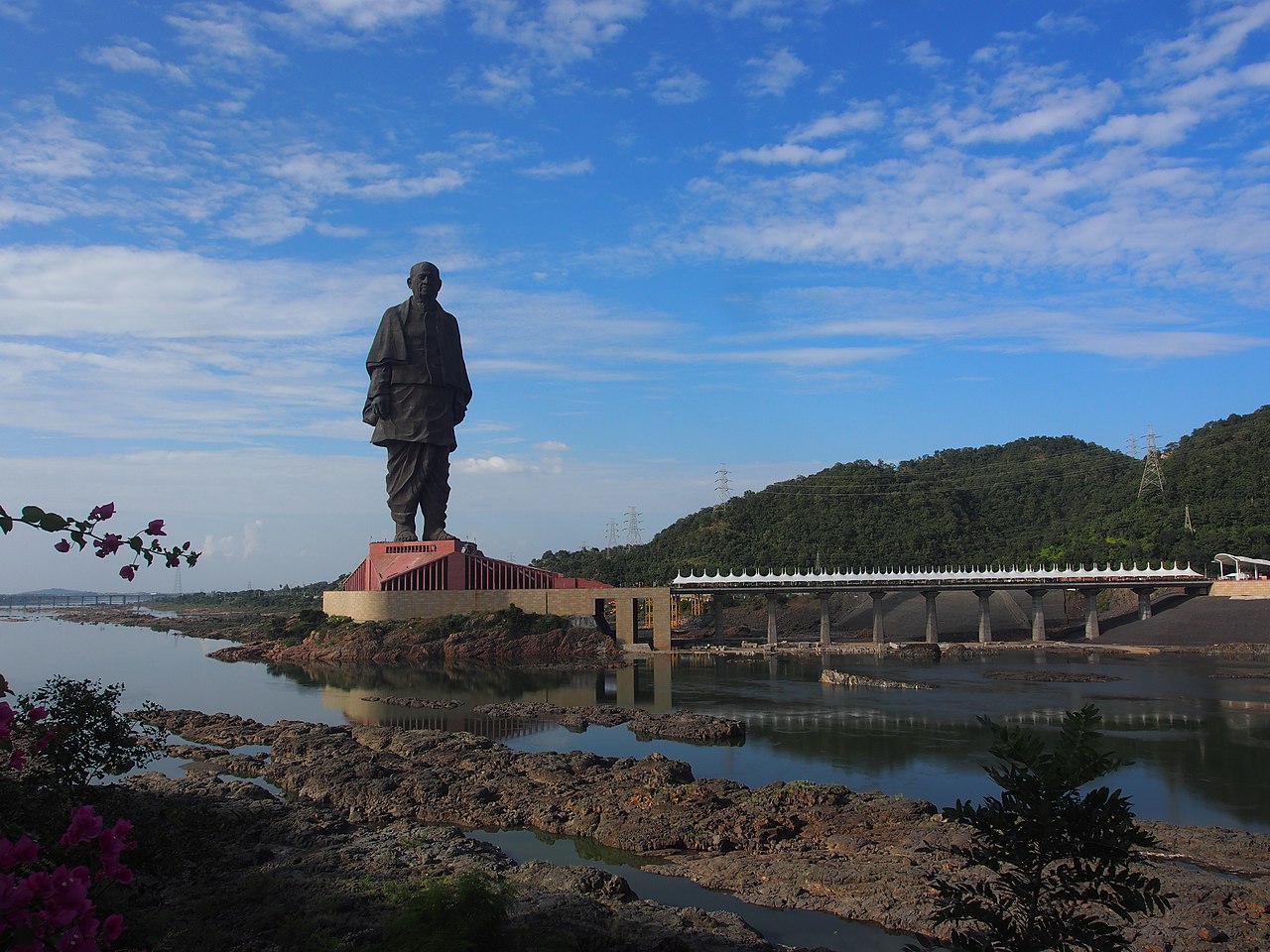
The Statue of Unity is a monumental sculpture dedicated to the Indian independence leader and statesman Sardar Vallabhbhai Patel. Unveiled on 31 October 2018, it stands on Sadhu Bet, an island in the Narmada River near the Sardar Sarovar Dam in the Narmada district of Gujarat. Commissioned by the state government and managed through a special trust, the memorial was intended as a national landmark and a tribute to Patel’s role in integrating the princely states after independence. At 182 metres tall, the completed structure is widely cited as the world’s tallest statue.
Image gallery
10 Images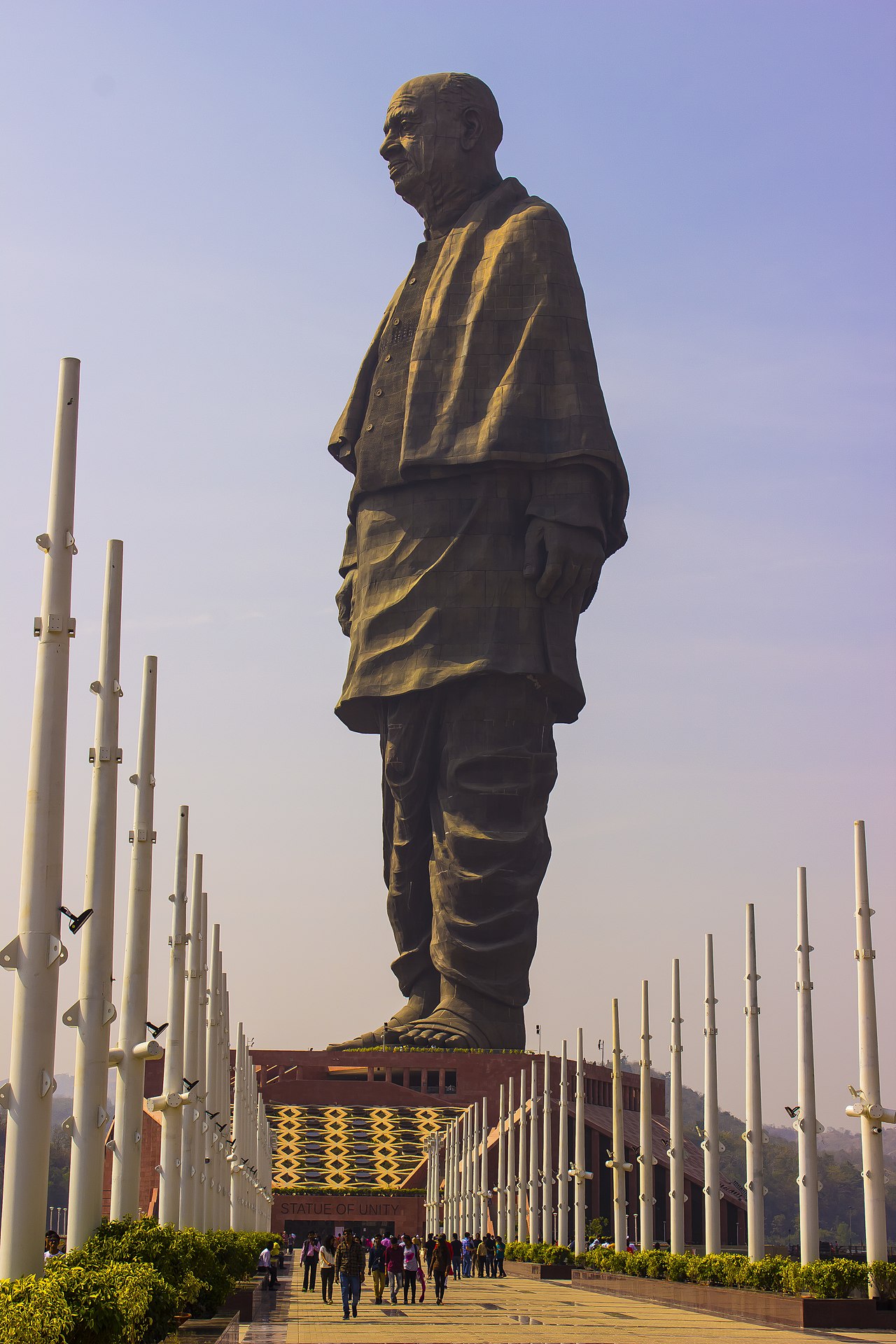




Design and location
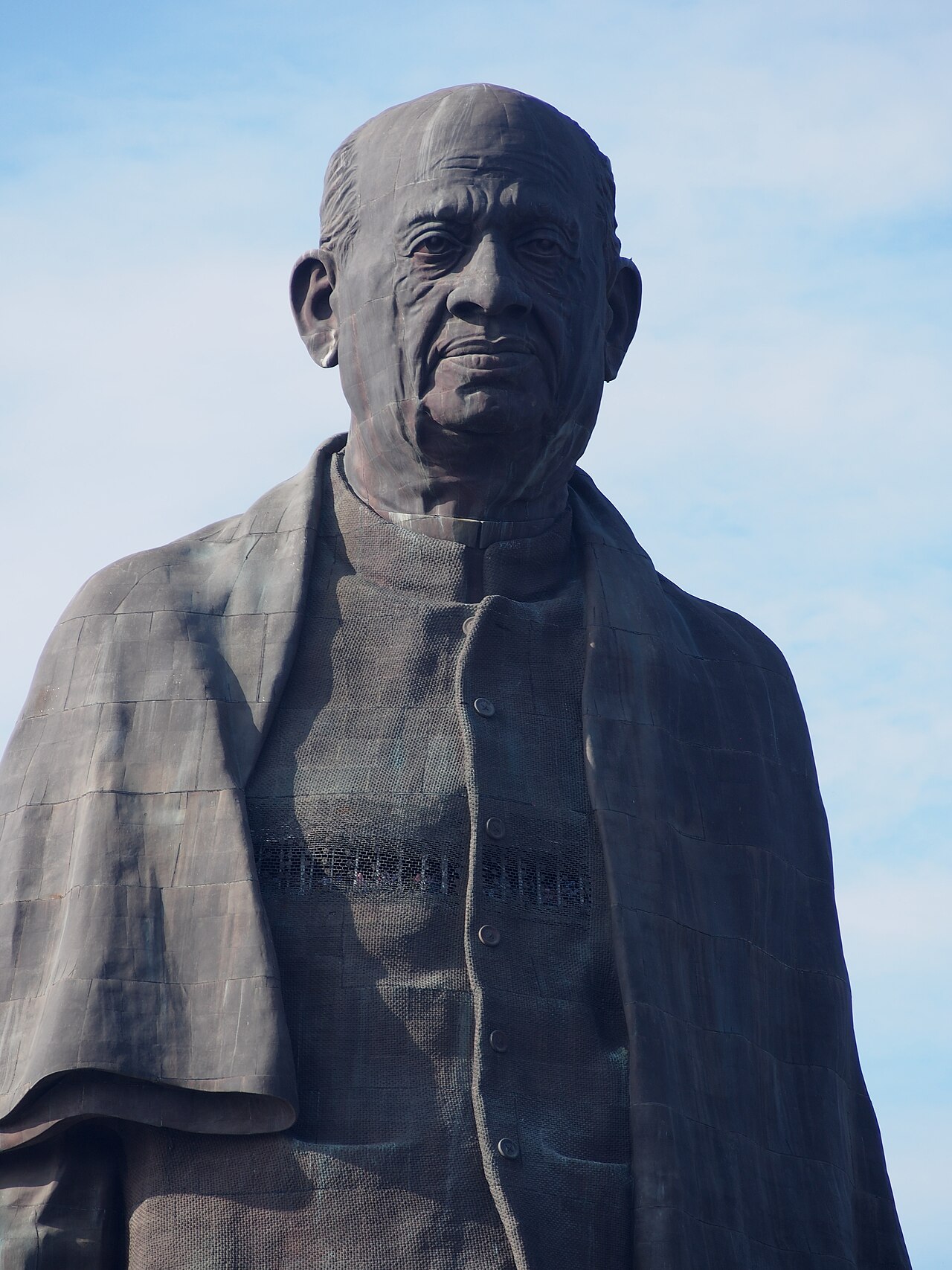
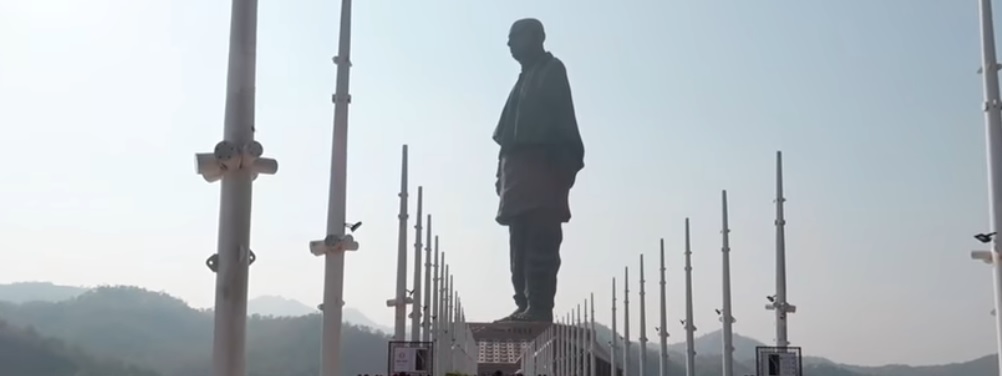
The statue was designed by the Indian sculptor Ram V. Sutar and executed by a multidisciplinary team of architects, engineers and fabricators. The site chosen for the memorial is near the village of Kevadia (also spelled Kevadiya) and the Sardar Sarovar reservoir; the statue faces across the river and is visible from the dam and surrounding hills. The sculptural design reproduces a standing figure of Patel in formal attire and was conceived to function both as a commemorative portrait and as a public viewing landmark.
Construction and contractors
Construction combined heavy civil engineering with large-scale metalwork and precision cladding. The principal contractor on the project was the engineering firm Larsen & Toubro, which coordinated foundations, the reinforced concrete core and the structural steel framework. External shaping was achieved with a system of prefabricated bronze panels fixed to the structural frame. Reported project costs were around US $430 million, reflecting the scale of materials, transport and specialized fabrication required for a structure of this height.
Structural features and materials
The statue’s core is a thick reinforced concrete structure supported by a steel skeleton, to which bronze cladding panels are anchored. Designers incorporated measures to ensure durability in the local climate and to meet safety standards for public access. Reports note the symbolic use of iron items collected from across India for parts of the work. The monument was engineered for wind and seismic loads appropriate to the region; published accounts indicate design values intended to resist very high wind speeds and seismic forces.
Viewing gallery and visitor elements
An internal viewing gallery is installed within the upper portion of the statue; this deck is positioned well above ground level and offers panoramic views over the Narmada River, the dam and the surrounding landscape. The gallery has restricted capacity for safety and operational control. The wider site was developed as an integrated visitor complex: access routes, landscaped approaches, a plaza and interpretive facilities were provided alongside amenities such as ticketing, parking and services to support increased tourism in the area.
Site management and associated facilities
The memorial precinct is overseen by the Sardar Vallabhbhai Patel Rashtriya Ekta Trust, a body constituted to manage operations, maintenance and visitor services. The precinct includes museums and exhibition spaces intended to interpret Patel’s life and public service, audio-visual installations that explain the monument and the history it commemorates, and spaces for temporary exhibitions and events. Transport improvements, including a bridge, ferry services and upgraded roads, have been implemented to improve access for visitors.
Purpose, reception and significance
The Statue of Unity has been promoted as a symbol of national unity and as a memorial to a leader who played a central role in the political integration of India after 1947. Supporters have highlighted its technical achievement, scale and potential to stimulate regional economic activity through tourism. At the same time, the project has generated debate in India and abroad about priorities for public expenditure, the environmental and social effects of large infrastructure projects, and the role of monumental statuary in shaping public memory.
Controversies and public debate
Critical commentary has addressed several recurring themes: the cost of construction compared with other public needs; environmental concerns related to development near reservoirs and riverine ecosystems; and questions about historical interpretation and political symbolism. These topics have been widely discussed in Indian media, academic commentary and public forums. Proponents argue the site creates employment and regional development, while critics call for careful assessment of long-term social and environmental impacts.
Engineering and safety considerations
To meet the demands of height and public occupancy, the statue incorporates redundant structural systems, fire safety measures and controlled visitor circulation. The concrete core and steel frame were designed to support the weight of the cladding and the loads imposed by wind, earthquakes and groups of visitors. Regular maintenance of the bronze surface and structural inspections are part of the management plan to preserve the monument over time.
Notable facts
- Designer: Ram V. Sutar, an established Indian sculptor with several large public works to his credit.
- Inauguration date: 31 October 2018.
- Overall height: 182 metres (including base), commonly described as the world’s tallest statue.
- Primary materials: reinforced concrete core, structural steel frame and bronze cladding panels.
- Viewing gallery: located high in the statue with limited visitor capacity for safety and operational management.
- Management: run by a dedicated trust established to operate the memorial precinct and associated visitor facilities.
As a contemporary example of monumental sculpture, the Statue of Unity brings together engineering, artistic production and commemorative purpose. It remains both a significant tourist destination in western India and a focal point for discussions about commemoration, development and public investment. For further reading on the leader commemorated by the monument, see the linked entry on Sardar Vallabhbhai Patel.
Questions and answers
Q: Who is the Statue of Unity dedicated to?
A: The Statue of Unity is a tribute to the Indian leader Sardar Vallabhbhai Patel.
Q: When was the Statue of Unity unveiled?
A: The Statue of Unity was unveiled on 31 October 2018.
Q: Where is the Statue of Unity located?
A: The Statue of Unity is located at Sardar Vallabhbhai Patel's birthplace in Gujarat on Sadhu Bet Island.
Q: Who designed the Statue of Unity?
A: The Statue of Unity was designed by Ram V. Sutar.
Q: What is the total amount spent on the project of the Statue of Unity?
A: The total amount spent on the project of the Statue of Unity was US $430 million.
Q: How high is the Statue of Unity?
A: The Statue of Unity stands at 182 metres high, making it one of the tallest monuments in the world, second to the St. Louis Arch.
Q: What materials were used in the construction of the Statue of Unity?
A: The statue is made with a steel frame and reinforced concrete. For durability, the statue has been given bronze plating. A total of 22,500 tons of cement forms the core structure of this monument, and the iron used in the construction was collected from old farm equipment throughout India.
Related articles
Author
AlegsaOnline.com Statue of Unity: memorial to Sardar Vallabhbhai Patel in Gujarat, India Leandro Alegsa
URL: https://en.alegsaonline.com/art/93569