
State Ratifying Conventions in the United States
State ratifying conventions are one constitutional path for approving amendments under Article V; they have been used rarely, notably to ratify the 21st Amendment in 1933.
State ratifying conventions are one of the methods the U.S. Constitution recognizes for states to approve proposed amendments. The power derives from Article V of the Constitution, which allows Congress to submit proposed amendments to the states and to specify whether ratification must proceed through state legislatures or by conventions called in the states. When Congress selects the convention route, each state organizes a ratifying convention to consider and vote on the proposed amendment.
Image gallery
1 Image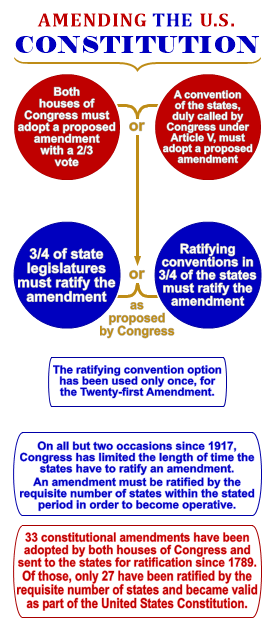
Legal basis and basic mechanism
The constitutional foundation for this procedure is laid out in Article V. Under that provision, after Congress proposes an amendment, it designates the mode of ratification: either approval by state legislatures or by state ratifying conventions. A state ratifying convention is not the same thing as a state constitutional convention or a national convention to propose amendments; it is a temporary body convened only to consider a particular proposed amendment or set of amendments and to vote on ratification.
How state ratifying conventions are organized
States implement conventions under their own laws and procedures, so the way delegates are selected and how meetings are conducted varies. Typical steps include:
- Congress proposes an amendment and specifies ratification by conventions.
- Each state enacts laws or uses existing rules to call and staff a convention, often prescribing how delegates are chosen or appointed.
- The state convention meets, debates the text, and votes to ratify or reject the amendment.
- Successful ratifications are certified and transmitted as required for official recognition.
Because state law governs many details, there can be significant variation from state to state in timing, eligibility of delegates, and procedural rules.
Historical use and a key example
Although the convention method has existed since the founding, it has been used only once in American history. In 1933 Congress chose state ratifying conventions to consider the proposed repeal of Prohibition; the result was ratification of the Twenty-first Amendment. Lawmakers and historians generally agree that Congress selected conventions for this amendment in part to produce a quicker, more direct popular response than could be expected from state legislatures.
Distinctions, modern debates, and significance
State ratifying conventions differ from approvals by state legislatures and from the separate Article V process that allows the states to call a national convention to propose amendments. In practice, every amendment that has become part of the Constitution was proposed by Congress; none of the twenty-seven ratified amendments began as a proposal from a convention called by the states. Scholars and activists periodically debate the merits of using state conventions: proponents highlight greater public input and the ability to bypass potentially resistant legislatures, while critics point to procedural uncertainty and the logistical complexity of assembling delegates under diverse state rules. Courts have not had to resolve many fine points about ratifying conventions because of their rarity, which leaves some questions open about precise mechanics and limits.
For those researching the topic, useful entry points include the constitutional text and historical records of the 1933 ratification campaign. For background on the submission and ratification processes, see resources that explain amendment procedure and the differences between legislative ratification and convention ratification of proposed amendments, sometimes described simply as "ratifying conventions" or "state conventions for ratification" in legal and historical literature. Additional information on the general concept of ratification and constitutional amendment practice is available through primary sources and scholarly summaries of Article V and the amendment history at large (ratification).
Questions and answers
Q: What are state ratifying conventions?
A: State ratifying conventions are one of the two ways established by Article Five of the United States Constitution for ratifying proposed constitutional amendments.
Q: When was the only time state ratifying conventions were used to ratify a constitutional amendment?
A: The only time state ratifying conventions were used to ratify a constitutional amendment was in 1933 to ratify the 21st Amendment.
Q: How have all other proposed constitutional amendments been ratified?
A: All other proposed constitutional amendments have been offered to the state legislatures for ratification.
Q: Can state ratifying conventions be used to propose a constitutional amendment?
A: Yes, the Constitution provides that state ratifying conventions may also be used to propose a constitutional amendment.
Q: Have any of the 27 amendments to the Constitution been proposed by state conventions?
A: No, to date, none of the 27 amendments to the Constitution have been proposed by state conventions.
Q: How can a state ratifying convention be called?
A: A state ratifying convention may be called by a two-thirds vote by a state legislature.
Q: How does Article Five of the United States Constitution outline the process for ratifying proposed constitutional amendments?
A: Article Five of the United States Constitution outlines two ways for ratifying proposed constitutional amendments, one through state ratifying conventions and the other through state legislatures.
Related articles
Author
AlegsaOnline.com State Ratifying Conventions in the United States Leandro Alegsa
URL: https://en.alegsaonline.com/art/93520
Sources
- archives.gov : "The Constitutional Amendment Process"
- legal-dictionary.thefreedictionary.com : "Twenty-First Amendment"
- cnsnews.com : "Mark Levin: States Should Call Convention to Propose Amending Constitution"