
Star Trek (2009 film)
A 2009 science-fiction reboot directed by J. J. Abrams that reimagines the origins of the original Star Trek crew using time travel to create an alternate timeline.
Overview
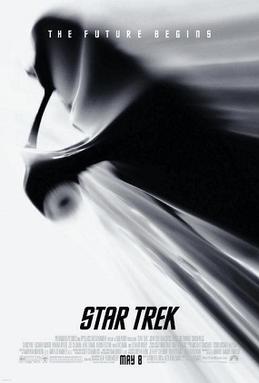
Star Trek (2009) is a science-fiction feature film directed by J. J. Abrams and produced by Paramount Pictures. It serves as a modern reboot of the characters first seen in the original Star Trek television series. The film retells how the core officers of the starship Enterprise—James T. Kirk, Spock, Leonard McCoy and others—first come together, while introducing a time-travel element that allows the filmmakers to alter established events without erasing earlier continuity within the wider franchise.
Image gallery
10 Images




Plot and structure
The narrative centers on a Romulan antagonist from the future whose actions create a divergent timeline. This device resets character histories so the familiar cast can be shown meeting and growing into their roles under different circumstances. While the film draws on classic characters and motifs from the original series, it emphasizes fast-paced action, modern visual effects, and a more accessible origin-story format.
Cast and production
The film introduced a new ensemble to portray well-known roles: Chris Pine as James T. Kirk, Zachary Quinto as Spock, Karl Urban as Dr. Leonard "Bones" McCoy, Zoe Saldana as Uhura, Simon Pegg as Montgomery Scott, John Cho as Hikaru Sulu and Anton Yelchin as Pavel Chekov. The villain, a Romulan commander, was played by Eric Bana. The production updated sets, costumes and effects to balance respect for the original designs with contemporary cinematic aesthetics.
Reception and legacy
On release, the movie was widely discussed for revitalizing the property for a new generation. Critics and fans noted its energetic pacing and the chemistry among the cast; reactions ranged from praise for its entertainment value to debate over its departures from older storylines. The film was commercially successful and led to two direct sequels, establishing a new film continuity sometimes informally referred to as an alternate timeline.
Notable aspects and distinctions
- The use of time travel creates a separate timeline that preserves earlier television continuity while permitting creative freedom.
- It functions both as an origin story for classic characters and as an accessible entry point for viewers unfamiliar with earlier Star Trek material.
- Its blend of character-driven scenes and action-oriented spectacle marked a stylistic shift for mainstream Trek films and influenced later entries in the series.
For more detailed production information and credits see the film entry: Star Trek (2009 film). Additional context about the broader property is available through sources that survey the development of the modern franchise and the original television series legacy.
Questions and answers
Q: Who directed the 2009 Star Trek movie?
A: J. J. Abrams directed the 2009 Star Trek movie.
Q: When was the movie Star Trek released?
A: The movie Star Trek was released in 2009.
Q: Who made the movie Star Trek?
A: Paramount Pictures made the movie Star Trek.
Q: What is Star Trek about?
A: Star Trek is about the characters of the original series meeting and assembling for the first time on the Enterprise and fighting a Romulan named Nero, who is from the future.
Q: How does time travel affect the storyline in the Star Trek movie?
A: Time traveling allows for massive changes in the storyline, which lets the creators take the franchise in a new direction while still being faithful to the existing canon.
Q: What does a reboot mean in the context of the Star Trek movie?
A: A reboot means that the movie is a new version of the original Star Trek television series.
Q: Who is the main antagonist in the Star Trek movie?
A: The main antagonist in the Star Trek movie is a Romulan named Nero, who is from the future.
Related articles
Author
AlegsaOnline.com Star Trek (2009 film) Leandro Alegsa
URL: https://en.alegsaonline.com/art/93448