
Stalagmite
A stalagmite is a mineral deposit that rises from a cave floor, formed by dripping water that leaves behind minerals (commonly calcium carbonate); its formation, varieties, and conservation are explained.
Overview
A stalagmite is a type of speleothem — a secondary mineral deposit found on the floor of caves and similar cavities. It grows upward from the ground where mineral-rich water drips from the ceiling and deposits solids as the water loses carbon dioxide or evaporates. The most common mineral in limestone caves that forms stalagmites is calcium carbonate in the forms calcite or aragonite, but other minerals can create different colors and textures. For a short note on non-geological uses of the word, some unrelated organisms have been nicknamed using the term in informal contexts; see related note.
Image gallery
8 Images



How they form and their characteristics
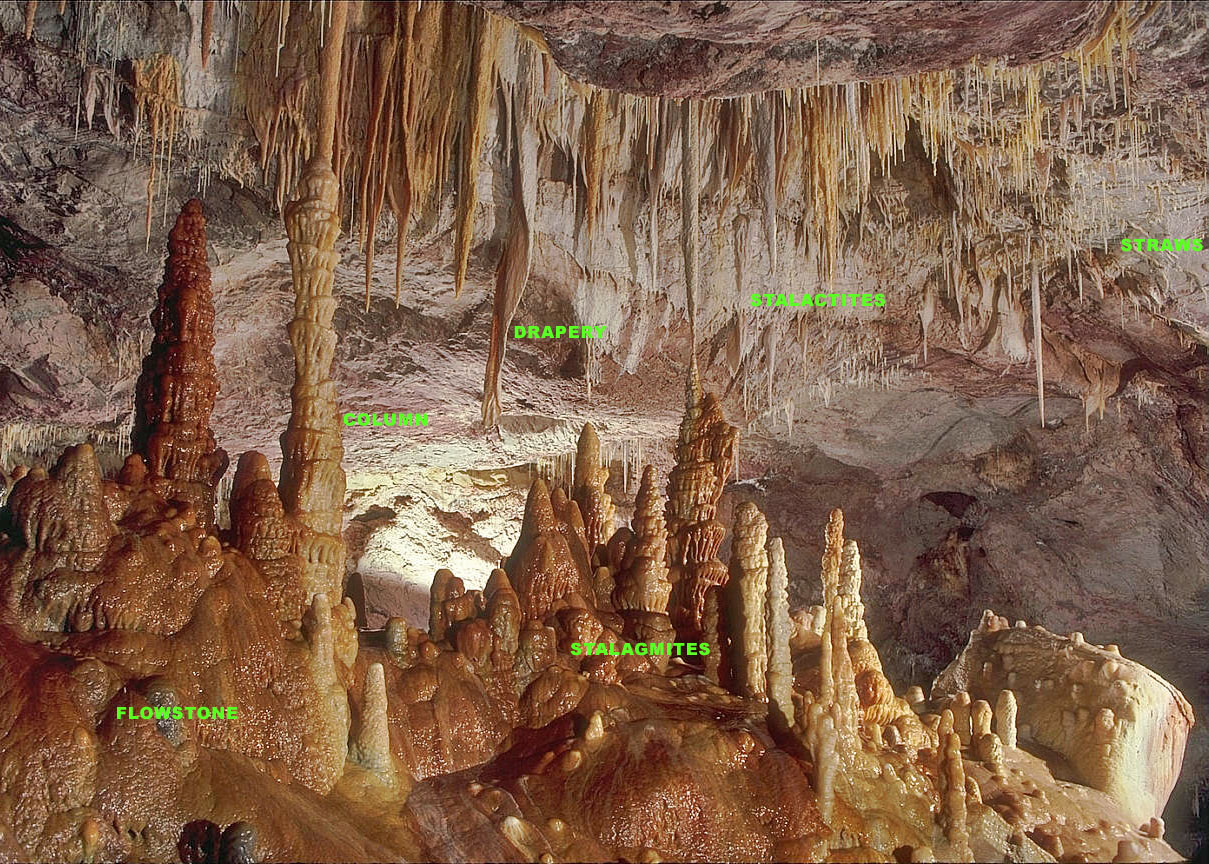
When groundwater percolates through limestone it dissolves carbonate rocks, carrying ions in solution. Where that water enters an air-filled void and drips to the floor, changes in pressure, temperature, or evaporation cause the dissolved minerals to precipitate. Over time the deposits build up into cone- or mound-shaped features that can vary from a few millimetres to many metres in height. Individual stalagmites often have layered internal structure reflecting episodic growth and changes in water chemistry. Small, delicate varieties and larger, massive forms coexist; when a stalagmite aligns with and eventually joins its counterpart from the roof (a stalactite), the combined structure is called a column or pillar. Further reading on cave deposits: speleothem types.
Growth rates, appearance and types
Growth rates depend on mineral concentration, drip rate, air circulation and climate. In many natural caves growth is slow — typically fractions of a millimetre to a few millimetres per year — so stalagmites record long-term environmental information. Variations in color and banding come from impurities such as iron, manganese, or organic material. Related cave features include soda straws, flowstones and draperies; these forms reflect different patterns of drip, film flow, or evaporation. More technical descriptions and classification guides are available at classification resource and mineralogy overview.
Historical and scientific importance
Stalagmites have interested people for centuries as striking cave ornaments and as sources of scientific data. Their layered growth can be sampled and dated to provide records of past rainfall, temperature and atmospheric composition, making them useful in paleoclimate research. Archaeologists and historians also use cave deposits to help interpret the timing of human activity where cave floors preserve artifacts. For conservation and study methods, consult conservation guidance and laboratory protocols at research methods.
Conservation, hazards and occurrences outside natural caves
Because growth is slow, stalagmites are vulnerable to damage. Touching active formations can disrupt growth: oils from skin alter surface tension so water fails to deposit minerals where it would naturally, leaving permanent marks. Tour guides commonly ask visitors not to touch formations to preserve their continued development. Stalagmites can also form on artificial structures such as concrete ceilings or mine workings where alkaline water deposits calcium carbonate much more rapidly than in limestone caves; see examples at man-made occurrences and safety notes at site safety. For a short glossary and visitor information, consult visitor guide.
Distinguishing stalagmites from stalactites
- Stalagmite: grows upward from the ground (think "ground" or the letter "g").
- Stalactite: hangs downward from the ceiling (think "ceiling" or the letter "c").
- When joined: the union is called a column or pillar.
Together, these features form intricate cave landscapes that are both scientifically valuable and visually striking. Responsible visitation and scientific study help protect these slow-forming natural records for future generations.
Questions and answers
Q: What is a stalagmite?
A: A stalagmite is a column-shaped formation that rises from the floor of a limestone cave when mineralized solutions drip from the ceiling and deposits of calcium carbonate form on the ground.
Q: What is the corresponding formation on the ceiling of a cave?
A: The corresponding formation on the ceiling of a cave is known as a stalactite.
Q: How can you remember which formation hangs from the ceiling (stalactite) and which rises from the floor (stalagmite)?
A: You can remember which formation hangs from the ceiling and which rises from the floor by noticing that StalaCtite has a "c" for "ceiling" and the T in StalacTite resembles one hanging from the ceiling, while StalaGmite has a "g" for "ground" and the M in StalagMite resembles a formation rising from the floor.
Q: Why are visitors to caves with stalactites and stalagmites asked not to touch the rock formations?
A: Visitors to caves with stalactites and stalagmites are asked not to touch the rock formations because the formation is considered to still be growing and forming. Skin oils can disturb where the mineral water will cling, which affects the development of the rock formation and makes it not natural anymore.
Q: Can stalactites and stalagmites form on concrete ceilings and floors?
A: Yes, stalactites and stalagmites can form on concrete ceilings and floors, but they form much more quickly on concrete than in the natural cave environment.
Q: What is the cause of stalagmites forming?
A: Stalagmites form when mineralized solutions drip from the ceiling of a cave and deposits of calcium carbonate form columns on the ground.
Q: What is another meaning of "stalagmites"?
A: Stalagmites may also refer to a type of fungus.
Related articles
Author
AlegsaOnline.com Stalagmite Leandro Alegsa
URL: https://en.alegsaonline.com/art/93274