
Staffa (island in the Inner Hebrides)
Staffa is an uninhabited island off northwest Scotland, renowned for Fingal's Cave, dramatic columnar basalt formations, seabird colonies and a layered Norse–Scottish history.
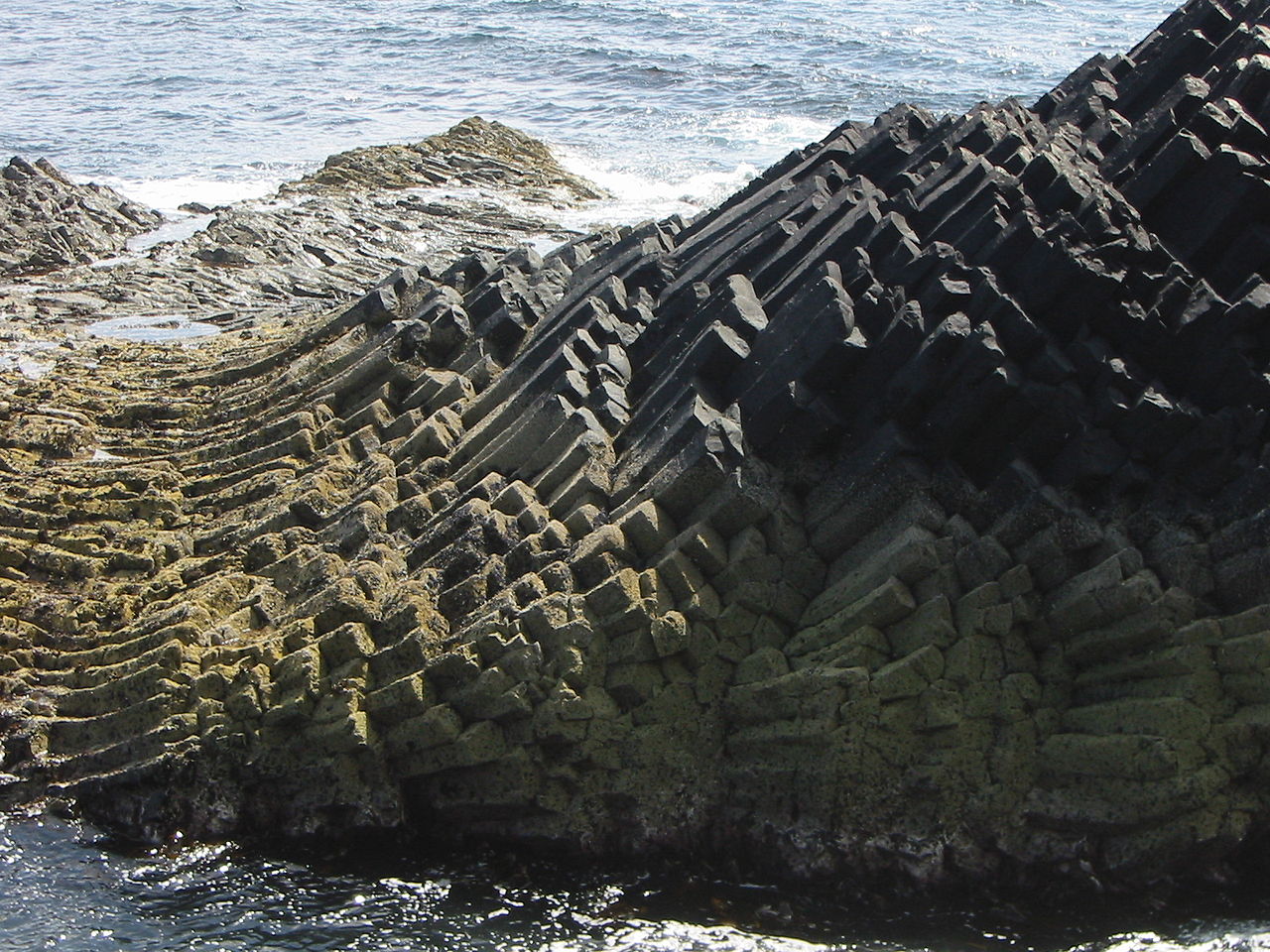
Staffa is a small, uninhabited island in the Inner Hebrides off the northwest coast of Scotland. It is best known for Fingal's Cave, a sea cave formed in remarkable hexagonal basalt columns that rise directly from the sea. The island's name is believed to derive from Old Norse for "pillar" or "stave", a reference to those vertical rock formations.
Image gallery
10 Images


Geology and landscape
The island is composed chiefly of basalt formed by cooling lava that contracted into regular, often hexagonal, columns. These columnar structures are an example of the same geological process responsible for other well-known sites, and they give Staffa its distinctive, almost geometric appearance. Fingal's Cave is the most famous single feature: its natural acoustics and lofty arched roof have drawn poets, artists and musicians. Visitors often compare the cave's rock architecture to related formations elsewhere and cite the interplay of sea, stone and light as a defining characteristic.
History and cultural associations
Human use of Staffa has been intermittent. In the medieval period the island lay within the maritime Norse realm known as the Suðreyjar, and sovereignty passed to the Scottish crown by the Treaty of Perth in 1266. Later it was associated with local Scottish clans such as the MacLeods and MacDonalds, though it was not permanently settled. The dramatic scenery of Fingal's Cave inspired artists and composers—most famously the composer Felix Mendelssohn, who visited and whose music helped popularize the site in the 19th century.
Wildlife, access and protection
Staffa provides valuable habitat for seabirds and coastal flora; puffins, guillemots and other species breed on its cliffs in season. Today the island is a frequent destination for day excursions by boat from nearby islands and the mainland. Landing conditions vary with weather and tide, so access is typically by organized boat trips rather than independent landings. Because of its geological rarity and wildlife, Staffa is treated as a place of natural interest and visitors are encouraged to respect conservation guidelines.
Notable features and visitor tips
- Fingal's Cave: distinctive basalt columns and resonant acoustic space.
- Columnar basalt: clear example of volcanic cooling patterns; learn more about the rock type via basalt resources.
- Historical context: part of the Norse Suðreyjar and later under Scottish clan influence—see material on the local clans.
Staffa remains a striking combination of geology, wildlife and cultural history. Its compact size and dramatic features make it an instructive place to observe how volcanic processes shape coastal landscapes and how such places enter human imagination and heritage.
Questions and answers
Q: Where is Staffa located?
A: Staffa is an island in the Inner Hebrides off the north-west of Scotland.
Q: What is Staffa famous for?
A: Staffa is famous for Fingal's Cave and other examples of basalt columns.
Q: Is Staffa inhabited?
A: No, Staffa is not inhabited.
Q: Who ruled the Kingdom of Mann and the Isles?
A: The Suðreyjar kingdom of Norse ruled the Kingdom of Mann and the Isles.
Q: How long did the Norsemen rule in the Kingdom of Mann and the Isles?
A: The Norsemen ruled for over 400 years.
Q: When was the sovereignty of the Kingdom of Mann and the Isles transferred to Scotland?
A: The sovereignty of the Kingdom of Mann and the Isles was transferred to Scotland by the Treaty of Perth in 1266.
Q: Who held the islands after the sovereignty was transferred to Scotland?
A: The Clans MacLeod and MacDonald held the islands after the sovereignty was transferred to Scotland.
Related articles
Author
AlegsaOnline.com Staffa (island in the Inner Hebrides) Leandro Alegsa
URL: https://en.alegsaonline.com/art/93240
Sources
- brailsfordpress.com : 3.pdf
- sat.dundee.ac.uk : "To Staffa with ladder"