
Sport in Japan: Tradition, Modernization, and Contemporary Landscape
A compact survey of sport in Japan: traditional martial arts, imported team sports, historical development, school and corporate systems, major competitions and social importance.
Sport occupies a visible place in Japanese society, blending ritual, education and entertainment. Participation ranges from community clubs and school activities to professional leagues and international competition. Physical pursuits are valued for discipline, teamwork and health, and they often carry cultural or seasonal associations.
Image gallery
10 Images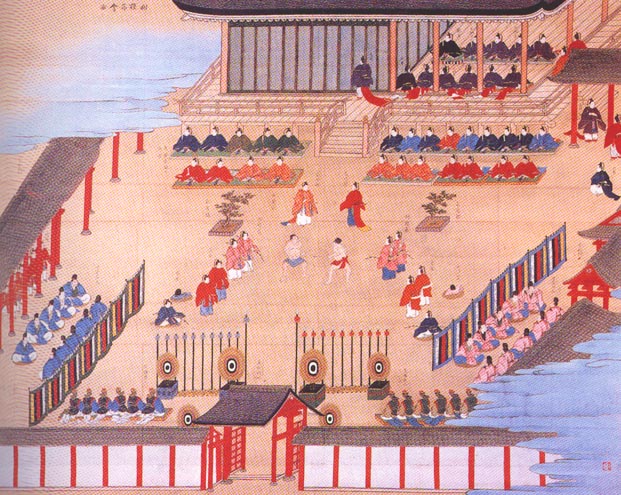


Traditional sports and martial arts
Several sports in Japan trace deep roots to the country’s history and philosophy. Prominent examples include sumo, an ancient ring sport with Shinto ceremonies; judo, a modern martial art derived from older jujutsu practices and now an Olympic sport; karate, a striking art that developed in the Ryukyu Islands; and kendo, a swordsmanship-derived practice emphasizing form and etiquette. These activities are taught both as competitive sports and as ways to cultivate discipline.
Imported sports and popular team games
From the late 19th century onward, Japan adopted a number of Western sports that became widely practiced. Baseball, introduced in the 1870s and now organized professionally and at school level, remains particularly popular (baseball). Soccer, golf and winter sports such as skiing have grown steadily in participation. Golf and other recreational sports are common in leisure culture and corporate hospitality.
Organized sport in Japan often follows distinctive institutions: school clubs (bukatsu) provide a structured path from youth to elite levels; corporate teams employ athletes as company employees; and regional clubs sustain lifelong participation. This system supports talent development but can also emphasize long hours and intense training.
Historically, the Meiji period’s modernization and the introduction of Western physical education reshaped sporting life. Postwar reconstruction and international events, including hosting Olympic Games, further professionalized competition and infrastructure. Today Japan participates actively in global sport while preserving unique national traditions and seasonal festival competitions.
Notable features include frequent national tournaments (for example university and high school baseball championships), professional leagues for baseball and soccer, and the ritualized seasonal schedule of sumo tournaments. Women’s sport and grassroots fitness programs have expanded in recent decades, reflecting wider social change. For further reading and resources see sumo, judo, karate, kendo, baseball, golf and skiing.
Questions and answers
Q: What are some of the traditional sports in Japan?
A: Some of the traditional sports in Japan include sumo, judo, karate, and kendo.
Q: What are some of the sports that were imported from the West to Japan?
A: Some of the sports that were imported from the West to Japan include baseball, soccer, golf, and skiing.
Q: Are sports popular with people in Japan?
A: Yes, sports are popular with both participants and onlookers in Japan.
Q: What role do sports play in Japanese culture?
A: Sports are an important part of Japanese culture.
Q: What is sumo?
A: Sumo is a traditional Japanese wrestling sport.
Q: What is kendo?
A: Kendo is a traditional Japanese martial art that uses bamboo swords and protective gear.
Q: Are sports in Japan only limited to traditional and Western sports?
A: No, Japan has a wide variety of sports beyond traditional and Western sports including e-sports, martial arts, and extreme sports like skateboarding and BMX.
Related articles
Author
AlegsaOnline.com Sport in Japan: Tradition, Modernization, and Contemporary Landscape Leandro Alegsa
URL: https://en.alegsaonline.com/art/92795
Sources
- books.google.com : "Sports"
- books.google.com : "Baseball,"
- books.google.com : "Golf,"
- la84foundation.org : "A Centenary of Rugby and Masculinity in Japanese Schools and Universities: Continuity and Change," Sporting Traditions, Vol. 16, No. 2, May 2000, p. 91 [PDF 5 of 18]
- puroresu.com : "Rikidōzan"
- bbc.co.uk : "Puroresu - Pro Wrestling Japanese Style"
- eslteachersboard.com : "Travel, Teach, Live in Japan - Professional Wrestling In Japan: A Brief History of Puroresu"
- web-japan.org : "Sports"
- joc.or.jp : "Olympic History in Japan, Tokyo 1964, Games of the XVIII Olympiad"
- ohno-ohnohigashi-j.hiroshima-c.ed.jp : "Clubs & Sports"
- la84foundation.org : Report of the Organizing Committee on Its Work for the XIIth Olympic Games of 1940 in Tokyo Until the Relinquishment, p. 177 [201 of 207 PDF]
- web-japan.org : "Japan and the Olympics"