
Sponge (cleaning tool): materials, structure, history and uses
A sponge is a porous cleaning implement—natural or synthetic—used for washing, wiping and absorbing. Covers structure, common materials, history, care, uses and environmental considerations.
Overview
A sponge is a porous tool designed to absorb liquids and scrub surfaces. Sponges are sold for household cleaning, personal bathing, industrial washing and craft work. They may be derived from the skeletons of marine animals or manufactured from synthetic polymers and plant fibers; each kind has different properties for absorbency, softness and durability. For information about the animal forms that inspired early use, see sponge (animal).
Image gallery
6 Images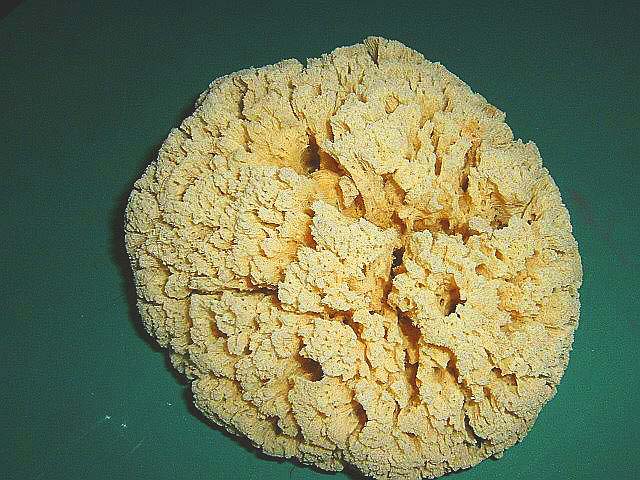



Structure and materials
What makes a sponge effective is its network of interconnected pores and channels. Natural sponges are formed by the fibrous skeleton of certain marine invertebrates and retain an open, irregular structure that soaks up water and traps particles. The rigid skeletons of some groups, such as demosponges, are preserved as examples of this porous architecture; images of such skeletal specimens are available at demosponges. Synthetic sponges are produced from materials like cellulose, polyurethane and other foams.
Brief history
People have used sea sponges for bathing and cleaning since antiquity, especially in Mediterranean cultures where they were harvested and traded. Natural sponges were prized for softness, absorbency and resilience. Over time, demand and changing technologies encouraged the development of manufactured alternatives that are cheaper and more uniform in quality.
Synthetic sponges and common types
Modern cleaning sponges are commonly made from:
- Cellulose (wood-derived fibers) — absorbent and biodegradable under some conditions;
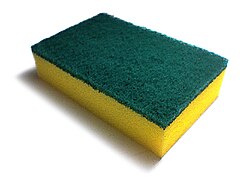
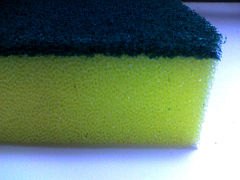
- Polyurethane foam — durable, flexible and widely used in household sponges; see materials information at polyurethane;
- Melamine foam — fine-porous material used as an abrasive "eraser" for stubborn marks;
- Composite types with scouring pads or antibacterial treatments — marketed as artificial sponges.
Uses and care
Sponges are used for washing dishes, cleaning surfaces, applying finishes, bathing and cosmetic work. Proper care extends service life and reduces contamination risks. Typical recommendations include:
- Rinse and wring out after each use; allow to dry between uses;
- Sanitize periodically by boiling, hot wash, or dilute bleach/white vinegar solutions where appropriate; follow safety cautions for microwaving or chemicals;
- Replace sponges that smell, shed, or show visible wear; use dedicated sponges for food contact and different areas to avoid cross-contamination.

Environmental and practical considerations
Natural sponges are biodegradable but harvesting can affect marine habitats if not managed. Many synthetic sponges are derived from petroleum-based polymers and may not biodegrade readily, creating waste and microplastic concerns. Choosing a sponge involves balancing performance, cost and environmental impact: cellulose types and responsibly sourced natural sponges offer more sustainable options, while some synthetics give longer life or special abrasiveness for heavy-duty jobs. For more technical or supplier details, consult product sources and material guides at cleaning tools references.
Questions and answers
Q: What is a sponge?
A: A sponge is a tool that is used for cleaning and washing. It is made of a special material, with many holes, which allows dirt to be removed by rubbing the sponge against dirty surfaces.
Q: Are there artificial sponges?
A: Yes, there are also artificial sponges which are made of polyurethane.
Q: What does a natural sponge look like?
A: A natural sponge looks like the skeleton of a Demosponge.
Q: How do you use a sponge to clean?
A: You can use a sponge to clean by rubbing it against dirty surfaces in order to remove dirt and debris.
Q: Is there any other purpose for using sponges besides cleaning?
A: Sponges can also be used for bathing or showering as they are absorbent and soft on the skin. They can also be used for applying makeup or skincare products due to their ability to hold liquid and spread evenly over the skin surface.
Related articles
Author
AlegsaOnline.com Sponge (cleaning tool): materials, structure, history and uses Leandro Alegsa
URL: https://en.alegsaonline.com/art/92763