
Séance: meeting, practices, history, and cultural significance
A séance is a ritual gathering—often led by a medium—intended to communicate with spirits. This article explains typical practices, historical development, notable figures, scientific scrutiny, and cultural impact.
A séance (from the French word for "session") is a gathering intended to establish communication with spirits or the deceased. Traditionally a séance meeting involves a group of participants and often a medium who serves as an intermediary attempting to reach a spirit or ghost. Although the image of people seated in a circle is common, séances can take many forms and need not always be stationary or silent.
Image gallery
6 Images


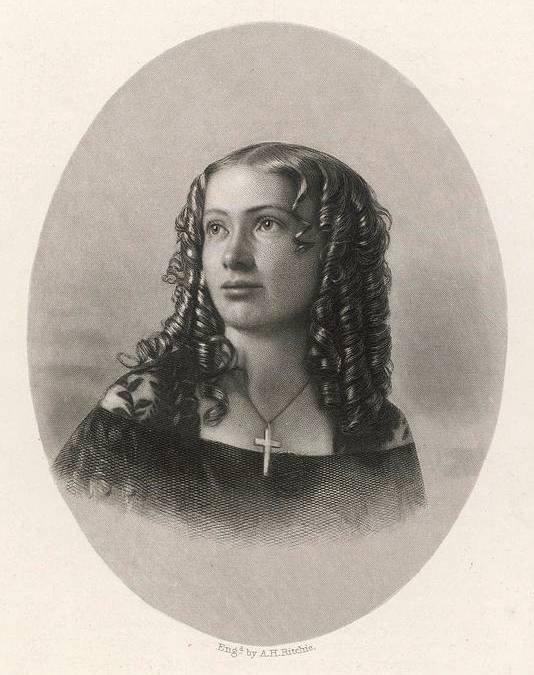

Typical format and claimed phenomena
Séances vary in style but frequently share recognizable elements: an opening statement or invocation, dim lighting, and a designated person who guides the session. Practitioners describe two broad types: "physical" séances in which material effects are claimed, and "mental" séances focused on messages, impressions, or automatic writing. Commonly reported phenomena include:
- Rappings or knocks and table movements (table turning),
- Audible spirit voices or trumpet amplifications,
- Automatic writing, trance mediumship and trance speaking,
- Spirit photography or alleged materializations,
- Use of planchettes, automatic drawing and other tools for communication.
Origins and historical development
Although literary accounts of afterlife communication go back centuries — one early English work is George, First Baron Lyttelton's 1760 book on communicating with the other side — the modern Spiritualist movement emerged in the mid-19th century. The Fox Sisters and other early figures popularized séances in the United States and Britain. Interest grew especially after the upheavals of the American Civil War and the many bereaved relatives seeking comfort.
Séances attracted a wide range of people: some public figures were reported to have attended or expressed an interest, including Abraham Lincoln and Mary Todd Lincoln, social reformers such as Robert Owen, journalists like William Thomas Stead, and scientists or inventors who investigated or supported aspects of spiritualist claims. Notable names connected in historical accounts include Alfred Russel Wallace, Alexander Graham Bell, and inventors such as John Logie Baird, who has been linked in some reports to spirit-contact claims involving Thomas Edison.
Investigation, criticism, and scientific perspective
From the late 19th century onward, committees and organizations — most prominently the Society for Psychical Research and later skeptics and magicians — examined séance claims. Investigations revealed that many apparent phenomena can arise from trickery, suggestion, unconscious movement, or psychological effects such as cold reading and expectation. Prominent skeptics and exposing magicians demonstrated methods by which physical phenomena could be faked, and controlled experiments have generally failed to reproduce reliable, demonstrable contact with the dead under strict conditions.
Cultural role and contemporary practice
Séances remain part of religious Spiritualist communities, parapsychological inquiry, and popular culture. They appear frequently in literature, film and folklore as a dramatic device. Modern practitioners vary from formal church services to private gatherings. Ethical issues are often emphasized in contemporary guidance: avoid exploiting grief, insist on informed consent, and apply critical thinking. For those researching or participating, recommended precautions include clear boundaries, respectful conduct, and awareness of the difference between consolation offered by ritual and empirical proof of survival after death.
Questions and answers
Q: What is a spiritual séance?
A: A spiritual séance is a meeting at which people, including a medium, attempt to contact a ghost and communicate with it.
Q: Do participants in a séance need to be seated?
A: No, participants in a séance need not be seated.
Q: Who wrote one of the earliest books on spiritual séances and when was it published?
A: The book is called "Communitation With the Other Side" by George, First Baron Lyttelton, and it was published in England in 1760.
Q: Have any notable people attended spiritual séances and believed in them?
A: Yes, some notable people who attended spiritual séances and believed in them include United States President Abraham Lincoln and his wife Mary Todd Lincoln, the social reformer Robert Owen, and the journalist and pacifist William Thomas Stead.
Q: Have any scientists conducted a search for real séances and believed in them?
A: Yes, some scientists who have conducted a search for real séances and believed in them include the evolutionary biologist Alfred Russel Wallace, the inventor of telephone Alexander Graham Bell, and the inventor of television technology John Logie Baird.
Q: Who did John Logie Baird claim to have contacted through a séance?
A: John Logie Baird claimed to have contacted the spirit of the inventor Thomas Edison through a séance.
Q: What is the purpose of a spiritual séance?
A: The purpose of a spiritual séance is to attempt to contact a ghost and communicate with it.
Related articles
Author
AlegsaOnline.com Séance: meeting, practices, history, and cultural significance Leandro Alegsa
URL: https://en.alegsaonline.com/art/92719
Sources
- attackingthedevil.co.uk : "''Stead on Spiritualism'' at The William T. Stead Resource Site"
- wku.edu : "''The Scientific Aspect of the Supernatural'', Alfred Russel Wallace, 1866"