
Spectrometer: instrument for measuring the properties of electromagnetic radiation
Overview of spectrometers: what they measure, core components, types across the electromagnetic spectrum, history, common applications, and distinctions from related instruments.
Overview
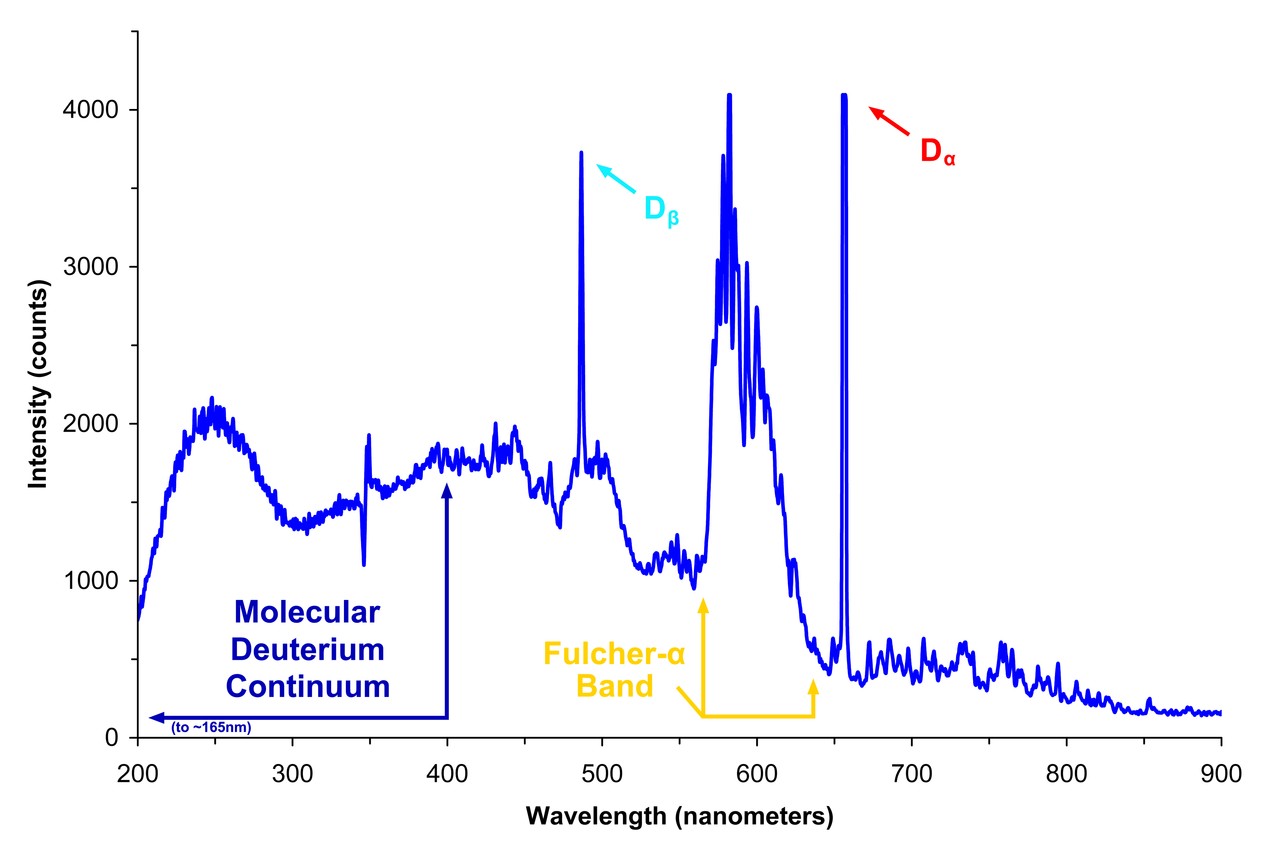
A spectrometer is an instrument that separates and measures components of electromagnetic radiation to reveal their distribution by wavelength, frequency, or energy. In practice a spectrometer records how a property of light—commonly intensity—varies with the independent variable, typically wavelength. Some designs also measure related quantities such as polarization or phase. Spectrometers are central tools in spectroscopy, producing the spectral signatures used to identify materials, determine physical conditions, and quantify concentrations.
Image gallery
4 Images

Main components and how they work
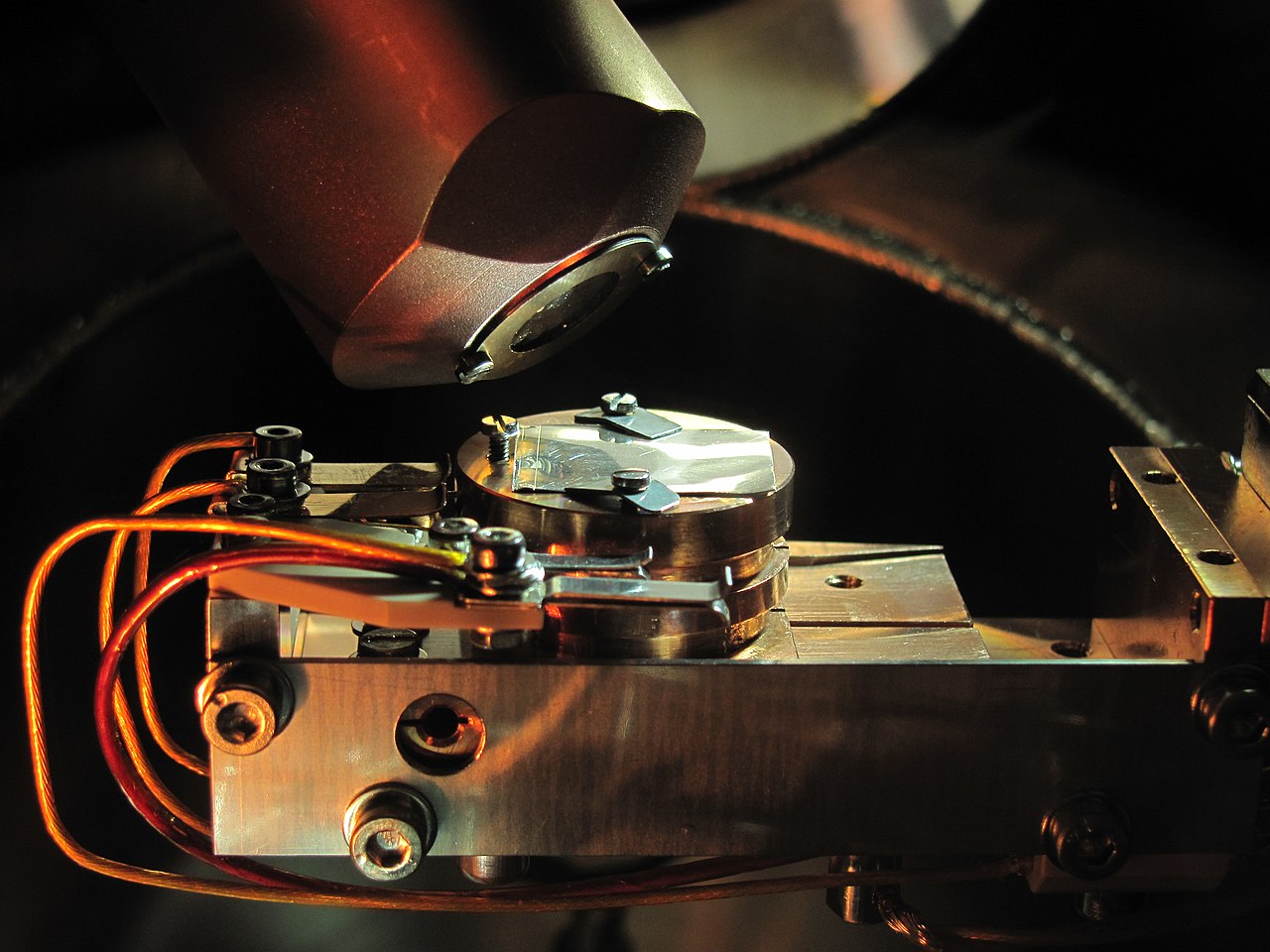
Most optical spectrometers share a few basic parts: an entrance that accepts radiation, a mechanism to separate wavelengths, and a detector. The separation is achieved by dispersive elements such as prisms or diffraction gratings, or by interferometric methods. A slit or fiber controls the optical input and affects resolution; detectors convert the dispersed signal into electronic data. Instruments often include calibration sources and software to convert raw signals into a calibrated spectrum.
Types and spectral ranges
Spectrometers are built for different portions of the electromagnetic spectrum. Visible and ultraviolet instruments are common in laboratories and industry; specialized detectors extend measurements into the infrared and far infrared. At much higher energies, different designs address gamma rays and X-rays. At lower frequencies, electronics-based devices are used for microwave, radio, and even audio frequencies—where the related instrument is often called a spectrum analyzer rather than an optical spectrometer.
History and development
Concepts underlying spectrometers date back to experiments with prisms and the recognition of spectral colors in the 17th and 18th centuries. Advances such as diffraction gratings, photographic detection, electronic detectors, and digital signal processing progressively increased precision and sensitivity. Modern devices range from compact handheld units to large, highly specialized spectrographs installed at observatories or on satellites.
Applications and examples
Spectrometers are used across science and industry: identifying chemical composition in laboratories, monitoring atmospheric gases, controlling processes in manufacturing, diagnosing astronomical objects by their spectral lines, and characterizing light sources. A few common examples include fiber-optic spectrometers for lab analysis, infrared spectrometers for molecular identification, and X-ray spectrometers for material studies.
Distinctions and notable facts
Different names and designs reflect purpose: a spectrograph typically records an image of a spectrum, a monochromator isolates a narrow band of wavelengths, and a mass spectrometer—despite the shared name—measures mass-to-charge ratios of ions rather than optical wavelengths. Resolution, sensitivity, and spectral range are principal trade-offs when choosing or designing an instrument. For further technical introductions and reference material consult general resources on optical instruments, properties of light, and the electromagnetic spectrum. Additional reading: spectral lines, instrument calibration methods, and practical guides for laboratory and field measurements (wavelength calibration tips and spectroscopic techniques). For specialized frequency domains see references on gamma, X-ray, microwave, radio, and audio spectral analysis.
Questions and answers
Q: What is a spectrometer?
A: A spectrometer is an optical instrument used to measure properties of light over a specific portion of the electromagnetic spectrum.
Q: What is the independent variable in a spectrometer?
A: The independent variable in a spectrometer is usually the wavelength of the light.
Q: What variable is measured by a spectrometer?
A: The variable measured is most often the light's intensity but could also be the polarization state.
Q: What is the purpose of a spectrometer?
A: A spectrometer is used in spectroscopy for producing spectral lines and measuring their wavelengths and intensities.
Q: What range of wavelengths can a spectrometer operate over?
A: A spectrometer is a term that is applied to instruments that operate over a very wide range of wavelengths, from gamma rays and X-rays into the far infrared.
Q: Why does any particular instrument only operate over a small portion of the total range of wavelengths?
A: Any particular instrument will operate over a small portion of this total range because of the different techniques used to measure different portions of the spectrum.
Q: What is a closely related electronic device to the spectrometer?
A: Below optical frequencies (that is, at microwave, radio, and audio frequencies), the spectrum analyzer is a closely related electronic device.
Related articles
Author
AlegsaOnline.com Spectrometer: instrument for measuring the properties of electromagnetic radiation Leandro Alegsa
URL: https://en.alegsaonline.com/art/92583