
Spectral bat (Vampyrum spectrum): the largest New World carnivorous bat
Overview of the spectral bat (Vampyrum spectrum): appearance, range, hunting behavior, diet, reproduction, and conservation, with distinctions from Old World ‘false vampires’.
The spectral bat (Vampyrum spectrum) is a striking, large predatory bat native to parts of tropical America. It is the only species in the genus Vampyrum and is notable for being the largest bat in the New World. Although sometimes called a "false vampire," this name has caused confusion because it is not closely related to the Old World family Megadermatidae that are also called false vampires. The spectral bat occurs across much of South America and on islands such as Trinidad and Tobago, where it is typically associated with mature forest and forest edge habitats.
Image gallery
7 Images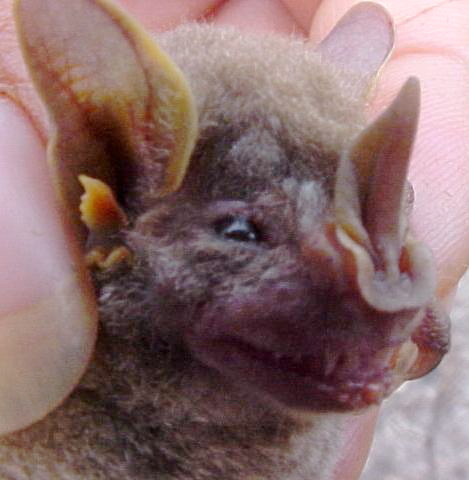




Description and distinguishing features
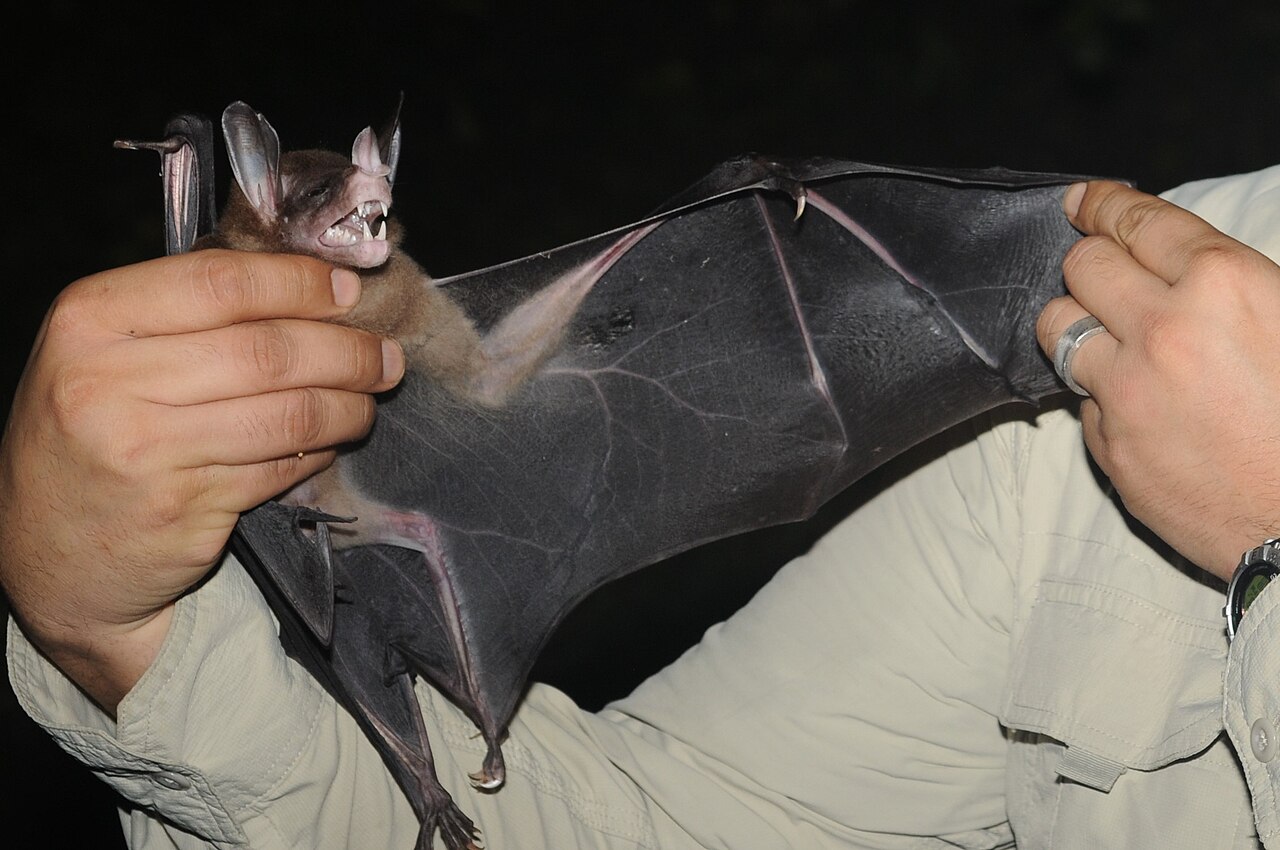
Spectrals are large, heavy-bodied bats with substantial wingspans: commonly around 80 cm and in some individuals exceeding one metre. Their head and body length is on the order of a dozen centimetres and adult mass generally ranges in the mid-hundreds of grams. The fur is short and usually brown to rust-orange on the back, and the face shows a long, narrow muzzle equipped with strong teeth adapted to subduing vertebrate prey. Prominent rounded ears and a noseleaf are present, and the feet are large with curved claws useful for grasping. These physical traits combine to give the spectral bat a distinctive, somewhat owl-like silhouette in flight.
Characteristics and adaptations
- Skull and dentition: robust jaws and well-developed teeth for slicing and crushing vertebrate prey.
- Sensory abilities: the species uses echolocation and acute hearing to detect movement; it also hunts visually in low light.
- Locomotion: powerful wing muscles allow slow, maneuverable flight along forest edges and the ability to pounce from perches.
- Roosting: typically uses cavities in large trees or similar sheltered sites for daytime rest and raising young.
Diet, hunting and ecological role
Spectral bats are primarily carnivorous predators. Their diet includes a wide range of vertebrates — amphibians such as frogs (amphibians), small reptiles (reptiles), birds including small passerines (small birds), and mammals such as rodents and other bats (mammals). They also take large insects (insects) when available and occasionally consume small amounts of fruit. Hunting is typically nocturnal and stealthy: spectrals may sit on a perch and pounce onto prey, or fly slowly along forest edges—behavior likened to that of some owls—dropping suddenly onto animals in vegetation or on the ground.
Reproduction and social behaviour
Reproduction in Vampyrum spectrum is characterized by small litter size; females usually bear a single pup each year. Parental care is notable: mothers are attentive and carry or nurse their young in the roost. Males have been observed remaining near the mother and offspring, sometimes sheltering with them, which suggests a degree of social tolerance or family grouping that is unusual among many bat species. Juveniles develop flight and hunting skills over several weeks to months before dispersing.
Conservation, threats and notable facts
Because spectrals require large trees and intact forest structure for roosting and hunting, they are vulnerable to habitat loss, fragmentation and human disturbance. They are also sometimes persecuted due to misconceptions about their diet. Conservation measures that protect mature forest, preserve roost sites and reduce persecution benefit these bats and the broader ecosystems in which they are apex nocturnal predators. Notable points to remember: the spectral bat is the largest chiropteran in the Americas, it is an active predator rather than a blood-feeding species, and the common name "false vampire" has led to taxonomic confusion with unrelated Old World bats in the Megadermatidae.
For further general information on habitats and vertebrate prey, see regional resources on South American wildlife and island faunas such as those described for Trinidad and Tobago. Additional reading on bat diets and predatory behaviours can be found in materials that cover carnivorous bats and their role in neotropical ecosystems (vertebrate prey summaries, amphibian and reptile interactions, avian prey studies small birds, mammal predation surveys mammals, and insect prey accounts insects). Observers sometimes compare their hunting style to that of owls, reflecting convergent tactics for taking vertebrate prey at night.
Questions and answers
Q: What is the scientific name of the Spectral bat?
A: The scientific name of the Spectral bat is Vampyrum spectrum.
Q: What are some alternate names for this species?
A: Some alternate names for this species are 'Linnaeus's False vampire bat' and the 'Spectral Vampire bat'.
Q: Where can these bats be found?
A: These bats can be found in South America, and Trinidad and Tobago.
Q: How large is this species of bat?
A: This species of bat has a wingspan of about 80 cm (almost 3 feet) with body length and weight being 125-35 mm and 145-190 grams respectively. Some animals reach wingspans of over a metre.
Q: What does its fur look like?
A: The fur on the upper parts of the bat is normally brown or rust-orange and quite short. The ears are very long and rounded, while the muzzle is long and narrow, with strong teeth. The Noseleaf is shaped as in the photograph.
Q: What does it hunt?
A: This species hunts many vertebrates such as amphibians, reptiles, small birds, mammals, other bats, insects such as large crickets or cicadas, as well as a small amount of fruit.
Q: How does it hunt?
A: When hunting, this species is extremely stealthy; it will often pounce from a position on an above branch onto its prey or fly like some owls by patrolling back and forth along forest edges before suddenly dropping on something in the grass.
Related articles
Author
AlegsaOnline.com Spectral bat (Vampyrum spectrum): the largest New World carnivorous bat Leandro Alegsa
URL: https://en.alegsaonline.com/art/92579
Sources
- iucnredlist.org : Vampyrum spectrum