
Spectacled bear (Tremarctos ornatus): the Andean bear
The spectacled bear, or Andean bear, is South America’s only bear species. Known for its variable facial markings, arboreal habits and cultural importance, it faces habitat loss and is protected by conservation efforts.
Overview
The spectacled bear (Tremarctos ornatus), often called the Andean bear, is the only surviving bear species native to South America. It is commonly known locally by names such as ukuku, jukumari and ukumari. Characterised by distinctive pale markings around the eyes and upper chest, these patterns vary between individuals and populations and can resemble spectacles — the origin of the common name.
Image gallery
10 Images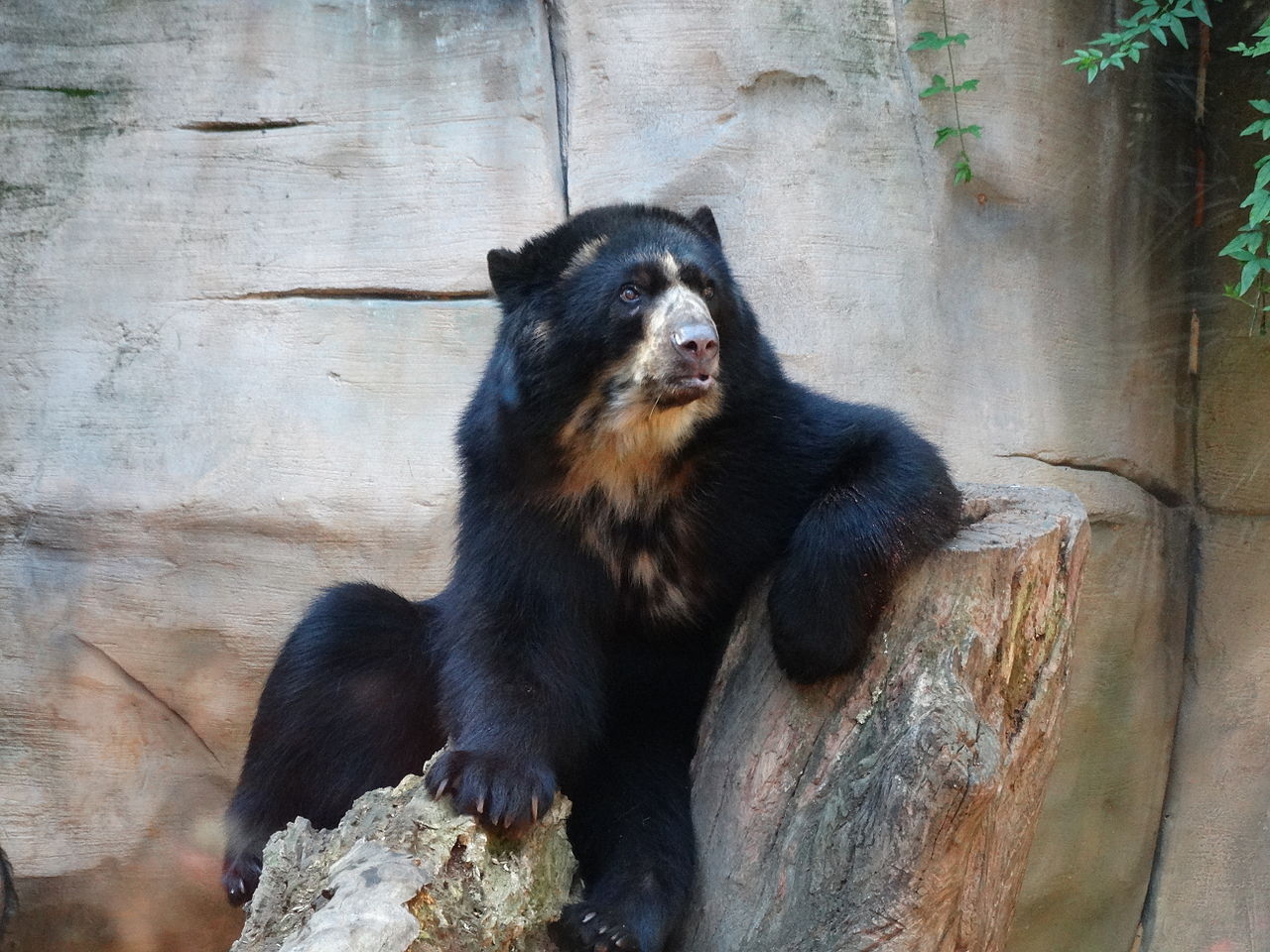


Appearance and behaviour
Spectacled bears are relatively small to medium-sized compared with some other bear species; males are substantially larger than females. Their coat is generally dark, with cream to reddish facial and chest markings that differ in shape and extent. Adaptations for climbing are well developed: strong limbs, curved claws and a flexible build enable them to ascend trees to feed and rest. Their diet is largely herbivorous, dominated by fruit, bromeliads, cactus, palm hearts and other plant material, although they will take insects or carrion opportunistically.
Distribution and habitat
These bears occupy a range of mountain and foothill habitats along the Andes, from northern Venezuela through Colombia, Ecuador and Peru to Bolivia and parts of northwestern Argentina, with historical records extending into eastern Panama. They inhabit cloud forests, montane forest, and high-elevation scrub and páramo, often favouring areas with abundant fruiting plants and tree cover that support their climbing lifestyle.
Evolutionary background
The spectacled bear is the sole living member of the subfamily Tremarctinae, a lineage that included several extinct short-faced bears known from the Pleistocene. Fossil relatives once ranged across the Americas, but today Tremarctos ornatus is the last representative of that group. Its survival into the present contrasts with the disappearance of many of its larger relatives during the late Quaternary.
Conservation and cultural significance
Populations have declined and are fragmented in parts of their range because of habitat loss, agricultural expansion, infrastructure development and sometimes persecution for crop damage. Conservation assessments list the species as facing elevated risk, and efforts focus on habitat protection, reducing human–bear conflict, and community-based conservation programs. The spectacled bear also holds cultural value in Andean traditions and appears in folklore and local art.
Further reading and references
- Short-faced bears and evolutionary context
- Extinct relatives of the spectacled bear
- Pleistocene fauna and chronology
- Comparative size among bear species
- Biogeography of South American mammals
- Morphology and body mass studies
- Weight conversions and measurements
- Records from western Venezuela
- Spectacled bear populations in Colombia
- Status and ecology in Ecuador
- Conservation in Peru
- Distribution in western Bolivia
- Reports from northwestern Argentina
- Historical records in Panama
- Arboreal adaptations and climbing behaviour
Questions and answers
Q: What is the spectacled bear?
A: The spectacled bear is a species of bear native to South America.
Q: What are the other short-faced bears?
A: The other short-faced bears are now extinct.
Q: What is the distinctive feature on the spectacled bear's face?
A: The spectacled bear has a beige-colored marking across its face and upper chest.
Q: How much larger are male spectacled bears than females?
A: Males are 33% larger than females.
Q: Where are spectacled bears found in South America?
A: Spectacled bears are found in several areas of northern and western South America, including western Venezuela, Colombia, Ecuador, Peru, western Bolivia, northwestern Argentina, and eastern Panama.
Q: What is the subfamily the spectacled bear belongs to?
A: The spectacled bear is the only surviving member of the subfamily Tremarctinae.
Q: How has the spectacled bear survived?
A: Their survival has depended mostly on their ability to climb even the highest trees of the Andes.
Related articles
Author
AlegsaOnline.com Spectacled bear (Tremarctos ornatus): the Andean bear Leandro Alegsa
URL: https://en.alegsaonline.com/art/92577
Sources
- species.wikimedia.org : Tremarctos ornatus
- grizzlybear.org : Grizzly Bear.org: Spectacled Bear
- bearplanet.org : Bear Planet