
Spartacus League (Spartakusbund) — German Marxist revolutionary group
Left-wing revolutionary movement in Germany during World War I and the 1918–19 revolution; founded by figures such as Rosa Luxemburg and Karl Liebknecht and later forming the KPD.
Overview
The Spartacus League (German: Spartakusbund) was a Marxist, anti-war political current active in Germany during World War I and the revolutionary period that followed. It took its name from Spartacus, the leader of a large slave revolt in antiquity, and positioned itself against the moderate Social Democratic leadership by calling for revolutionary change and workers' councils.
Image gallery
10 Images




Origins and development
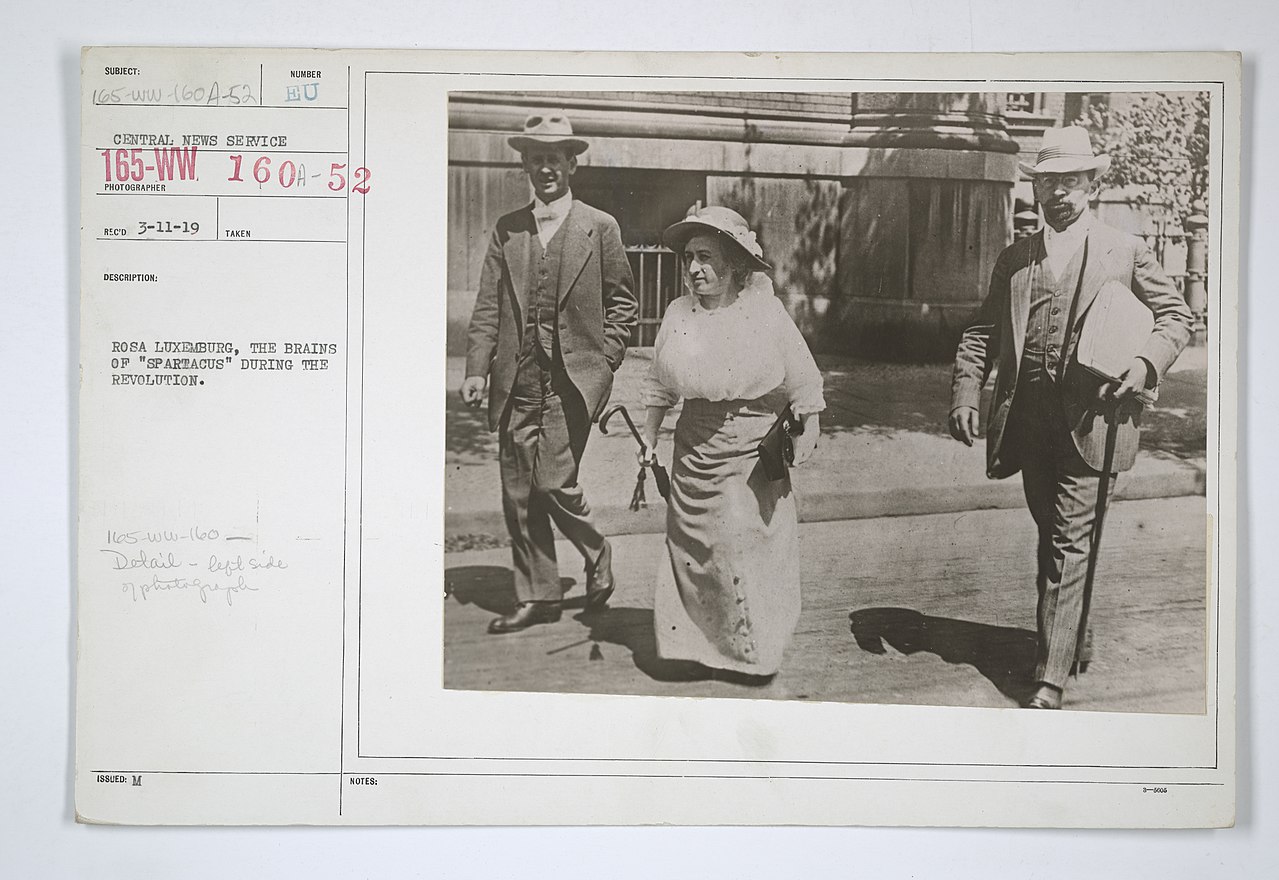
The group emerged from the anti-war left of the Social Democratic movement and from independent Marxist circles. Prominent organizers included Rosa Luxemburg, Marxist theorist Karl Liebknecht and other left socialists. It used pamphlets and newspapers, notably publications often referred to as the "Spartacus Letters" and later the paper Die Rote Fahne, to disseminate its ideas and to coordinate action.
Activities and the 1918–19 revolution
During the German Revolution of 1918 the League played a visible role in strikes, mass demonstrations and the formation of workers' and soldiers' councils. In the chaotic months after the war it was a leading voice calling for a proletarian republic rather than a parliamentary compromise. A principal flashpoint was the January 1919 uprising in Berlin, often called the Spartacist uprising; government forces and paramilitary units crushed the revolt, and leading members were arrested and killed soon afterward.
From League to Communist Party and international relations
As the revolutionary moment shifted into party organization, members of the Spartacus League helped found the Kommunistische Partei Deutschlands (KPD). The new party aligned itself with the Third International (Comintern) and sought to connect German revolutionary activity to an international communist movement.
Distinctive traits and legacy
The Spartacus League was distinguished by its uncompromising stance toward war, its insistence on revolutionary means rather than parliamentary reform, and its close grounding in Marxist theory. Its suppression and the deaths of central leaders had a lasting impact on left politics in the Weimar Republic and shaped debates about strategy between reformist social democrats and revolutionary communists.
Notable figures and further reading
- Rosa Luxemburg — theorist and organizer associated with the League.
- Karl Liebknecht — anti-war socialist and co-founder of the group.
- Clara Zetkin — prominent socialist activist linked to the movement.
- Historical context references: the Roman slave revolt led by Spartacus and the late-imperial political crisis of Germany; see specialized studies and archives for primary sources.
For concise introductions and archival documents consult overview accounts and collections of writings by League members and contemporaries. Related topics include the wider socialist split in Germany, the role of paramilitary units in postwar repression, and debates within the international communist movement after 1919. Additional biographical and documentary resources can be found via links to research portals and library catalogs indexed in specialist guides on Republican-era history and online repositories covering Marxist movements. For more on the group's German-language identity see the entry for Spartakusbund.
Questions and answers
Q: What is the Spartacus League?
A: The Spartacus League was a Marxist revolutionary movement in Germany during World War I.
Q: Why was it named after Spartacus?
A: It was named after Spartacus, the leader of the largest slave rebellion of the Roman Republic.
Q: Who were some of the founders of the Spartacus League?
A: Some of the founders of the Spartacus League were Karl Liebknecht, Rosa Luxemburg, and Clara Zetkin.
Q: What did the Spartacus League later change its name to?
A: The Spartacus League later changed its name to the Kommunistische Partei Deutschlands (KPD).
Q: When did the Spartacus League join the Comintern?
A: The Spartacus League joined the Comintern in 1919.
Q: When was the Spartacus League most active?
A: The Spartacus League was most active during the German Revolution of 1918.
Q: What was the Spartacus League's method of trying to start a revolution?
A: The Spartacus League wanted to start a revolution through its newspaper, Spartacus Letters.
Related articles
Author
AlegsaOnline.com Spartacus League (Spartakusbund) — German Marxist revolutionary group Leandro Alegsa
URL: https://en.alegsaonline.com/art/92511