
Space Shuttle Discovery (OV-103)
Space Shuttle Discovery (OV-103) was NASA's third operational orbiter. It flew more missions than any other shuttle, logged roughly one year in space, supported satellite deployment and ISS assembly, and is now a museum exhibit.
Space Shuttle Discovery (OV-103) is one of NASA’s reusable winged orbiters built for the Space Shuttle program. Entering service in the early 1980s, Discovery flew more missions than any other orbiter and accumulated roughly one year (about 365 days) of time in space. Over a long career it carried crews and payloads for scientific research, satellite deployment, and station construction tasks, becoming known as a reliable workhorse of low Earth orbit operations.
Image gallery
10 Images




Design and characteristics
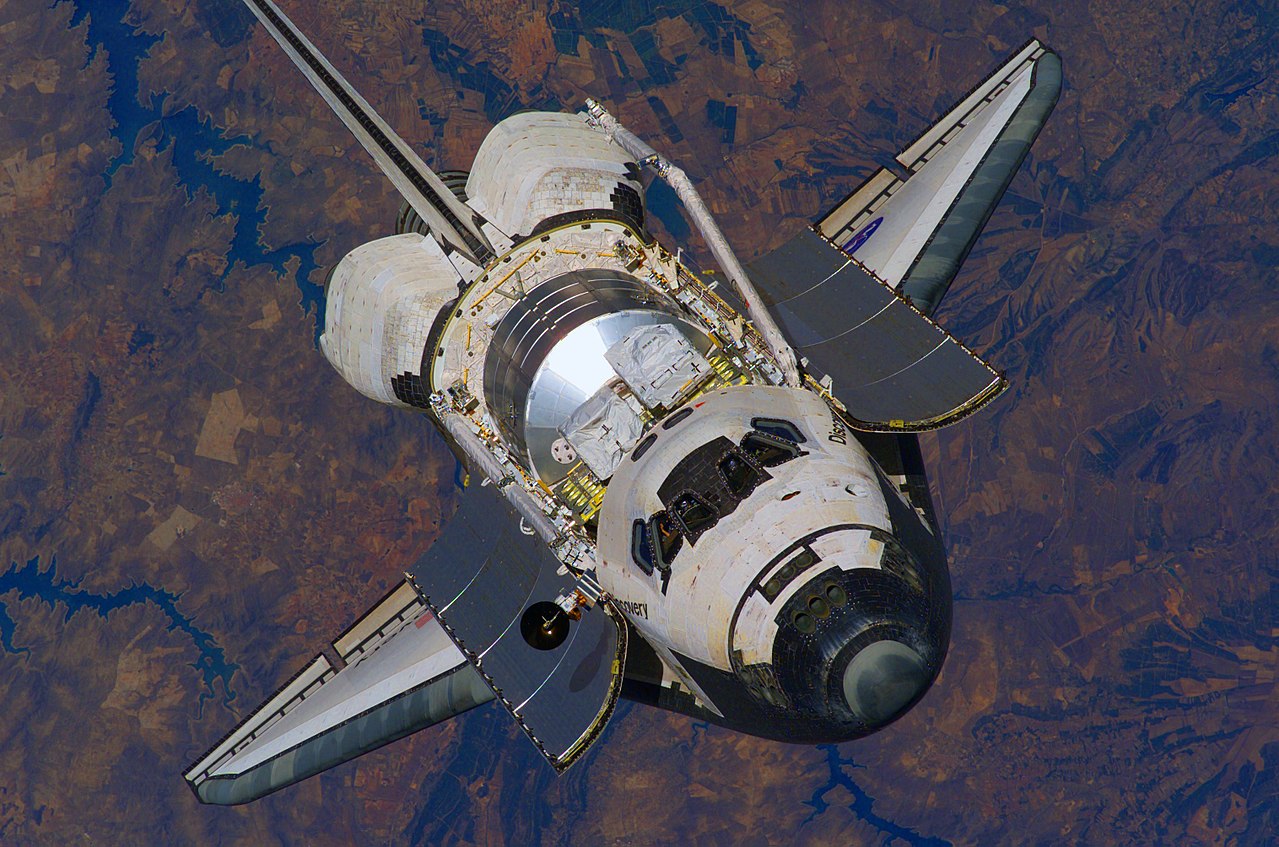
As an orbiter vehicle, Discovery was designed to operate as part of the Space Shuttle system, which included two solid rocket boosters and an external fuel tank for launch. The orbiter itself housed the crew compartment, avionics, main engines, and a large payload bay that could accommodate satellites, scientific modules, and components for the International Space Station (ISS). Thermal protection tiles and reinforced carbon‑carbon panels protected the vehicle during atmospheric reentry. A central feature of the design was reusability: after each mission the orbiter underwent inspection, maintenance, and refurbishment to prepare for subsequent flights.
Operational history
Discovery served across three decades, performing missions that ranged from routine satellite deployment to complex assembly and servicing tasks in orbit. It played prominent roles in crewed science experiments, technology demonstrations, and logistics missions for the ISS. Discovery also led the shuttle fleet’s return to flight on two separate occasions following the program’s fatal accidents, reflecting changes in safety practices and engineering approaches developed by NASA. The orbiter’s long career illustrates both the operational capabilities and the evolving risk management of human spaceflight in the late 20th and early 21st centuries.
Notable missions and roles
- Deployment of satellites and observatories that expanded astronomical and communications capabilities.
- Transport of scientific experiments and supplies to support microgravity research aboard the ISS.
- Participation in major construction and maintenance tasks for orbital infrastructure.
- Execution of missions that implemented upgrades to crew safety, inspection procedures, and thermal protection techniques.
Retirement and public display
Discovery was retired from flight service in 2011, with its final landing marking the end of its active career. Following decommissioning, the orbiter was preserved as part of the Smithsonian collection and placed on public display so visitors can learn about its engineering, missions, and cultural impact. Information about the exhibit and the orbiter’s conservation is available from the National Air and Space Museum.
Legacy: Discovery’s extensive manifest, multiple return‑to‑flight roles, and long service life made it one of the most recognized spacecraft in NASA history. As a museum artifact it continues to educate the public about the Space Shuttle program, the challenges of human spaceflight, and the technological advances achieved during its operational lifetime.
Questions and answers
Q: How many space shuttles did NASA run?
A: NASA ran three space shuttles, and Space Shuttle Discovery (OV-103) was the third of them.
Q: Which space shuttle has flown more missions than any other?
A: Space Shuttle Discovery has flown more missions than any other space shuttle.
Q: After which ship was Space Shuttle Discovery named?
A: Space Shuttle Discovery was named after RRS Discovery.
Q: When was Space Shuttle Discovery retired?
A: Space Shuttle Discovery was retired on March 9, 2011.
Q: How long did Space Shuttle Discovery spend in space?
A: Space Shuttle Discovery spent one year (365 days) in space.
Q: Where is Space Shuttle Discovery now?
A: Space Shuttle Discovery is now on display at the National Air and Space Museum in Washington D.C.
Q: What is OV-103?
A: OV-103 is the designation given to Space Shuttle Discovery.
Related articles
Author
AlegsaOnline.com Space Shuttle Discovery (OV-103) Leandro Alegsa
URL: https://en.alegsaonline.com/art/92418